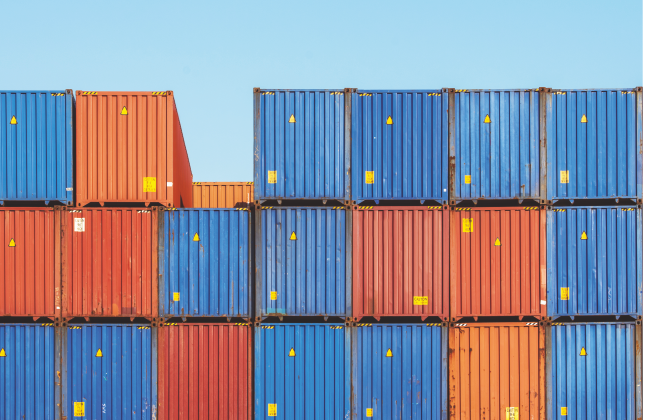
Domestication of containers is steadily gaining popularity for lowering logistic costs and making available empty containers when required
Domestication of ISO containers is a relatively recent development, in the container business in India. Only domesticated containers are legally allowed for domestic use in India in the Domestic Tariff Area (DTA). What does it mean? “Conversion of the non-duty paid into duty-paid containers, is called domestication of containers,” explains

A M Srikanth, General Manager. VS&B Containers Group
As per Indian Customs Act, Sec 12, all goods which enter the Indian territorial waters are liable to be taxed. In the case of marine freight containers, the steamer agent who brings in the container, executes a bond with the Customs, undertaking to re-export the empty containers within six months from the date of landing in India. However, in cases where the steamer agent or a buyer is in need of the containers for domestic purposes, they need to obtain permission from the Customs and pay the Customs duty assessed on the containers. The containers can then be used for domestic purposes.
The domestic containers, on the other hand, are not bound by any Customs restrictions and can be used all the year round. Generally containers are used in domestic transportation, as a warehousing unit, temporary shelter, site offices etc. Container train operators are the main users of domesticated containers. Containers are taken from leasing companies for a long period of time and then used for domestic transportation of cargo. Manufacturing units, construction sites and clearing forward agents are a few customers who use domestic containers.
Another aspect of domesticated containers, which has gained currency, is the use of the units as temporary warehouses. Some manufacturers store their products in containers immediately after production and it is subsequently moved to the final destination, on the basis of orders received. This would avoid the need for warehousing the products. Land becoming very expensive, the usage of containers for storage purposes, will release the land currently locked as warehouses. Further, by using domestic containers, multiple handling of commodities can be avoided.
Terminal operators lease containers to allow importers to store their goods in them. The importers destuff the consignment from the shipping line containers and it is stuffed into the leased containers. This saves the consignees paying enormous sums of detention charges to the shipping lines, if the clearance or the delivery of the cargo is held up for any reason.
Srikanth said that the cost benefit is in proportion with customer requirements. For one month of container detention charges that an importer has to pay to the shipping line is about $1300 for a 40’ container as against just `12,000 for a domesticated container for the same period. At the same time the shipping line containers are freed for use in the export cycle.
Some consignees who import high tech consignments use domestic containers to maintain secrecy against their competitors. For the lessor too, giving containers for warehouses purposes is more lucrative than using them for intermodal movement.
“Another area where the domestic containers are extensively used is in coastal shipping. The cost benefit is pretty substantial,” said Srikanth.
A related development has been the ‘Cabotage’ of ISO Containers initiated by CONCOR. Though it may not be strictly described as domestication of containers, shipping lines on regular basis, move empty containers to locations in other parts of India, where there is a deficit of empty containers to be used for export cycle, incurring needless railway freight for movement.
CONCOR offers this facility of “Cabotage” to shipping lines who wish to move empty containers to these empty container deficit locations. A “Cabotaged” container is loaned by the shipping company to CONCOR, for a brief period, who load the containers with domestic cargo on a one way trip. The containers are destuffed at the destination and returned back to the shipping line.