
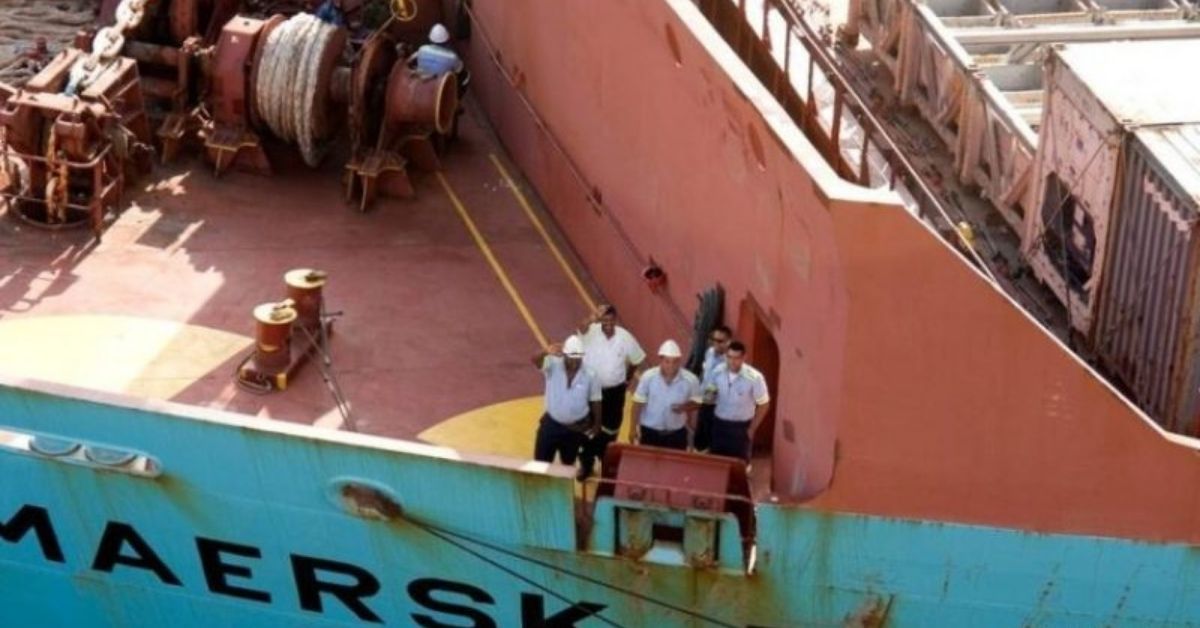
The global trade is functional because of the maritime commercial ecosystem which accounts for 90% of it. The gargantuan merchant ships convey goods ranging from pins to airplane parts and ensure that the supply chain keeps running.
Machines with inbuilt Artificial Intelligence(AI) are replacing the human workforce as technology progresses, but there are still many areas where the human touch is indispensable. The global maritime industry employs around 1.89 million seafarers that operate more than 74,000 merchant ships and the human replacement with the machine in the foreseeable future is out of the question. But the community responsible for keeping the world functional is reevaluating its risk-reward ratio and is seeking other avenues for employment. This has sent shockwaves to the maritime industry which still depends on a substantial labour force and is staring at a dismal and dark future if not course-corrected soon.
The Crisis
Seas and sailors have often been associated with romance and the unwavering spirit of adventure. From Odyesseus’ adventures to the Titanic’s fall, life at sea and those who live it are etched in history and almost accorded a mythological status. But the deification of the seafarers also has a downside: isolation, loneliness, fatigue and depression. But despite the unseen troubles that is part of the job profile, seafaring has attracted many recruits especially from poorer countries, who seek to better their financial conditions sacrificing their mental and physical health. South Asian countries such as Brunei, Malaysia, Indonesia, and the Philippines see a massive number of seafarers lineup for the recruitment processes. The Philippines contributed 4,70,000 people to the marine merchant industry, about one-third of the world’s total according to a 2019 study. It comes as no surprise, as the seafarers from the island nation would, for a few months of work, earn up to ten times more than they would in their country.
Seafarers from the developing world would clock in about 15 hours of work, compared to the European contribution of 10. But it isn’t just the long hours daily that has them reevaluating their contributions.
Almost 25% of the seafaring workforce checked all metrics of depression according to a 2019 study. The percentage is alarming as it is alarmingly higher than other working populations.
In a report published in 2016, it was projected that by 2025 ‘the shipping industry would face a shortfall’. And among the falling prospects, technicians and engineers would be the ones to look elsewhere to deploy their services, thereby depriving the $168.5 billion dollars global shipping industry of fresh technical expertise.
All of the factors were pre-pandemic and not extremely immediate. The Covid-19 pandemic disrupted and disfigured the maritime industry unlike anything else. The pandemic spurred a deep humanitarian crisis that went largely unnoticed.
The Covid-19 crisis shut down borders and people were made stationary. Those on land could afford to be with their loved ones, but the seafarers were marooned on their vessels up to 18 months and faced severe loneliness, depression and trauma. ‘This had been the fate of some 300,000 seafarers abroad their ships, while 1.4 million of the crew on land were unable to work and without an income’. This terrible episode will forever be remembered as the crew-change crisis. The term is derived from the process of relieving the crew on deck with the ones on the ground.
The Way Ahead
The future seems bleak but not dark. Humanity has saved itself from terrible tragedies in the past and can save its members at sea this time too.
The way ahead involves a radical shift in the way the world views its invisible heroes who make life possible for all and to take their welfare more seriously, shipping companies must throw the gauntlet at their old mindsets and value the contribution of their workforce even more.
A positive sign in the direction was seen during the crew-change crisis when, ‘realising the problem, about 800 companies and organizations signed the Neptune Declaration on Seafarer Wellbeing and Crew Change which urged the stakeholders to recognize the seafarers as ‘key workers’ and implement gold standard health protocols, among other points’.
Source : The Maritime Post









