
In a bid to revive the economy from the severe macroeconomic impacts inflicted by the Covid-19 pandemic, Union Budget 2022-23 has quite expectedly been expansionary. The high budgeted deficit for FY23 (6.4 per cent of GDP), despite better-than-expected revenue receipts, suggests that the government has prioritised the urgent imperative of boosting growth over fiscal consolidation.
The Budget lays down several action points envisaging higher growth, with particular emphasis on capital expenditures to boost domestic employment and income. Nevertheless, it has largely failed to focus on foreign trade — a critical engine of economic growth. Barring the announcement to reform the 16-year-old Special Economic Zone (SEZ) Act, there is very little to cheer about in the Budget concerning external trade.
There is little doubt that the much-needed reform of the SEZ Act, 2005 can potentially boost the country’s export competitiveness and investment attractiveness. But the impact of such reform will only show results in the medium to long-term. Focus on budgetary measures to boost foreign trade in the short term was imperative for several reasons.
Net exports
First, among the key components of aggregate demand, the Indian economy has been witnessing a steady decline in the growth of private consumption and investment, even before the pandemic started. These components, which account for above 87 per cent of total aggregate demand, witnessed the sharpest fall during the pandemic period.
The Economic Survey 2021-22 indicates government consumption to grow at 7.6 per cent. The recovery in growth (over 2019-20) in private consumption and investment is expected to be much slower. On the contrary, foreign demand has shown encouraging signs of revival in the last three quarters.
During April-December FY22, merchandise exports recorded a growth of 49.7 per cent to $301.4 billion, compared to the corresponding period in FY21, and 26.5 per cent over FY20, thus exceeding the pre-pandemic levels of growth. With clear indications of a sub-optimal recovery in private consumption and investment, a major impetus is necessary to further boost net exports as a critical engine of growth at this juncture. The Budget missed an opportunity to do so.
Free trade pacts
Second, more than two-fifths of India’s exports are still accounted for by only seven nations. After India walked out of the 16-nation Regional Comprehensive Economic Partnership (RCEP) trade deal in 2019, formulating a conducive foreign trade policy (FTP) to boost exports has become even more critical. Free trade agreements (FTAs) with countries like Australia, the European Union, the UAE, Canada, etc., will not only provide a fillip to our economic interests but also promote our geopolitical objectives.
Although India is currently negotiating FTAs with several such partners, it is yet to finalise one. Under such circumstances, Indian exporters are at a clear disadvantage vis-a-vis other Asian countries, which either became natural beneficiaries from the US-China trade war or have successfully negotiated several broad-based FTAs in quick time, raising their exports significantly. Contrary to expectations, the Budget did not announce any measures to facilitate duty-free market access for its labour-intensive exports, a step deemed as urgent in the current scenario.
Logistics costs
Third, notwithstanding the subdued global economic environment, merchandise trade revived above its pre-pandemic peak in H1FY21. The WTO, in its October 2021 release, also upgraded its forecast for growth in global merchandise trade volume to 10.8 per cent in 2021, and to 4.7 per cent in 2022.
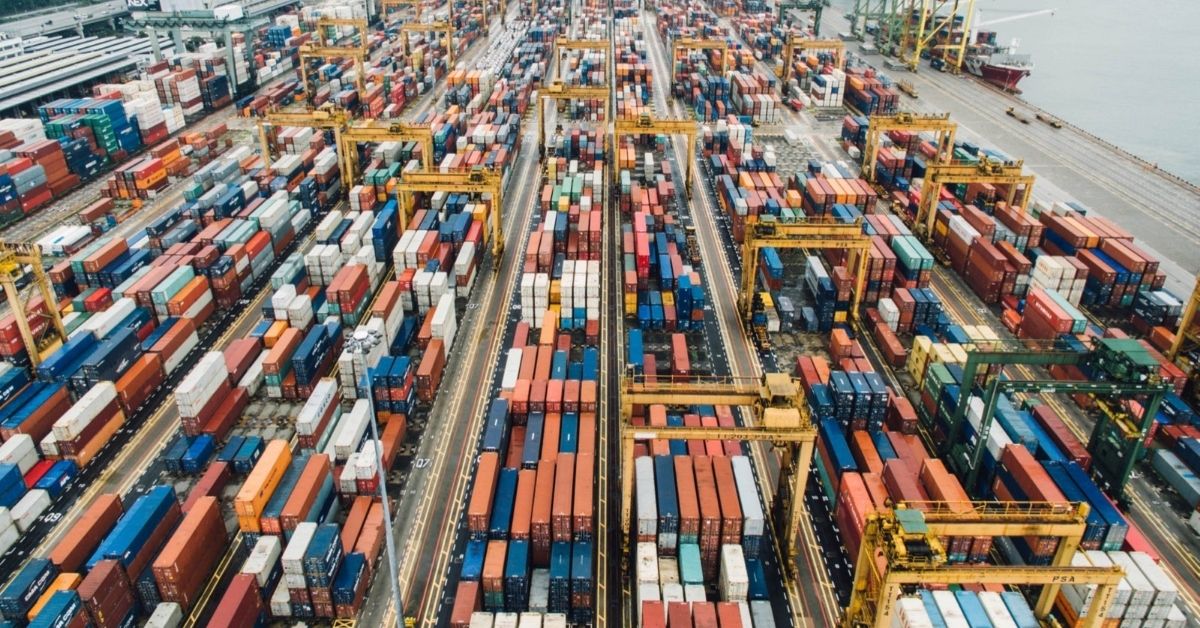
To effectively leverage the emerging opportunities, the Budget should have addressed the downside risks that Indian exporters continue to face in an uncertain global environment. For example, container freight rates have witnessed a marked increase — from $1,290 in November 2019 to $9,800 in January 2022. While such rates are exogenously determined, it would have been prudent for the government to provide some tax support to address the sharply escalating logistics costs.
Albeit having an impact only in the medium to long term, the Budget should have encouraged the manufacturing of shipping containers locally under the production-linked incentive (PLI) scheme and incentivised Indian entities to build world-class shipping lines. Such initiatives could have reduced the heavy dependence on imported containers and foreign shipping lines, saving an estimated $30-40 billion per annum remit on transport services.
Support for MSMEs
Fourth, the high cost of overseas marketing poses substantive challenges for exporters, particularly for an estimated 1.2 lakh MSMEs actively engaged in exports. The support provided under the Market Access Initiative (MAI) of the Ministry of Commerce is a meagre ₹300 crore that can cover export-marketing initiatives of only 5,000 MSMEs.
Given how MSMEs, in particular, have been severely affected by the pandemic, the long-standing demand for budgetary provisions for an Export Development Fund and increased allocations to the Reimbursement of Duties and Taxes on Export Production (RoDTEP) scheme could have been meaningful interventions at this juncture.
To achieve the ambitious target of becoming a $5 trillion economy, India’s FTP must be geared up to achieve $1 trillion exports. Raising exports would however mean that the country’s attitude towards free trade needs to change from the current protectionist stance.
Analysis by Shoumitro Chatterjee and Arvind Subramanian shows that since 2014, there has been a reversal in India’s tariff policy — about 3,200 tariff increases at the HS-6-digit level on MFN imports, and on average a five percentage point rise in average tariff rates. With an estimated 51 per cent import intensity for the manufacturing sector, this surely does not augur well for the competitiveness of Indian exports.
The Budget has clearly sidelined such issues. We can only hope that in the coming months fiscal and trade policies will be redirected and tuned to attain the milestones the government has set for itself.
Nandy is Assistant Professor (Economics), IIM Ranchi, and Sur is Assistant Professor (Economics), Jindal Global Law School, OP Jindal Global University
Source : The Hindu Businessline









