
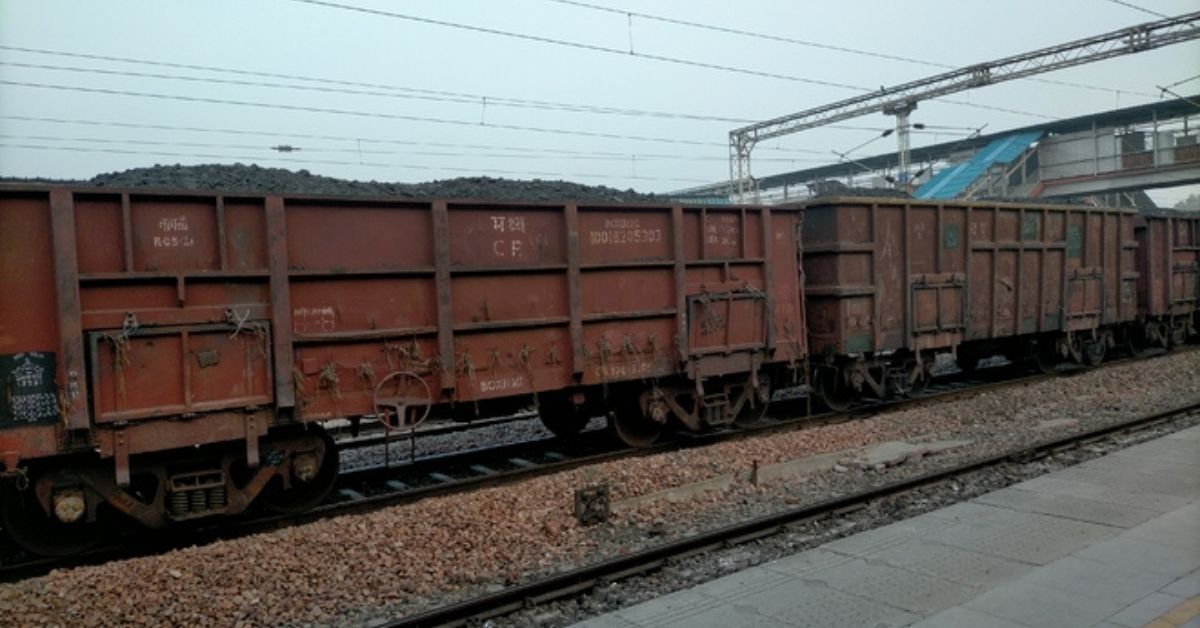
The sleepy Tanzanian port of Mtwara mainly dealt in cashew nuts until late last year. Now it bustles with vessels loading up with coal, as Russia’s invasion of Ukraine drives a worldwide race for the polluting fuel.
Tanzania traditionally exports thermal coal only to neighbouring countries in east Africa; sending it further afield was out of the question, as it required trucking the material more than 600 km from mines in its southwest to Mtwara, the nearest Indian Ocean port.
Europe’s crippling energy crisis has changed all that.
Prices for thermal coal, used to generate electricity, have leapt to record levels as a result of the war, which has led to many European countries losing access to vital supplies of natural gas and coal from their top provider Russia.
Buyers in Europe and beyond are now vying to pay top dollar for coal from often remote mines in places such as Tanzania, Botswana and even potentially Madagascar. The resurgent coal demand, driven by governments trying to wean themselves off Russian energy while keeping a lid on power prices, clashes with climate plans to shift away from the most polluting fossil fuel.
“European players, after the Russian war, are going to any place where there is coal,” Rizwan Ahmed, managing director of coal miner Bluesky Minings said in Dar es Salaam, Tanzania. “They are offering to pay very good prices.”
Commodities trader Cargill has seen a marked rise in coal shipments into Europe in recent months, said Jan Dieleman, president of Cargill’s ocean transportation division, with the company transporting 9 million tonnes of coal globally in the June-August period compared with 7 million a year earlier.
“Europe is competing with other buyers and the alternative is more expensive, which is gas,” said Dieleman. “Europe should be able to source coal and we will see very strong flows into Europe from Colombia, South Africa and even further away.”
Even though the window of opportunity may be short should the geopolitical winds shift, some countries with coal resources see the margins to be gained as too good a chance to miss.
Front-month physical thermal coal at Australia’s Newcastle port – a global benchmark – was trading at $429 a tonne on Sept. 16, just below an all-time high of $483.50 in March and up from around $176/tonne this time last year.
Mtwara has seen 13 vessels load up with coal since November last year when it launched its first-ever coal shipment, according to a port official; the latest, the MV Miss Simona, a bulk carrier with 34,529-tonne capacity, docked last week, loaded up and sailed off to France.
Since the end of June, 57 cargo orders – requests for available vessels – to ship Tanzanian coal have been seen on the spot freight market compared with just two in the same period last year, according to analysis from maritime and commodities data platform Shipfix.
Global seaborne thermal coal imports reached 97.8 million tonnes in July, the highest level on record and up more than 9% year-on-year, an analysis from ship broker Braemar shows. The volume dropped to 89 million tonnes in August, largely due to export disruptions from major producer Australia.
A LAST HURRAH FOR COAL?
Tanzania expects coal exports to double this year to around 696,773 tonnes, the country’s Mining Commission told Reuters, while production is expected to increase by 50% to about 1,364,707 tonnes.
Targeting sizeable tax revenues from this jump in exports, the government is considering building a railway that would link the coal-producing Ruvuma region to Mtwara, said Yahya Semamba, acting executive secretary of the Mining Commission, a government body.
Tanzania-based miner Ruvuma Coal has already exported at least 400,000 tonnes of coal via a trader to countries including the Netherlands, France and India since November, according to trade data reviewed by Reuters.
Coal miners are enjoying unprecedented profit margins in what some see as a last hurrah for an industry facing intense pressure to cut production; with coal at $75 a tonne in late 2020, a coal mine might earn a cash margin of $15/tonne, said Rob West, analyst at consultancy Thunder Said Energy. But as prices hit $400/tonne, the cash margin increased to $235/tonne.
Indeed traders in Europe are willing to pay twice the price quoted by Asian buyers, according to some mine executives such as Bluesky’s Ahmed, who said his company didn’t currently export through Mtwara, but planned to do so, and had received requests from buyers in Germany, Poland and Britain.
Similarly, in landlocked Botswana, selling coal on the seaborne market used to be unthinkable, with most exports going to neighbouring South Africa, Namibia and Zimbabwe.
“Earlier, the logistics would kill us. However, at current prices, we can make this thing work,” said Morné du Plessis, CEO of Botswana-based coal miner Minergy (MIN.BT).
Minergy has exported two shipments of around 30,000 tonnes each from Namibia’s Walvis Bay port, and sent two trains of coal to be exported from Mozambique’s Maputo port.
The island nation of Madagascar, the world’s top exporter of vanilla, could become another newbie on the global coal scene.
“The current prices comfortably support a business case for coal miners in Madagascar to start exporting coal for the first time in the country’s history,” said Prince Nyati, CEO of one of the companies developing a coal project in the country.
However, new entrants will have to ready themselves to pull back or even cease production if the market conditions become unfavourable, Nyati added.
‘COAL HAS BEEN EMBRACED’
High demand and tight supplies of coal have redrawn trade routes, driving up global “deadweight tonne days” for the fossil fuel to record heights in July, according to Braemar research, referring to a measure of shipping levels in terms of fleet usage and the length of voyages.
Thermal coal imports by the European Union from Australia, South Africa and Indonesia – which have traditionally supplied Asian markets – rose more than 11-fold in the four months after Russia invaded Ukraine, data from Indian consultancy Coalmint showed.
The invasion has forced EU nations to move to cut reliance on gas from Russia, which has reduced its vast supplies to the region. The bloc’s ban on Russian coal imports has further increased pressure on electricity generators to find alternative sources of the fuel.
Russia usually provides about 70% of the EU’s thermal coal, according to the Brussels-based think-tank Bruegel, while it typically supplies 40% of the bloc’s natural gas.
European countries have temporarily set aside environmental goals as they seek to stockpile the fuel and reopen mothballed coal plants to prepare for what could be a difficult winter.
“Strong incentives have pushed coal and lignite generation 25% above year-ago levels, despite a whole host of plant closures over the past three years,” analysts at Bank of America said about Europe.
The current ramp-up in thermal coal combustion could put countries on a collision course with ambitious CO2 emissions reduction goals; in the EU, burning more coal will increase CO2 emissions by 1.3% a year if Russian gas supplies are completely halted, according to energy think-tank Ember.
Governments in Europe say this is a temporary change, although that could depend on how long the energy crisis drags on. Germany is delaying planned shutdowns of some coal plants in order to ensure security of power supply.
Minergy, the Botswana coal miner, sees the coal market remaining strong until at least mid-2023, if not longer. It hopes to double its production capacity. “The negative narrative surrounding coal has been abandoned, and coal has been embraced as the go-to energy source in the energy crises arising from the war,” the company said.









