
Compromise is an essential ingredient to any healthy relationship. But things change and individuals’ priorities shift over time. At the point when one, or both, parties feel like the other is preventing them from being themselves, it is probably time to call it quits and move on separately.
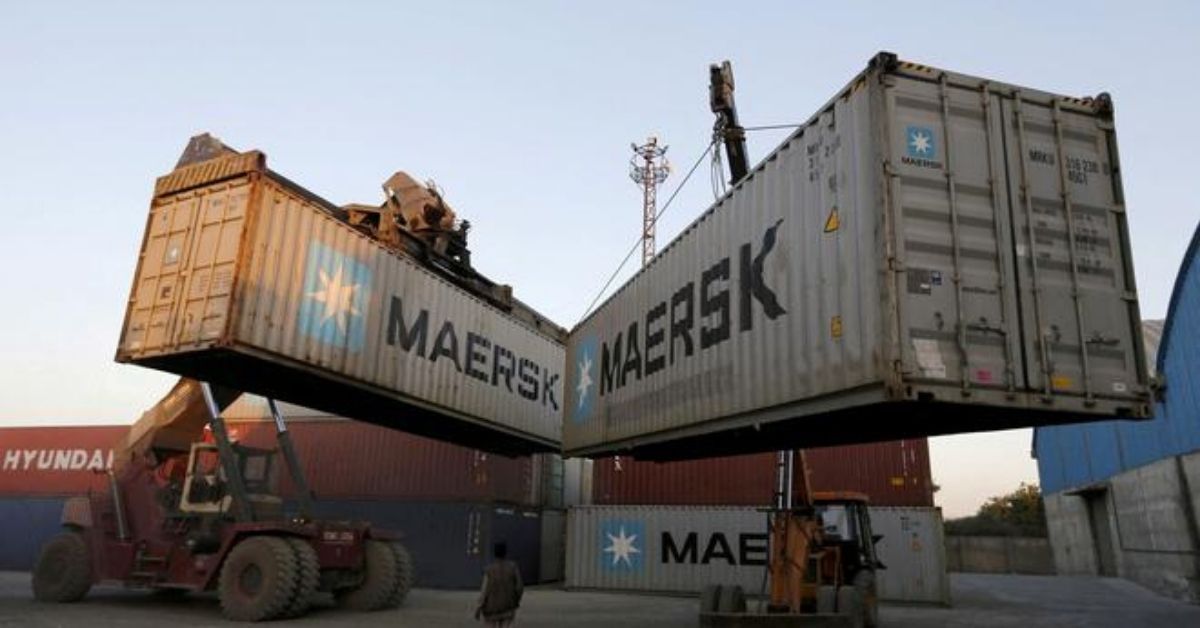
Container shipping’s high-profile divorce between Maersk and MSC in the 2M alliance can be viewed as a classic case of two partners drifting apart since they first hooked up in 2015. There will be no marriage counselling, no reconciliation. Instead, both companies will be free as birds to pursue their own ambitions and strategies, unencumbered by a disgruntled partner.
As we said in our original analysis (Your move, Maersk), MSC had virtually signposted its intentions by hugely increasing its fleet size and developing more non-alliance services, but we were less sure of how Maersk felt about the break-up, or indeed its plans for post-2M life. Would it look for a new alliance to join, or try and go it alone in some fashion?
In conversations with the company, it would appear that this was more of a mutual decision than we had initially speculated. Rather than being the jilted partner, Maersk has for some time been keen to get out of 2M, viewing it as incompatible with the new integrator strategy (see Figure 1), broadcast in late 2018. The lack of autonomy on its network decisions was holding back progress of the masterplan.
2M worked for Maersk in 2015 as the company had many new big ships that it needed help filling, but as the focus has shifted from scale economies towards end-to-end solutions, the company wants to accelerate the strategic vision. To do that, it needs to control its own network and have full ownership of service performance and reliability. It is done with compromises.
Subsequently, we think Maersk will not seek membership of an existing alliance, or try to form a new one. Maersk believes that its integrator model will be more attractive to customers and deliver higher returns for shareholders and that developing a core independent liner backbone will be an essential element of this.
By making no attempt to replicate the 2M network, it will lose some frequency of sailings, if not actual port coverage, but expects that increased control will give higher reliability and visibility that will create value for customers.
The end of 2M is ultimately a story of clashing company strategies, which rather begs the question: which is the right model?
Tim Power, Drewry’s managing director, said that Maersk’s integrator strategy “won’t work” at the recent Marine Money conference. In his opinion it will not deliver superior logistics value to customers than the offer provided by a conventional mix of liner and forwarder/logistics providers, and will not generate higher margins and returns than those achieved by conventional lines.
This personal opinion was based on his past experience of working in both the core liner and logistics arms of P&O Containers and his view that the disciplines of liner and supply chain management are too different to be integrated.
Drewry’s company view is that the strategy can work, but that it is certainly high-risk and full of pitfalls that Maersk will have to overcome.
The main challenge as we see it is that container shipping and logistics have very different operational and commercial imperatives; the latter demanding a level of customer-orientated service hitherto unseen in the liner arena.
The results of the integrator strategy also depends on Maersk successfully integrating multiple, recently-acquired logistics businesses – a hard task for any large corporation.
Notwithstanding the large capital investment, it will be a huge management challenge to align the entire organisation to ensure that Maersk’s customer-facing team is fully versed on all aspects of the service with very clear communication channels. They will need to keep all eyes on the prize without losing focus on any link in the chain. Past attempts to expand the scope of liner operators failed to meet expectations, but new technology offers hope that things might work out better this time around.
It will also need buy-in from customers who might be wary of entrusting their entire supply chain to a single partner, especially one new to the role. Teething problems and short-term disruption should be expected and as such customers will need to feel comfortable entering into closer, longer-term partnerships with Maersk.
If anyone can make it work, it is probably Maersk. Feedback from Drewry’s shipper clients suggest that the brand is highly trusted and seen as a driver of change and product improvement.
We can see it appealing to shippers that have neither the resource or knowledge to build their own supply chain network and would like it handled by a one-stop-shop. Other shippers might see it as an opportunity to gain some leverage with Maersk on the ocean freight, whilst outsourcing some laborious logistics tasks.
It’s not going to be for everyone, but if Maersk can demonstrate that it is the market leader for reliability and customer service it will surely woo more customers. To get there it clearly felt that it has to be master of its own destiny.
If Maersk is right – that being an integrator within an alliance is unworkable – then companies with similar aspirations and in a similar situation, most obviously CMA CGM in the Ocean Alliance, will have to consider a break up of their own.
This marks a significant change to the consensus view that the future of container shipping will involve dominating alliances. Instead, it seems increasingly likely that the big-hitters will pursue single life, with the medium size operators remaining together out of necessity.
Our view
The chances of Maersk succeeding with its integrator model are better than they were in the past, but it’s a high risk move that will ultimately be judged on whether it delivers value for customers and returns for shareholders at the same time. Messaging to both sets on how they will succeed needs to be crystal clear.
Source: Drewry









