
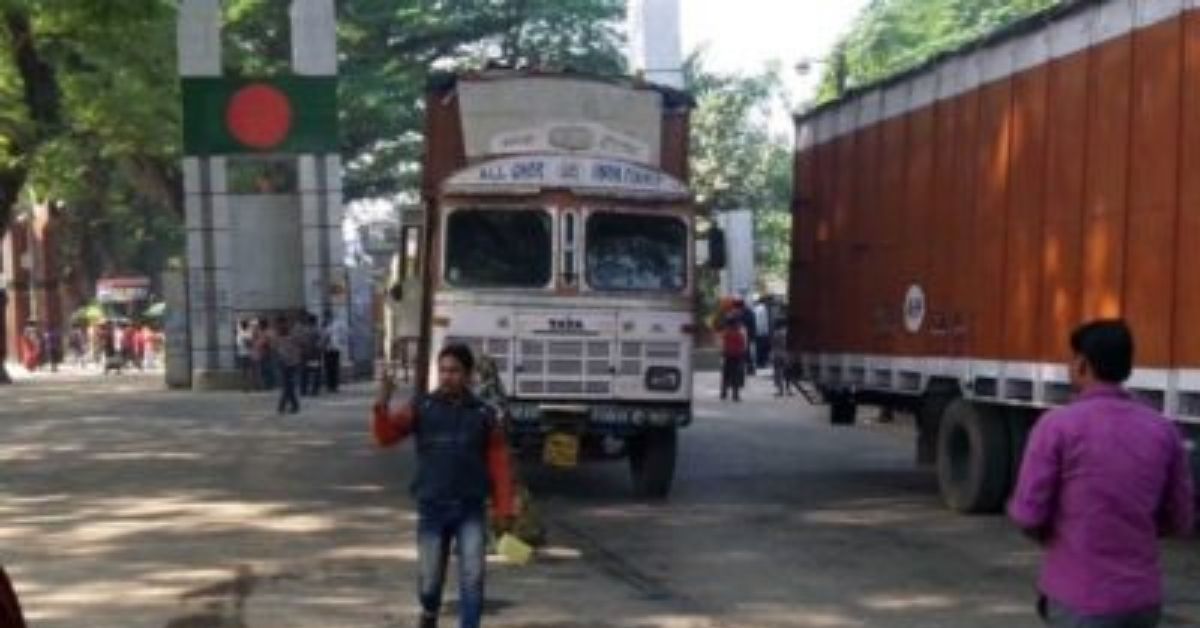
The potential for cross-border trade between India and its neighboring countries — Bangladesh, Bhutan, Nepal, Myanmar, Pakistan, Afghanistan and China — has not been fully realized.
India’s formal cross-border trade with these countries was about US$2.48 billion in 2021 despite the $115 billion trade potential. Only nine of India’s 17 border states are actively engaged in cross-border trade.
This is due to political and security reasons, difficult geographical terrain for connectivity and growing informal trade which has stemmed from open borders in most of the northeastern region.
Borders with neighboring countries are often not properly fenced and guarded, resulting in insurgency and illegal movement of goods and people.
The realities of the northeastern region pose a challenge to India’s open economic policy as conceptualized by the “Act East” policy, which is currently oscillating between the need for basic economic development in the region and security constraints.
Despite these challenges, northeastern states possess the potential to leverage their strong ethnic and cultural ties with neighboring countries to facilitate the trade of locally produced goods via border haats (local markets along borders) and other channels. These channels can create numerous employment opportunities for young people.
The proposed increase in border haats with Bangladesh, construction of new airports and the new PM-DevINE scheme (a regional development initiative) allow northeastern states to break the cycle of dependence on the central government.
northeastern states still face an infrastructural deficit. Poor road connectivity and a lack of bridges remain the biggest infrastructural challenge in the border districts of the state.
Most villages do not even have access to tap water and electricity, and the Border Area Development Program does not have sufficient funds to fulfill the needs of border districts. Most borderlands lack basic amenities and employment opportunities, causing people to leave.
The central government’s flagship initiatives, Make in India and the Self Reliant India Campaign, are efforts to make India a manufacturing hub. Given that vision, regional integration should be at the top of India’s foreign policy agenda, because it would help overcome constraints to the flow of goods, services, capital, people and ideas — all of which are critical to delivering high economic growth.
The central government needs to increase budget allocations for infrastructure and development initiatives in the border areas to provide necessary facilities for local populations.
State governments could establish Export Promotion Zones for border trade through Integrated Check Posts by providing institutional and financial support to local entrepreneurs. They could also initiate an institutional framework at the state level to boost local trade, with designated ministries identifying local challenges and strengths.
The role of sub-regional groupings such as the Bay of Bengal Initiative for Multi-Sectoral Technical Economic Cooperation (BIMSTEC) and the Bangladesh, Bhutan, India, Nepal Initiative in facilitating border trade in India cannot be ignored.
These groupings help reduce trade barriers, harmonize trade policies, develop infrastructure, enhance cooperation and promote regional integration which are essential for facilitating cross-border trade.
BIMSTEC is in line with India’s “Act East” policy, which seeks to foster greater regional cooperation in Southeast Asia. During the 2022 summit, Indian Prime Minister Narendra Modi urged BIMSTEC leaders to transform the group into a means of connectivity, prosperity and security — the three drivers of India’s regional diplomacy.
India considers soft and hard infrastructure connectivity a key priority of its regional foreign policy. New Delhi’s recent initiatives such as the Bangladesh, Bhutan, India, Nepal Initiative Motor Vehicles Agreement, the expansion of cross-border railway linkages with Nepal and Bangladesh, the India-Myanmar–Thailand trilateral highway, efforts to start direct flights between Indian cities and Southeast Asian tourist destinations and the Security and Growth for All in the Region initiatives are all evidence of India’s commitment to this goal.









