
Monday, November 23, 2026
Maritime Gateway
No Result
View All Result
  • Logistics
    • Supply Chain
    • Warehousing
    • Logistics Parks
  • Transport
    • Rail
    • Trucking
    • Multimodal
    • Waterways
  • Global News
    • Americas
    • Asia
    • Europe
    • Middle East
    • Africa
  • Technology
  • More
    • Webinars
    • Reports
    • Newsletters
  • Login
Maritime Gateway
  • Logistics
    • Supply Chain
    • Warehousing
    • Logistics Parks
  • Transport
    • Rail
    • Trucking
    • Multimodal
    • Waterways
  • Global News
    • Americas
    • Asia
    • Europe
    • Middle East
    • Africa
  • Technology
  • More
    • Webinars
    • Reports
    • Newsletters
No Result
View All Result
  • Login
Maritime Gateway
No Result
View All Result

India Out campaign in Bangladesh: Can Dhaka afford to sever trade ties with Delhi?

byKalpana Pandey
April 5, 2024
in Asia, Economy, EXIM, News
Reading Time: 3 mins read

Source: Indian Express

Bangladesh’s location and India’s role in its independence have established the “India factor” as a powerful discourse in its domestic politics. The emergence of an “India Out” campaign on social media that advocates the boycott of Indian products with hashtags such as #IndiaOut, #BoycottIndia comes as a reaction to that.

Bangladesh is expected to become a middle-income country by 2041 while it is on track to graduate from the Least Developed Countries list in 2026. Bangladesh finds itself above average on the parameters of the Human Development Index compared to other South Asian countries.

Can Dhaka afford to sever trade ties with Delhi?

According to the World Bank, Indian exports to Bangladesh were valued around $324 million in 1991. This, interestingly, increased to $868 million in 1996 during the first tenure of BNP. Similarly during its second tenure, in 2001, the export from India was around $1.06 billion, which increased to $1.66 billion in 2006.

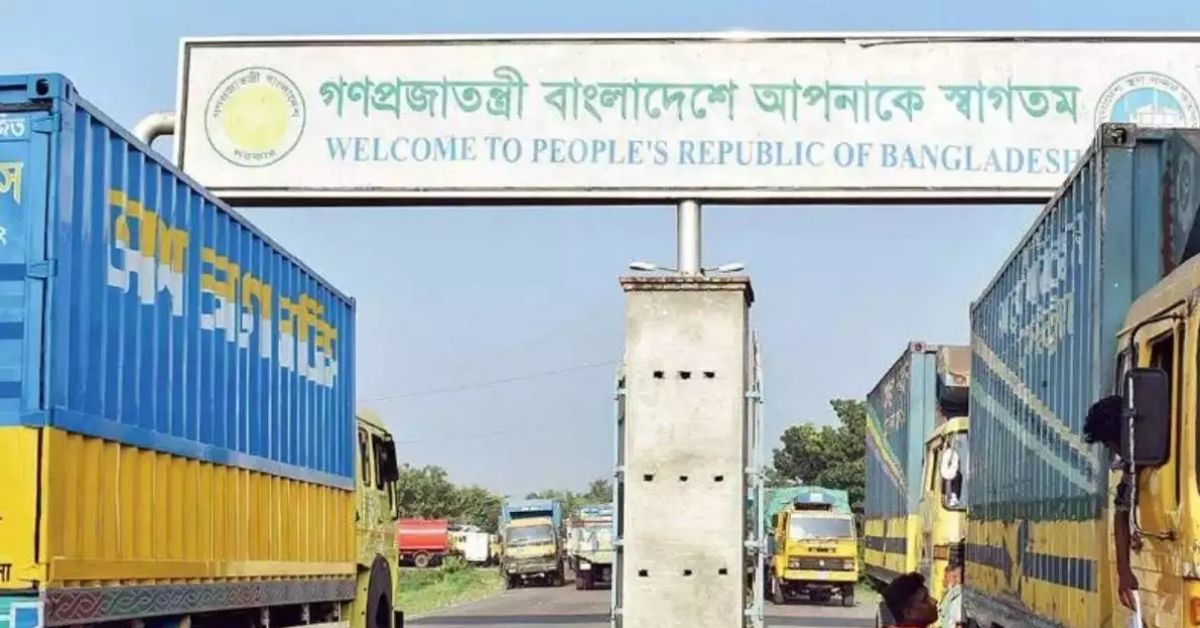
A close economic partnership between India and Bangladesh has been one of the factors behind Bangladesh’s prosperity. India’s proximity to Bangladesh translates into a natural trade advantage. Shared land borders and well-established transportation links facilitate the movement of goods, often at lower costs compared to imports from more distant locations like China. India is Bangladesh’s second-largest import source, with a staggering $13.69 billion worth of goods entering the Bangladeshi market in 2021-22.

A dominant theme in India’s exports to Bangladesh is the supply chain for the textile industry. Bangladesh’s garment manufacturing sector, a key driver of its economic growth, relies heavily on raw materials and intermediate goods from India. In 2022, non-retail pure cotton yarn and raw cotton (20.1 per cent of total import) were among India’s top imports. These materials are transformed into yarn and fabric in Bangladeshi factories before being used to manufacture garments for domestic consumption as well as for exports.

While textiles reign supreme, India also supplies Bangladesh Refined Petroleum which is crucial for powering industries and transportation. Other significant imports include pharmaceuticals, chemicals, and machinery, highlighting the multifaceted nature of this trade relationship. Recently, India exported 50,000 tonnes of onion to Bangladesh ahead of Ramzan, an exception to the export ban on the crop in December 2023. This is apart from essential commodities such as garlic, coconut oil and spices. There have also been instances of informal trade between the two countries, crucial in stabilising inflation in Bangladesh.

India is a major supplier of construction materials to Bangladesh for infrastructure development. The supply of diesel locomotives, double and single-decker buses, steel coaches, highway duty trucks under Indian Government’s Line of Credit had improved transportation, work efficiency and office capacity in Bangladesh. The loss-incurring Bangladesh Road Transport Corporation (BRTC) is turning profit-making with the supply of new tracks from India.

An intensification of the India Out campaign stands to derail all of these as well as the on-going negotiations on the Comprehensive Economic Partnership Agreement (CEPA) between India and Bangladesh. AL leaders, including Prime Minister Sheikh Hasina, have argued that if the boycott campaign is steadfast, even “garam masala, onions, garlic, ginger and all spices that come from India should not be seen in their (BNP leaders’) homes”.

Young and pragmatic

The educated and moderate younger generation of Bangladeshis consider development as the core of political and diplomatic actions. This cohort is keen to be a partner in the process of economic growth and development and is not sceptical of an alliance with India. This generation has given a massive mandate to the AL-led alliance since 2008, giving hope that in the age of globalisation and commercialisation, boycotting of products is an obsolete idea.


Tags: Bangladesh economyexportsIndia Bangladesh Economic PartnershipIndia Bangladesh trade

Kalpana Pandey

The Maritime Gateway Editorial Team delivers trusted news, analysis, and insights on shipping, ports, logistics, supply chains, and global trade, backed by industry expertise and editorial review.

Related Posts

India ship entry rules add salvage and pollution-response checks
Customs

India ship entry rules add salvage and pollution-response checks

October 10, 2026
NCT concession keeps ownership with Bangladesh
Asia

NCT concession keeps ownership with Bangladesh, says shipping minister

October 10, 2026
Major Ports Cargo Traffic Climbs 8% in First Half of FY27
Cargo

Major Ports Cargo Traffic Climbs 8% in First Half of FY27 as Growth Gathers Pace

October 10, 2026
Trichy Dry Port Moves Ahead
Cargo

Trichy Dry Port Moves Ahead as Tamil Nadu Shortlists Sites for Multimodal Logistics Hub

October 10, 2026

Leave a Reply Cancel reply

Your email address will not be published. Required fields are marked *

Popular News

No Content Available
[mc4wp_form]
Next Post
ASA-SNEC highlights urgent attention to Maritime Security in the Red Sea; advocates for the R&D Funding for Net-Zero Transition

ASA-SNEC highlights urgent attention to Maritime Security in the Red Sea; advocates for the R&D Funding for Net-Zero Transition

A modern news portal designed for daily coverage of breaking stories, global events, politics, business, technology, sports, and entertainment. Built to deliver fast, reliable, and engaging journalism across every major news category.
[mc4wp_form]
Browse by Category
  • 2008
  • 2009
  • 2010
  • 2012
  • 2013
  • 2014
  • 2015
  • 2016
  • 2017
  • 2018
  • 2019
  • 2020
  • 2021
  • 2022
  • 2023
  • 2024
  • 2025
  • 2026
  • Africa
  • Air Cargo
  • Americas
  • Articles
  • Asia
  • Bulk Ports
  • Bunkering
  • Business
  • Cargo
  • Container Terminals
  • Containers
  • Customs
  • Digital Dialogues
  • Dry Bulk
  • Economy
  • Entertainment
  • Equipment
  • Europe
  • EXIM
  • Featured
  • Forwarding
  • Global News
  • Government
  • Interviews
  • Lifestyle
  • Liquid Bulk
  • LNG
  • Logistics
  • Logistics Parks
  • Magazines
  • Main Line Operators
  • Middle East
  • Multimodal
  • National
  • News
  • Newsletters
  • NVOCC
  • Policy
  • Politics
  • Ports
  • Project Cargo
  • Rail
  • Recommended
  • Reports
  • Science
  • Shipping
  • Sports
  • Supply Chain
  • Tankers
  • Tech
  • Technology
  • Transport
  • Trending
  • Trucking
  • Uncategorized
  • Warehousing
  • Waterways
  • Webinars
  • World

Site Links

  • Site Admin
  • Log Out
  • Entries Feed
  • Comment Feed

Download Our App

Follow Us

© 2026 JNews – Premium WordPress news & magazine theme by Jegtheme.
  • Terms of Use
  • Privacy Policy
  • Manage Cookies
  • License

Welcome Back!

Login to your account below

Forgotten Password?

Retrieve your password

Please enter your username or email address to reset your password.

Log In
No Result
View All Result
  • Home
  • Politics
  • World
  • Business
  • Science
  • National
  • Entertainment
  • Lifestyle
  • Tech

© 2026 JNews - Premium WordPress news & magazine theme by Jegtheme.






