
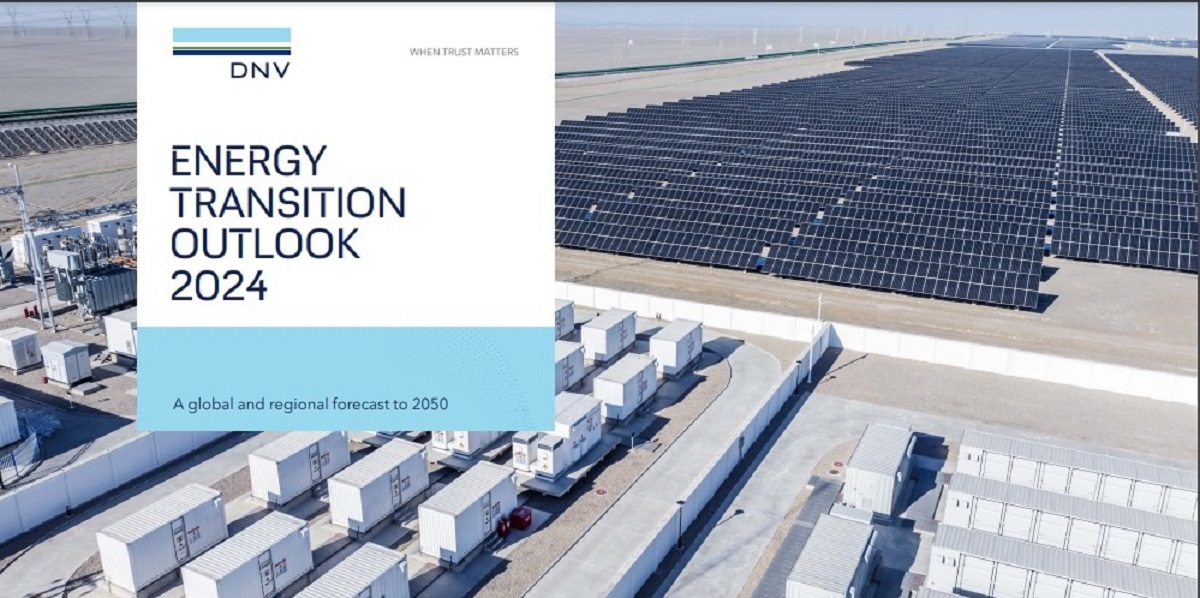
2024 will go down as the year of peak energy emissions, according to DNV’s Energy Transition Outlook. Energy related emissions are at the cusp of a prolonged period of decline for the first time since the industrial revolution. Emissions are set to almost halve by 2050, but this is a long way short of requirements of the Paris Agreement. The Outlook forecasts the planet will warm by 2.2 °C by end of the century.
The peaking of emissions is largely due to plunging costs of solar and batteries which are accelerating the exit of coal from the energy mix and stunting the growth of oil. Annual solar installations increased 80 per cent last year as it beat coal on cost in many regions. Cheaper batteries, which dropped 14 per cent in cost last year, are also making the 24-hour delivery of solar power and electric vehicles more affordable. The uptake of oil was limited as electrical vehicles sales grew by 50 per cent. In China, where both of these trends were especially pronounced, peak gasoline is now in the past.
China is dominating much of the global action on decarbonization at present, particularly in the production and export of clean technology. It accounted for 58 per cent of global solar installations and 63 per cent of new electrical vehicle purchases last year. And whilst it remains the world’s largest consumer of coal and emitter of CO2, its dependence on fossil fuels is set to fall rapidly as it continues to install solar and wind. China is the dominating exporter of green technologies although international tariffs are making their goods more expensive in some territories.
“Solar PV and batteries are driving the energy transition, growing even faster than we previously forecasted.” said Remi Eriksen, Group President and CEO of DNV. “Emissions peaking is a milestone for humanity. But we must now focus on how quickly emissions decline and use the available tools to accelerate the energy transition. Worryingly, our forecasted decline is very far from the trajectory required to meet the Paris Agreement targets. In particular, the hard-to-electrify sectors need a renewed policy push.”
Energy transition progressing despite challenges
The success of solar and batteries is not replicated in the hard-to-abate sectors, where essential technologies are scaling slowly. DNV has revised the long-term forecast for hydrogen and its derivatives down by 20 per cent (from 5 per cent to 4 per cent of final energy demand in 2050) since last year. And although DNV has revised up its carbon capture and storage forecast, only 2 per cent of global emissions will be captured by CCS in 2040 and 6 per cent in 2050. A global carbon price would accelerate the uptake of these technologies.
Wind remains an important driver of the energy transition, contributing to 28% of electricity generation by 2050. In the same timeframe, offshore wind will experience 12% annual growth rate although the current headwinds impacting the industry are weighing on growth.
Despite these challenges, the peaking of emissions is a sign that the energy transition is progressing. The energy mix is moving from a roughly 80/20 mix in favour of fossil fuels today, to one which is split equally between fossil and non-fossil fuels by 2050. In the same timeframe, electricity use will double, which is also at the driver of energy demand only increasing 10 per cent.
“There is a growing mismatch between short term geopolitical and economic priorities versus the need to accelerate the energy transition. There is a compelling green dividend on offer which should give policymakers the courage to not only double down on renewable technologies, but to tackle the expensive and difficult hard-to-electrify sectors with firm resolve,” added Eriksen
The Outlook also examines the impact of artificial intelligence on the energy transition. AI will have a profound impact on many aspects of the energy system, particularly for the transmission and distribution of power. And although data points are currently sparse, DNV does not forecast that the energy footprint of AI will alter the overall direction of the transition. It will account for 2 per cent of electricity demand by 2050.









