
Monday, November 23, 2026
Maritime Gateway
No Result
View All Result
  • Logistics
    • Supply Chain
    • Warehousing
    • Logistics Parks
  • Transport
    • Rail
    • Trucking
    • Multimodal
    • Waterways
  • Global News
    • Americas
    • Asia
    • Europe
    • Middle East
    • Africa
  • Technology
  • More
    • Webinars
    • Reports
    • Newsletters
  • Login
Maritime Gateway
  • Logistics
    • Supply Chain
    • Warehousing
    • Logistics Parks
  • Transport
    • Rail
    • Trucking
    • Multimodal
    • Waterways
  • Global News
    • Americas
    • Asia
    • Europe
    • Middle East
    • Africa
  • Technology
  • More
    • Webinars
    • Reports
    • Newsletters
No Result
View All Result
  • Login
Maritime Gateway
No Result
View All Result

India supports the FoC regulation as MSC ELSA 3 tragedy hits hard

byMaritimegateway
June 12, 2025
in Asia, News, Shipping
Reading Time: 3 mins read
#image_title

#image_title

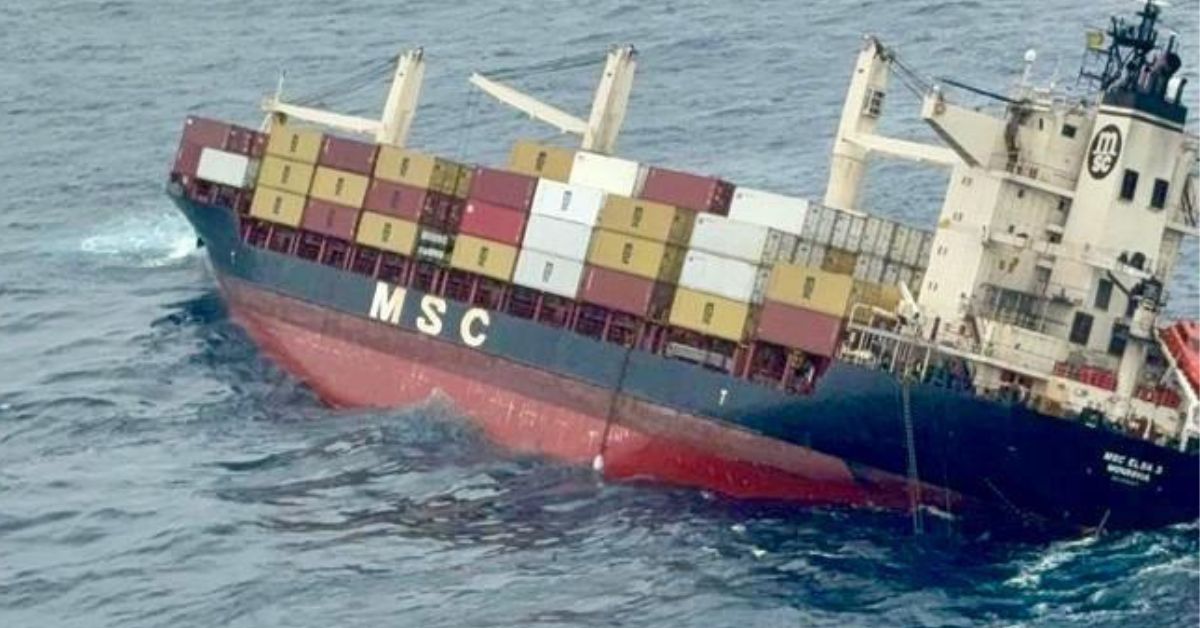
The Liberian-flagged MSC ELSA 3 capsized and sank off the coast of Kerala on May 25. India is targeting ships registered under so-called Flags of Convenience (FoC) regimes, claiming that the country must demand stricter international regulation of FoC regimes through the International Maritime Organization (IMO) in order to hold them responsible.

India’s reliance on ships registered in FoC regimes for over 97 per cent of its export-import (EXIM) trade has quietly but alarmingly evolved into a critical vulnerability. It is a hidden risk in India’s maritime trade due to our weak leverage over FoC vessels.

The FoC vessels, typically registered in jurisdictions such as Liberia, Panama, and the Marshall Islands, promise cost-efficiency and operational flexibility. But, behind this apparent commercial advantage lies a systemic erosion of regulatory oversight, accountability, and maritime sovereignty. The recent MSC ELSA 3 disaster off the Kerala coast offers a chilling illustration of the dangers embedded in this dependence.

To be sure, FoC registries are widely used in global shipping, accounting for nearly 76 per cent of the world’s merchant fleet by deadweight tonnage or DWT. These registries typically offer lax regulatory environments, permitting shipowners to circumvent stringent labour laws, environmental obligations, and safety protocols.

A vessel owned in one country, operated from another, and flagged in a third, with little to no regulatory coherence between them, is increasingly the norm. India, which depends on such ships for an overwhelming majority of its international trade, has little say in their operation or safety standards.

When things go wrong, as it did with the MSC ELSA 3, the costs are borne not by the flag states, but by coastal nations. The Liberian-flagged ELSA 3 had a murky record: multiple name changes, a long list of port state deficiencies, and a cargo manifest including 12 containers of calcium carbide, a highly dangerous substance.

After the vessel capsized, Liberia, the flag state, refused to participate in the investigation. While technically permissible under the United Nations Convention on the Law of the Sea (UNCLOS), such non-participation exposes the glaring shortcomings of the FoC model.

Such a lopsided burden-sharing structure is deeply problematic for a country like India, which is aspiring to be a global maritime hub and a responsible coastal state. FoC ships are frequently crewed by underpaid, undertrained personnel from multiple nationalities, making enforcement of labour standards and safety training extremely difficult.

Several reports have flagged discrepancies in crew competency, falsified certifications, and weak safety cultures aboard such ships. Indian Port State Control inspections frequently cite such issues, but with limited capacity and jurisdiction, enforcement is often superficial.

India’s dependence on FoC ships also means a diminished role for its domestic shipping industry, weakening the strategic and economic resilience of the nation. At a time when geopolitical and climate risks are rising, this lack of sovereign control over vessels operating on national trade routes is a strategic liability.

India must call for tighter international regulation of FoC regimes through the IMO and allied maritime conventions. The current overdependence on FoC ships may appear economically expedient, but it is strategically reckless and environmentally dangerous.


Tags: FOCIndiaRegulationShipping News

Maritimegateway

The Maritime Gateway Editorial Team delivers trusted news, analysis, and insights on shipping, ports, logistics, supply chains, and global trade, backed by industry expertise and editorial review.

Related Posts

India ship entry rules add salvage and pollution-response checks
Customs

India ship entry rules add salvage and pollution-response checks

October 10, 2026
NCT concession keeps ownership with Bangladesh
Asia

NCT concession keeps ownership with Bangladesh, says shipping minister

October 10, 2026
Major Ports Cargo Traffic Climbs 8% in First Half of FY27
Cargo

Major Ports Cargo Traffic Climbs 8% in First Half of FY27 as Growth Gathers Pace

October 10, 2026
Trichy Dry Port Moves Ahead
Cargo

Trichy Dry Port Moves Ahead as Tamil Nadu Shortlists Sites for Multimodal Logistics Hub

October 10, 2026

Leave a Reply Cancel reply

Your email address will not be published. Required fields are marked *

Popular News

No Content Available
[mc4wp_form]
Next Post
GRSE signs contract with GSI to build coastal research vessels

GRSE signs contract with GSI to build coastal research vessels

A modern news portal designed for daily coverage of breaking stories, global events, politics, business, technology, sports, and entertainment. Built to deliver fast, reliable, and engaging journalism across every major news category.
[mc4wp_form]
Browse by Category
  • 2008
  • 2009
  • 2010
  • 2012
  • 2013
  • 2014
  • 2015
  • 2016
  • 2017
  • 2018
  • 2019
  • 2020
  • 2021
  • 2022
  • 2023
  • 2024
  • 2025
  • 2026
  • Africa
  • Air Cargo
  • Americas
  • Articles
  • Asia
  • Bulk Ports
  • Bunkering
  • Business
  • Cargo
  • Container Terminals
  • Containers
  • Customs
  • Digital Dialogues
  • Dry Bulk
  • Economy
  • Entertainment
  • Equipment
  • Europe
  • EXIM
  • Featured
  • Forwarding
  • Global News
  • Government
  • Interviews
  • Lifestyle
  • Liquid Bulk
  • LNG
  • Logistics
  • Logistics Parks
  • Magazines
  • Main Line Operators
  • Middle East
  • Multimodal
  • National
  • News
  • Newsletters
  • NVOCC
  • Policy
  • Politics
  • Ports
  • Project Cargo
  • Rail
  • Recommended
  • Reports
  • Science
  • Shipping
  • Sports
  • Supply Chain
  • Tankers
  • Tech
  • Technology
  • Transport
  • Trending
  • Trucking
  • Uncategorized
  • Warehousing
  • Waterways
  • Webinars
  • World

Site Links

  • Site Admin
  • Log Out
  • Entries Feed
  • Comment Feed

Download Our App

Follow Us

© 2026 JNews – Premium WordPress news & magazine theme by Jegtheme.
  • Terms of Use
  • Privacy Policy
  • Manage Cookies
  • License

Welcome Back!

Login to your account below

Forgotten Password?

Retrieve your password

Please enter your username or email address to reset your password.

Log In
No Result
View All Result
  • Home
  • Politics
  • World
  • Business
  • Science
  • National
  • Entertainment
  • Lifestyle
  • Tech

© 2026 JNews - Premium WordPress news & magazine theme by Jegtheme.






