
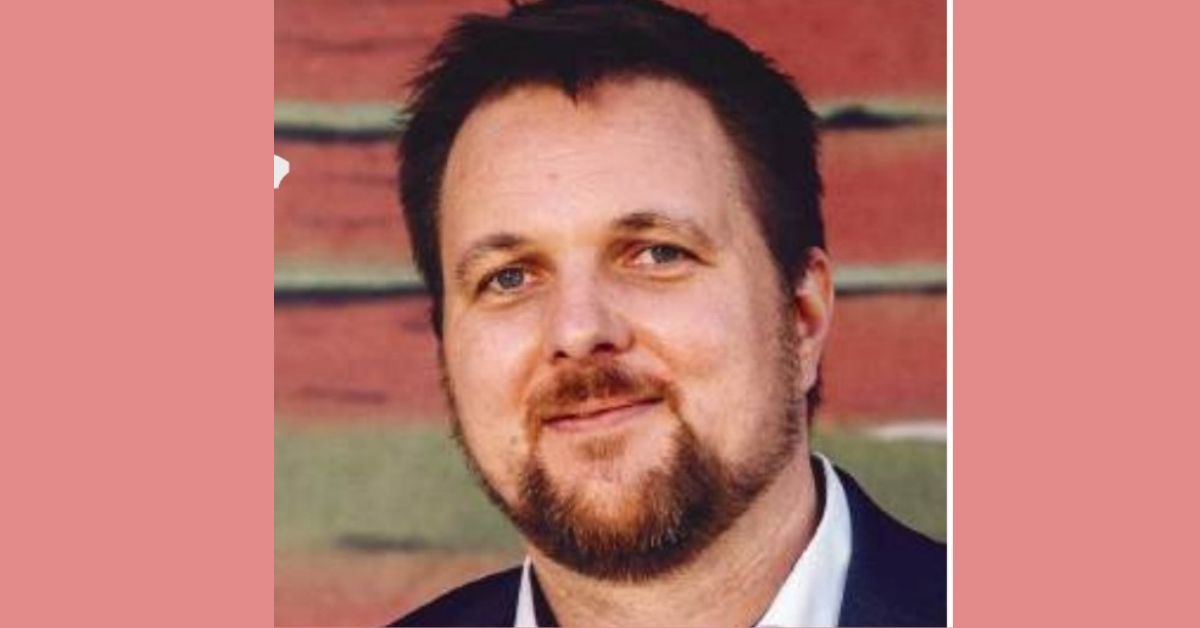
The future of zero-emission and more autonomous vessels is arriving in careful, deliberate steps. According to Pascal Göllnitz, who leads the Integrated Bridge Systems product line at Sperry Marine, the transition is happening, but not in a sudden leap. It is evolving through a series of trust building stages that keep mariners firmly at the center. “It will be a stepwise evolution,” he says. “The human remains at the center today. We build automation that assists mariners and earns their trust. As confidence grows, we move to higher levels of automation and ultimately to selective autonomy where it clearly adds safety and efficiency value.”
For Pascal, navigation systems and bridge architecture are the heart of that transformation. Better sensors are providing sharper situational awareness around the vessel, but what truly unlocks capability is how those inputs are fused and presented. “Navigation systems turn raw data into decisions,” he notes. “Our design principle is a modular, upgradable bridge so owners can add capabilities over time without ripping and replacing. Standardized interfaces are fundamental, and we are actively contributing to those standards.” Framing the future interaction between mariners and marine technology ship is the industry’s move toward the S-100 universal hydrographic data model. Pascal and bridge architecture are the heart of that transformation. Better sensors are providing sharper situational awareness around the vessel, but what truly unlocks capability is how those inputs are fused and presented. “Navigation systems turn raw data into decisions,” he notes. “Our design principle is a modular, upgradable bridge so owners can add capabilities over time without ripping and replacing. Standardized interfaces are fundamental, and we are actively contributing to those standards.” Framing the future interaction between mariners and marine technology ship is the industry’s move toward the S-100 universal hydrographic data model. Pascal design, with a platform that can accept new tech and new rules over time,” he says. “We could deliver because we own the critical IP end to end — radar, sensors, gyros, autopilot and steering — and we package it in a modular bridge system. As technology and regulation evolve, the ship can evolve with them.” Although hydrogen brings the largest emissions reductions in these vessels, Pascal points out that the bridge has a significant role in operational efficiency. “The IBS contributes by optimising routes and speed profiles and by making those tools easy to adopt. We partner closely on voyage and route optimization so skippers can realize the gains every day.”
A recurring theme in Pascal’s approach is open architecture. With autonomy standards still being shaped globally, Sperry Marine has chosen to build an ecosystem that welcomes future technologies rather than locking owners into fixed structures. “We prioritize structured data exchange and open interfaces from day one,” he says. “We are active in collaborative programs, including Project Aurora with Fraunhofer CML, authorities and customers. It is important to help shape scalable standards, not just wait for them.” One of the newest systems emerging from Sperry Marine’s innovation pipeline is the NAVPILOT 4500N.
Pascal describes it as a versatile evolution. “It is our latest autopilot and track control system, designed for everything from conventional cargo ships to highspeed craft. It uses energy-efficient control algorithms and integrates deeply with the bridge, including joystick control. Operators can switch seamlessly between manual steering, joystick and track control and even create temporary routes on the fly.” With higher digitalisation comes higher cyber risk, and Pascal stresses that resilience is built into Sperry Marine’s systems from the start. “Cyber is in our DNA,” he says. “Our Secure Maritime Gateway is engineered to meet or exceed recognized IMO and IEC frameworks. Our engineers also help shape those standards, so the hardening measures are native, not bolted on after the fact.” Another fast-changing area is camera-based situational awareness. Pascal sees adoption accelerating rapidly.
“We are seeing strong adoption of 360-degree bird’s-eye camera systems. On very large container vessels, where full visibility from bridge-wings visibility can require a 20-meter run, these systems deliver a complete view directly from the conning position and it enhances berthing safety by improving distance awareness, and even allows live verification of tug operations.” He recalls a recent example in which an owner added an ORCA AI camera system late in the project. “Because our platform is open, we integrated it into the existing displays instead of adding extra screens. The crew can now toggle between radar, ECDIS, alarms and camera views on the same interface.” Asked what the Bridge of 2030 will look like, Pascal describes something that is more connected and more adaptive. “Screens will still exist, but the human machine interface becomes more flexible and more contextual. The ship-shore data loop becomes continuous. The bridge will present more information, but more intelligently, reducing cognitive load while expanding capability.” Sperry Marine is also expanding its work in India through local integration partners who interface with Cochin Shipyard. Pascal calls this a strong model. “It ensures local execution with global product support. As projects scale from pilot to series, that approach is very effective.” As the conversation draws to a close, Pascal reflects on how owners should think about newbuilds in the coming years. He places special emphasis on radar performance, future-ready ECDIS and integrated awareness and control, but he returns repeatedly to the importance of trust and gradual transition. His final thought captures this philosophy well. “Autonomy is reinforcement first. Build trust with crews, prove safety and efficiency, then scale to higher autonomy where it makes operational sense. That is how we unlock value without losing the mariner’s expertise at the core.”









