Monday, November 23, 2026
Maritime Gateway
No Result
View All Result
  • Logistics
    • Supply Chain
    • Warehousing
    • Logistics Parks
  • Transport
    • Rail
    • Trucking
    • Multimodal
    • Waterways
  • Global News
    • Americas
    • Asia
    • Europe
    • Middle East
    • Africa
  • Technology
  • More
    • Webinars
    • Reports
    • Newsletters
  • Login
Maritime Gateway
  • Logistics
    • Supply Chain
    • Warehousing
    • Logistics Parks
  • Transport
    • Rail
    • Trucking
    • Multimodal
    • Waterways
  • Global News
    • Americas
    • Asia
    • Europe
    • Middle East
    • Africa
  • Technology
  • More
    • Webinars
    • Reports
    • Newsletters
No Result
View All Result
  • Login
Maritime Gateway
No Result
View All Result

Vessel Congestion at Asian Ports as Kamarajar Holds 5,711 Stranded Export Vehicles

byMaritimegateway
September 25, 2026
in Global News, News, Ports
Reading Time: 2 mins read

The closure of the Strait of Hormuz has set off a cascading chain of congestion effects across Asia’s major container ports, with vessel bunching and extended waiting times spreading from the Persian Gulf outward to key transhipment and gateway hubs including Singapore, Shanghai, and Busan — even as the direct impact zone remains the Gulf itself.
According to BIMCO Chief Shipping Analyst Niels Rasmussen, approximately 130 container ships representing around 1.5 per cent of global fleet capacity have been stranded in the Gulf since the onset of attacks on February 28. The suspension of Hormuz transits has effectively immobilised nearly 3 per cent of global container volumes, translating into a direct impact on about 5 per cent of global ship demand — a figure that captures both the stranded vessels and the knock-on effects of schedule disruption, repositioning delays, and missed connections across the wider network.
Asian Hub Ports Under Pressure
The vessel congestion rippling outward from the Gulf is creating real operational strain at Asian hub ports. Ships diverted from Gulf routes, delayed in completing Gulf voyages, or waiting for updated routing instructions are creating vessel bunching at Singapore, Shanghai, Busan, and Colombo — ports that ordinarily manage tight schedules with minimal slack. Longer dwell times at these hubs are stretching yard capacity, increasing container handling costs, and generating the kind of systemic schedule unreliability that multiplies costs across entire supply chains.
COSCO Shipping Lines’ decision to resume accepting dry container bookings from Gulf region shippers this week provided a partial relief signal, with the Chinese carrier reopening booking channels that had been suspended during the height of the crisis. Yang Ming has simultaneously updated routing on its GS2 service to account for Middle East operational constraints, while Maersk has highlighted the growing food security pressures facing Middle East markets dependent on imported grain, edible oils, and processed goods — a reminder that the human cost of supply chain disruption extends well beyond commercial logistics.
Kamarajar Port: 5,711 Export Vehicles and Counting
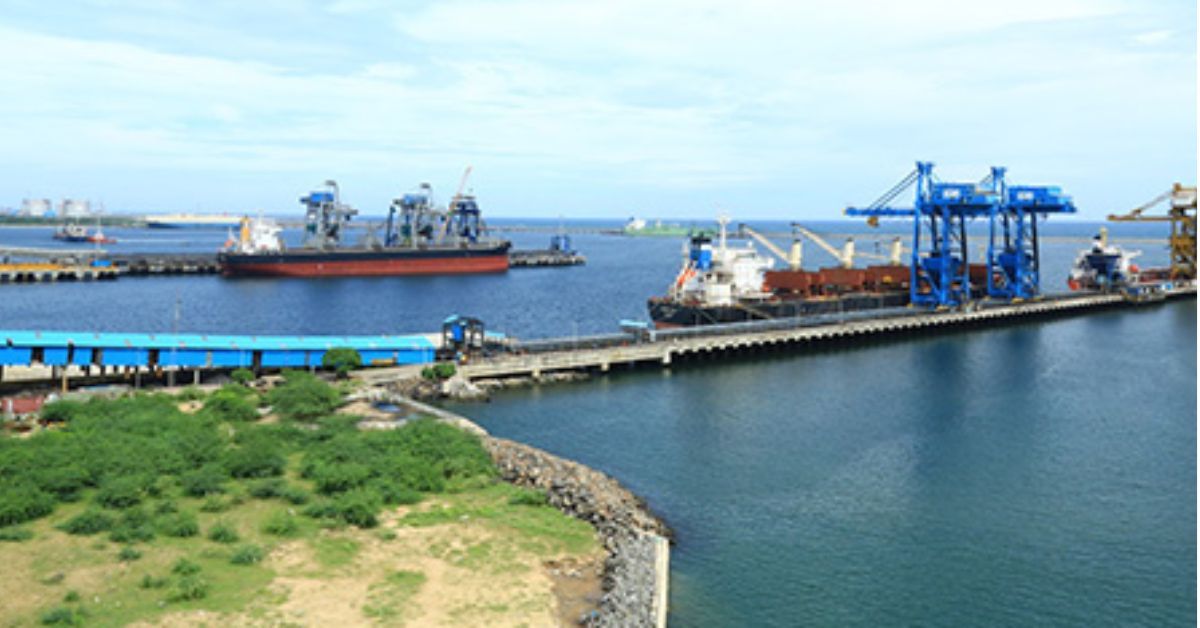
The automotive export sector is among the most visibly affected by the Hormuz disruption, and Kamarajar Port in Tamil Nadu has become a focal point for the crisis in India’s vehicle export supply chain. The port has received 5,711 export vehicles that cannot be despatched to Gulf destinations due to suspended shipping services, and has earmarked approximately 100,000 square metres of storage space to manage the overflow. Capacity is currently being created for nearly 7,000 transhipment vehicles, reflecting the scale of the backup in India’s automobile export pipeline.
DBGT Records First 100% Transhipment Call
In a silver lining, Dakshin Bharat Gateway Terminal (DBGT) in Tamil Nadu recorded its first-ever 100 per cent transhipment vessel call this week, with the MSC Krystal berthing on March 26 to handle approximately 1,307 TEUs of pure transhipment containers. DBGT has been actively facilitating the movement of crisis-affected and stranded cargo, positioning itself as an alternative routing hub during the disruption. The milestone highlights how India’s newer, smaller terminals are finding commercial opportunity in the operational gaps created by the Gulf crisis.


Tags: hormuz straitKamarajar portvessel congestion

Maritimegateway

The Maritime Gateway Editorial Team delivers trusted news, analysis, and insights on shipping, ports, logistics, supply chains, and global trade, backed by industry expertise and editorial review.

Related Posts

India ship entry rules add salvage and pollution-response checks
Customs

India ship entry rules add salvage and pollution-response checks

October 10, 2026
NCT concession keeps ownership with Bangladesh
Asia

NCT concession keeps ownership with Bangladesh, says shipping minister

October 10, 2026
Major Ports Cargo Traffic Climbs 8% in First Half of FY27
Cargo

Major Ports Cargo Traffic Climbs 8% in First Half of FY27 as Growth Gathers Pace

October 10, 2026
Trichy Dry Port Moves Ahead
Cargo

Trichy Dry Port Moves Ahead as Tamil Nadu Shortlists Sites for Multimodal Logistics Hub

October 10, 2026

Leave a Reply Cancel reply

Your email address will not be published. Required fields are marked *

Popular News

No Content Available
[mc4wp_form]
Next Post
India Fast-Tracks Energy Import Deals Amid Middle East Supply Crunch

India Fast-Tracks Energy Import Deals Amid Middle East Supply Crunch

A modern news portal designed for daily coverage of breaking stories, global events, politics, business, technology, sports, and entertainment. Built to deliver fast, reliable, and engaging journalism across every major news category.
[mc4wp_form]
Browse by Category
  • 2008
  • 2009
  • 2010
  • 2012
  • 2013
  • 2014
  • 2015
  • 2016
  • 2017
  • 2018
  • 2019
  • 2020
  • 2021
  • 2022
  • 2023
  • 2024
  • 2025
  • 2026
  • Africa
  • Air Cargo
  • Americas
  • Articles
  • Asia
  • Bulk Ports
  • Bunkering
  • Business
  • Cargo
  • Container Terminals
  • Containers
  • Customs
  • Digital Dialogues
  • Dry Bulk
  • Economy
  • Entertainment
  • Equipment
  • Europe
  • EXIM
  • Featured
  • Forwarding
  • Global News
  • Government
  • Interviews
  • Lifestyle
  • Liquid Bulk
  • LNG
  • Logistics
  • Logistics Parks
  • Magazines
  • Main Line Operators
  • Middle East
  • Multimodal
  • National
  • News
  • Newsletters
  • NVOCC
  • Policy
  • Politics
  • Ports
  • Project Cargo
  • Rail
  • Recommended
  • Reports
  • Science
  • Shipping
  • Sports
  • Supply Chain
  • Tankers
  • Tech
  • Technology
  • Transport
  • Trending
  • Trucking
  • Uncategorized
  • Warehousing
  • Waterways
  • Webinars
  • World

Site Links

  • Site Admin
  • Log Out
  • Entries Feed
  • Comment Feed

Download Our App

Follow Us

© 2026 JNews – Premium WordPress news & magazine theme by Jegtheme.
  • Terms of Use
  • Privacy Policy
  • Manage Cookies
  • License

Welcome Back!

Login to your account below

Forgotten Password?

Retrieve your password

Please enter your username or email address to reset your password.

Log In
No Result
View All Result
  • Home
  • Politics
  • World
  • Business
  • Science
  • National
  • Entertainment
  • Lifestyle
  • Tech

© 2026 JNews - Premium WordPress news & magazine theme by Jegtheme.







