
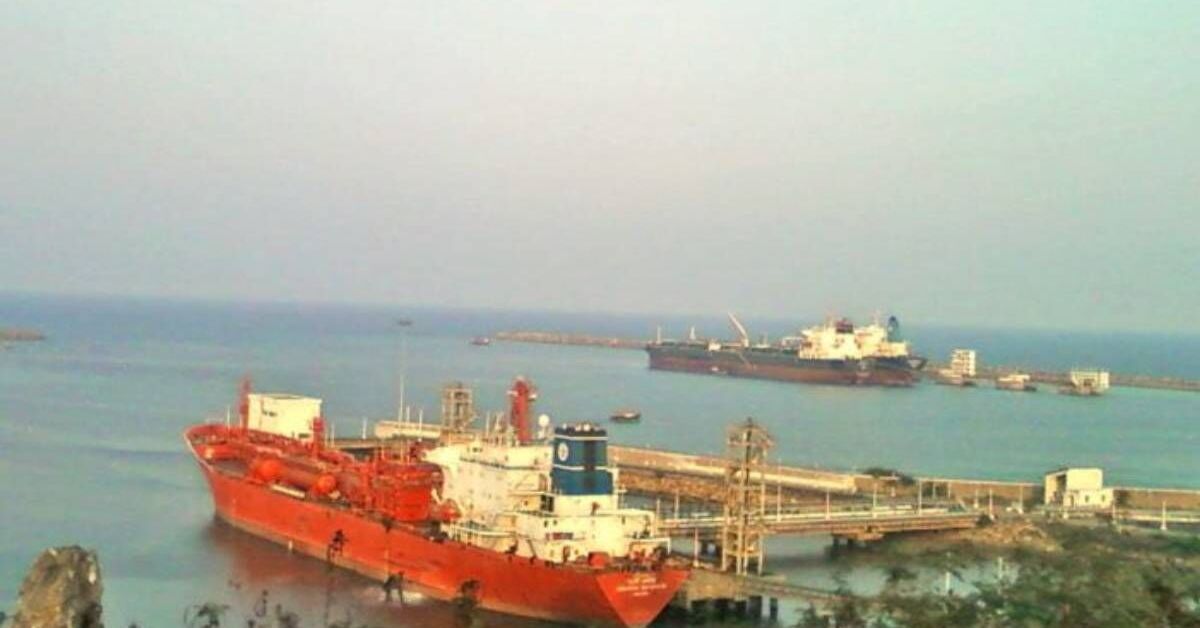
The Andhra Pradesh government is moving ahead with plans to relocate dust-generating bulk cargo operations from Visakhapatnam Port to the upcoming Mulapeta Greenfield Port, in a phased transition aimed at cutting urban pollution and boosting the new port’s viability.
Why is Visakhapatnam shifting bulk cargo to Mulapeta?
Minister for Investments and Infrastructure BC Janardhan Reddy said the shift aligns with Chief Minister N Chandrababu Naidu’s push to position Visakhapatnam as a clean, eco-friendly hub for IT and investment. Coal, minerals and other bulk commodities currently handled within Visakhapatnam Port Authority’s (VPA) urban limits will be redirected to Mulapeta, easing the pollution burden on residents while giving the greenfield port assured cargo volumes from the day it becomes operational.
Visakhapatnam pollution control port policy
According to the minister, moving bulk operations out of Visakhapatnam will also ease congestion at the existing port, cut vessel turnaround times, reduce demurrage costs for shipping lines, and spur industrial growth in the Mulapeta region. The move forms part of the state’s broader policy to keep Visakhapatnam’s port limits free of dust-heavy cargo handling.
What is the Mulapeta Greenfield Port SPV equity stake?
As part of the arrangement, VPA has proposed taking a 49-50 percent equity stake in the Mulapeta Port Special Purpose Vehicle (SPV), a move that would tie the two ports closely together from the outset.
Mulapeta Port berth allocation Phase 1 Phase 2
The port authority has also sought two berths each in Phase 1 and Phase 2 of Mulapeta Port, on a nomination or Right of First Refusal basis, along with a fair valuation of the salt lands being handed over to the SPV.
Andhra Pradesh Group of Ministers port projects 2026 A Group of Ministers, comprising Finance Minister Payyavula Keshav, Investment Minister BC Janardhan Reddy and Tourism Minister Kandula Durgesh, will review VPA’s proposals. The panel, earlier tasked with evaluating the Ramayapatnam Port project, will get support from senior state officials before recommendations go to the cabinet for final approval.










The proposal to shift dry bulk cargo operations from Visakhapatnam Port Authority (VPA) to Mulapeta Greenfield Port is a strategic policy decision that requires a comprehensive technical, commercial, environmental, and legal assessment. While reducing pollution in Visakhapatnam is a legitimate objective, relocating cargo should not be viewed as the primary solution to environmental concerns.
Modern ports across the world successfully handle dry bulk cargo within urban environments by adopting advanced pollution control measures and continuous environmental monitoring.
Therefore, the emphasis should be on eliminating pollution at source through technology, rather than merely transferring it to another location.
Another critical aspect is that VPA today directly operates only a limited number of cargo handling facilities. Most dry bulk terminals are developed and operated by PPP concessionaires or O&M operators, who have invested significant capital based on long-term concession agreements and projected cargo volumes. Any policy-driven diversion of cargo could have contractual, financial, and legal implications, including compensation or recovery of investments.
The present dry bulk cargo volumes handled at VPA are substantial. It is unlikely that Mulapeta, in its initial years of operation, will possess the infrastructure, rail connectivity, storage facilities, and cargo handling capacity required to absorb the entire volume. Consequently, a significant portion of dry bulk cargo will continue to be handled at Visakhapatnam Port, making investments in advanced environmental mitigation technologies at VPA equally essential.
Further, rail logistics from Mulapeta are likely to be more expensive than the established and efficient rail network serving Visakhapatnam Port, at least until equivalent infrastructure is developed. Increased logistics costs could reduce the competitiveness of industries dependent on bulk cargo movement.
A more sustainable approach would be to adopt a complementary twin-port strategy, where Visakhapatnam Port is modernized with world-class green bulk handling technologies while Mulapeta is developed to cater to future cargo growth, industrial expansion, and additional capacity requirements. This would ensure environmental sustainability, protect existing investments, honour contractual obligations, and enhance Andhra Pradesh’s long-term maritime competitiveness.
This is my perspective as a maritime infrastructure professional. I welcome constructive views from industry experts, policymakers, and fellow maritime professionals.
If someone refer to Chennai -Ennore Model; tyhe comparison is relevant because the Chennai–Ennore transition is often cited as a precedent. However, there are important differences that should be highlighted.
1.Ennore (Kamarajar Port) was conceived from the outset as a satellite bulk port for Chennai. The two ports complement each other within the same metropolitan logistics ecosystem.
2.Mulapeta is over 120 km from Visakhapatnam, making it a fundamentally different logistics proposition. Rail haulage, turnaround time, and inland transportation costs require detailed evaluation.
3.The present dry bulk cargo volumes handled at VPA are substantial. It is unlikely that Mulapeta can immediately absorb the entire volume. Consequently, a significant portion of dry bulk cargo will continue to be handled at VPA for the foreseeable future.
4.Unlike the Chennai–Ennore model, VPA has several PPP-operated and O&M bulk terminals developed based on long-term concession agreements and projected cargo volumes. Any policy-driven diversion of cargo may have contractual and financial implications.