
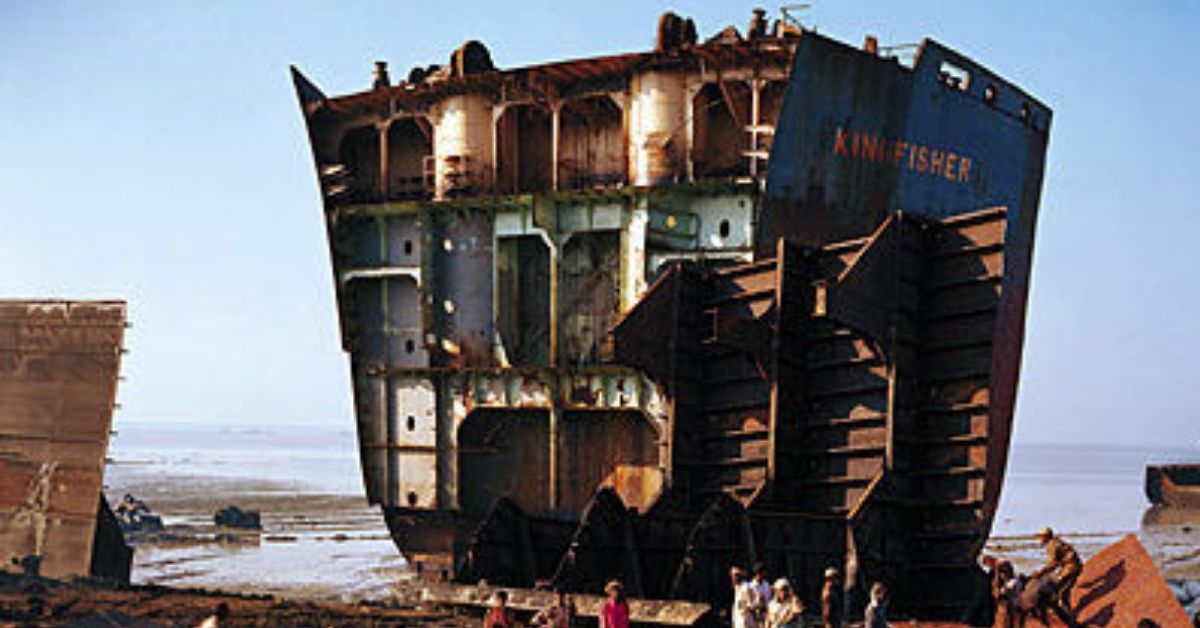
In 2021, India set an ambitious target to double its ship recycling capacity by 2024, with the aim of generating 150,000 jobs and increasing its ship recycling market share from 30 percent to 50 percent. To support this goal, India passed the Recycling of Ships Act and acceded to the Hong Kong International Convention, which will make around 90 yards at Alang compliant with the Convention. In addition, Indian Prime Minister Narendra Modi unveiled a policy for scrapping cars and vehicles, with the recycling center located in Alang, Bhavnagar, where ships are also being recycled.
This initiative is particularly timely given the upcoming COP26 and IPCC report, as recycling is a readily deployable instrument for any government to battle climate change. Recycling can play a critical role in India’s circular economy, as the country’s growing economy is fueled by internal demand rather than exports. However, it should be noted that India’s recycling process is more accurately described as upcycling, as recycled products are used in their physical form to create something new.
India’s plan for ship recycling suffered a setback when the European Commission announced that it would no longer include yards in its list of approved yards from non-OECD countries under the strict Basel Ban Amendment. The EU Ship Recycling Regulations remain the gold standard for ship recycling, with the Basel Convention and the Hong Kong Convention serving as the standards for hazardous waste management and downstream waste management.
During the EU Commission’s verification visits to Alang’s shipyards in 2020, several issues related to workers’ health, safety, and the environment were identified as “fixable,” while others seemed beyond the industry’s control, such as regulatory bodies, systems, political factors, and subtle intent. While it is crucial to address these issues, we must also recognize the immense socio-economic impact of ship recycling in the region.
For any environmental policy, the key to success is local implementation by regional mechanisms. Common environmental legislation for countries at different levels of development, responsibility for degradation, carrying capacity, and social implications is not an ideal solution. Sustainability requires a high level of state commitment, with an agency such as the Gujarat Maritime Board and the State Pollution Control Board working to achieve environmental priorities set by the center/state.
The significant challenges faced by India’s ship recycling industry include environmental impact, monitoring and remediation related to the intertidal zone, the lack of medical facilities, and the biggest challenge of downstream waste management compliance with EU SRR. All regulations have been framed in line with the Basel Convention, but there is a gap between what is provided for and what is implemented. The State Pollution Control Board requires renewed focus on implementation issues to realize its full potential.
The yards in India have taken up the challenges head on by pushing for further development beyond any regulatory requirements. Some of the yards have invested heavily on changing the method of ship recycling where they have combined beaching and alongside reach by deploying large offshore cranes and barges, with the idea of lifting all section from the vessel and better control of any leakages into the intertidal zone. In recent times there has been visits by major shipping lines, who have asked the yards to construct workers accommodation, certification by class on EUSRR, complete impermeable floor and status of EU Application for inclusion in the list of ship recycling yards.
The work on the ground is still progressing to fill the gaps as far as possible, and the yards in India must be encouraged to push for development. The push for development must come from the top and the actual development must flow bottom up.









