
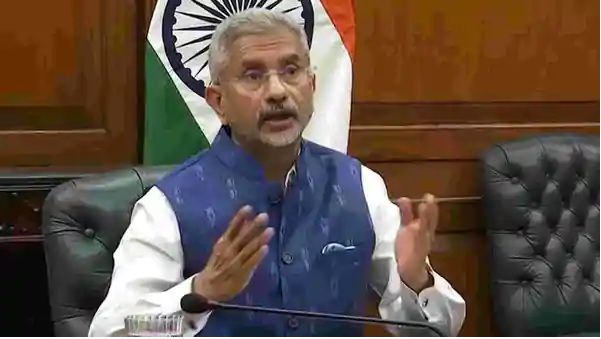
September 16, 2020: New Delhi, Tehran and Moscow could coordinate their efforts on Afghanistan as the US exits.
The recent visit of India’s external affairs minister, S. Jaishankar, to Iran could not have come at a more opportune moment, days before the 19th anniversary of the 9/11 terror attacks on the US. Two high-level visits from India to Iran, the other being that of defence minister Rajnath Singh two days before Jaishankar’s, points to New Delhi’s commitment to strengthen its bilateral relations with Tehran at an uncertain moment in regional geopolitics.
Jaishankar’s participation in the opening ceremony of crucial intra-Afghan talks via a video link also underscores the reality that the Taliban are close to being formally integrated into the Afghan governing apparatus in the wake of America’s drawdown of troops from Afghanistan. India and Iran may have differing views on the US presence there, but are both aware of the challenges once the Taliban gain authority and the current regime in Kabul weakens as a result.
Iran is known to have tactically engaged a few Taliban factions, but it cannot do any business with those espousing hardcore anti-Shia beliefs. Jihadist groups, which are not charitable towards Tehran, include the Islamic State Khorasan Province (ISKP) and Sunni terror groups such as the Haqqani Network that are supported by Pakistan’s security establishment. This dynamic is what makes Iran an indispensable partner for India as the US gradually winds down its troop presence in Afghanistan.
At a time when Iran’s economy is in dire straits due to low oil prices and severe economic sanctions, its leadership cannot afford an Afghanistan at war with itself and its neighbours. New Delhi and Tehran remain keen on coordinating their policies to sustain President Ashraf Ghani’s regime. Ghani’s recent public declaration that peace does not require a political deal on power sharing, implying that he has no intention of stepping down in favour of an interim government, was an attempt to reassure many Afghans uneasy with the frightening possibility of Taliban dominance. It was also a signal to India that all is not lost.
After staying on the sidelines for too long, India’s decision to participate in intra-Afghan talks seems aimed at regaining diplomatic momentum and re-asserting India’s position on an “Afghan-led, Afghan-owned and Afghan-controlled” peace process. New Delhi recognizes that Afghanistan is a treacherous terrain. As New Delhi gears up for a Taliban-heavy regime, India’s role in Kabul’s strategic frame must endure and outlive the Ghani regime. But a big part of the challenge is that Pakistan is no longer the sole danger.
The Chabahar port is the most tangible symbol of India-Iran-Afghanistan trilateral cooperation. It was never a low-hanging fruit, but ever since Iran and China forged a 25-year deal that envisions infrastructure development in Chabahar as well, concerns have been growing in New Delhi. Tehran’s diplomatic isolation has always been viewed by Beijing as a huge opportunity to penetrate Iran. Since Beijing’s potential involvement in the Chabahar project has unmistakable strategic implications for New Delhi, China cannot be allowed to chip away at India’s vital interests in its extended neighbourhood.
While India is no doubt reviewing the challenge posed by China and calibrating its response as a crisis along the Line of Actual Control unfolds, the prevailing regional balance of power poses a dilemma of dealing with Beijing in the wider spectrum of political, economic and security relationships.An altered scenario means it may not be possible to immediately create another version of the “Northern Alliance” between India, Iran and Russia, but New Delhi has no intention of giving in to Chinese desire for regional preponderance. India has the wherewithal to effectively bridge gaps among their respective perceptions on what comes next in Afghanistan and how to counter Pakistan’s terror-oriented policies.
Trump’s hasty troop withdrawal fails to acknowledge a simple reality of the Afghan conflict: that Rawalpindi is the principal driver of every facet of it. Therefore, alliance politics and the need for a hedge against a US exit must shape New Delhi’s policy discourse. The focus has to be China, given its status as the main originator of India’s most serious external troubles.
India likely envisages Moscow’s role in the regional security matrix not as a disrupter, but as a balancer. Despite the alliance-like relationship between Russia and China, Moscow does share with New Delhi an instinctive preference for holding China in check. Greater coordination between India, Iran and Russia has to be cultivated.
Despite the start of intra-Afghan talks, the Afghan conflict is far from over, and a failure to reach a consensus in Qatar would only present a more complex array of challenges and threats than before. What happens in Afghanistan never stays in Afghanistan. Therefore, India must urgently mobilize a coalition for a major regional diplomatic push aimed at resolving the Afghan crisis.
Besides convergence on regional security, India, Iran and Russia can develop cooperative mechanisms for commercial and economic ties with Afghanistan. This could help India moderate Chinese aggressiveness and Pakistani intransigence. If New Delhi is to realize its objectives in Afghanistan as well as Iran, it will require both fresh leverage and credibility. Neither of these will be possible without a coalition of partners.
New Delhi cannot afford to ignore its Eurasian frontiers even as it focuses on shaping new realities in the Indo-Pacific.
Source: live mint









