
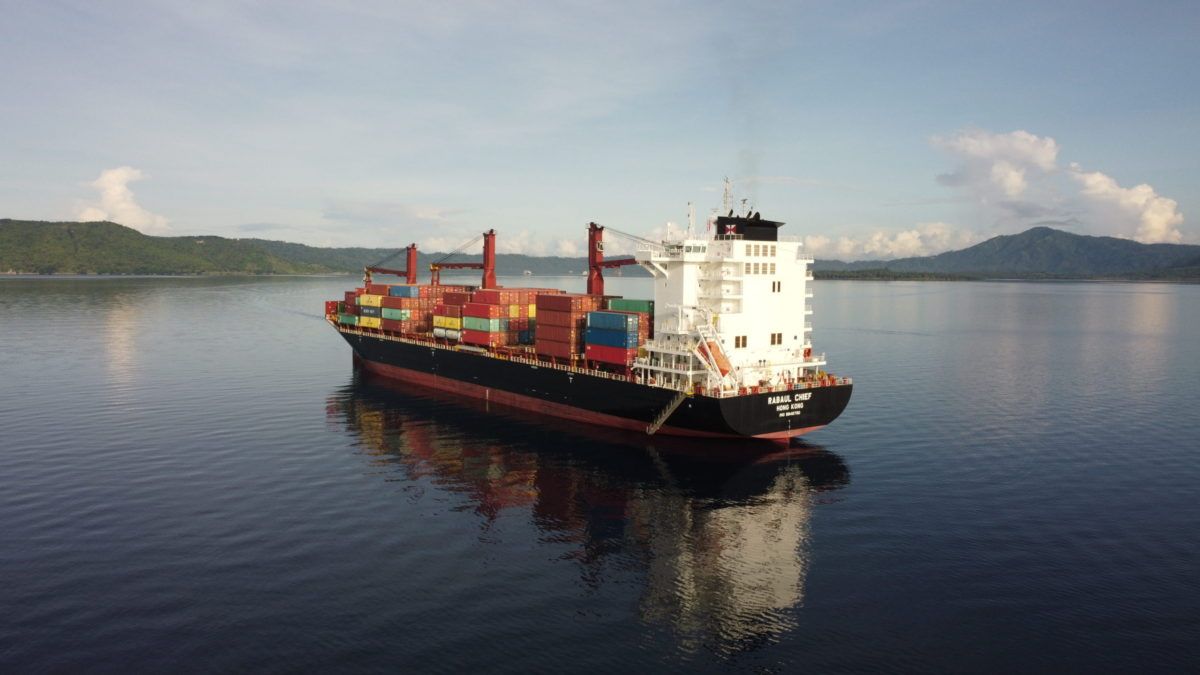
The price of shipping goods on vital global trade routes has fallen 85 per cent below its peak as the cost of living crisis hits consumer spending and pandemic-related supply chain disruption eases.
This month it cost $1,444 to ship a standard 40ft steel container from eastern China to the US west coast at short notice, according to shipping data specialist Xeneta, down from a peak of $9,682 in March last year. The widespread delays and queues, which hit ports at the height of the pandemic, have also dissipated.
Kiel Institute, a German think-tank, said despite a monthly gain of 2.1 per cent in January 2023, the quantity of goods shipped was down 5 per cent from January 2022 levels.
Behind the fall is a decline in demand for goods — 90 per cent of which reach retailers by ship. Demand has plunged as inflation surged, triggering a severe cost of living crisis in several economies and leading central banks to attempt to restrict spending with higher interest rates. The reopening of bars and restaurants and other facilities closed during the pandemic has led to more spending on services, too.
In the US, spending on goods is now down 5.4 per cent in real terms from the March 2021 peak. In the UK, sales volumes are back below pre-pandemic levels after rising 10 per cent above them in April 2021.
With inflation still high and central bank rates set to rise further, demand is expected to remain weak for the rest of the year.
Shipping group Maersk predicts that demand for containers — a proxy for trade — will fall by 2.5 per cent this year.
The S&P monthly survey of purchasing managers indicated that new export orders contracted across the world throughout the second half of last year and in January. Last month, the IMF forecast that global trade growth would decline to 2.4 per cent this year, from 5.4 per cent in 2022.
Leah Fahy, economist at research firm Capital Economics, said while China’s reopening had “somewhat improved” the outlook, “weak demand elsewhere will keep trade subdued for some time”.
After two years of bumper profits, shipping groups from CMA-CGM to Hapag-Lloyd have warned investors of the risk to their bottom line. Maersk, the second biggest container shipping group, last week said operating profits this year would be between $2bn and $5bn, a steep drop from $31bn last year and $20bn in 2021.
But the fall in prices has been welcomed by importers, which are also having to adjust to reduced demand caused by the cost of living crisis. “It’s a fairly significant positive,” said Jonas Samuelson, chief executive of consumer appliances producer Electrolux.
With many clients on long-term contracts, which have proven less volatile than short-term rates, shipping groups are likely to retain the benefits of higher rates for at least the current quarter before new agreements reflect the decline in prices.
In a bid to put a floor under freight rates, groups are also cutting sailings. In 2022, carriers cancelled or skipped 1,639 shipments between east Asia and Europe or North America, a 40 per cent increase on the previous year, according to data provider eeSea.
Despite this, the drop-off in shipping volumes leaves companies with a looming overcapacity problem.
As demand for container space soared during the pandemic, many carriers ploughed money into new ships. Last month the total cargo capacity of vessels on order was equivalent to 30 per cent of the active global fleet, according to Jonathan Roach, analyst at shipping broker Braemar. This compares with 13 per cent in January 2019.
The delivery of these vessels could add to excess shipping capacity, depressing freight rates further.
If that does happen, however, shipping groups are likely to resort to the same tactics used during the initial shock of the pandemic. As factories shuttered, the groups took scores of vessels out of action. This created the “most favourable supply and demand dynamic ever”, said John McCown, a founder of advisory firm Blue Alpha Capital, leading to surging rates when demand for goods soared.
“Carriers are going to be more aggressive than they have in the past on cutting back capacity because they have seen how elastic these rates are,” McCown added.
Those who depend on goods shipped by container are also worried that, in the long term, market power has shifted to the carriers.
Gerard Lyons, sales manager at logistics group Publiship, which helps publishers import books into the UK, said: “If [book orders] do start creeping up . . . I have very little faith in the carriers being able to switch the volumes back up.”
There are more challenging geopolitical conditions too. Russia’s full-scale invasion of Ukraine and pressure on businesses to decouple from China have added yet more headaches.
Vincent Clerc, Maersk’s new chief executive, said despite the recent improvements customers were well aware that shipping services would continue, from time to time, to be disrupted by global events. “I don’t think any of them are looking at the coming years and saying ‘our problems are solved’.”
Reacting to the news, Supply-chain expert Tom Fairbairn, Distinguished Engineer at Solace said: “Just in time supply chains and increased global trade have brought huge advantages in cost efficiency for manufacturers and consumers alike. It has, however, come at a cost: namely geographically longer, more complex and more fragile supply chains. During the pandemic, consumer and commercial demand patterns changed overnight. Hospitality demand evaporated, while consumer demand ballooned. Packaging, lot sizes and distribution requirements also changed radically. These changes require great flexibility and agility at all levels: organisational, in the supply chain, and technological. As such IT systems responsible for sending and receiving invoices, shipment requests, customs forms, materials and recipe changes all need to be able to react quickly. Technology has a big part to play in this: if it isn’t possible to update a factory production line to switch to different lot sizes and packaging, time will be wasted and shipments will be stuck in ports and warehouses.”









