July 07, 2020: Growing concerns over climate change have driven the maritime industry to focus on ways to increase efficiency. The majority of cargo is currently transported via container ships, but as climate change drives shifts in the shipping industry, it has called the future of the cargo container into question.
Cargo containers originally grew from the demand for an industry-wide standardised method of packaging and remain the most environmentally friendly means of transporting goods.
“The container revolutionised global trade,” says Steve Saxon, expert partner at McKinsey & Company. “It significantly reduced the cost of shipping goods by reducing handling costs and reducing breakage and pilferage.”
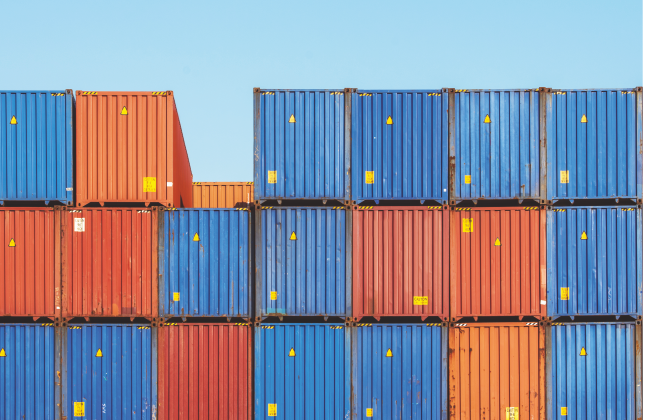
Today, colourful cargo containers are stacked on ships and in ports around the world. Made from metal, containers are sturdy and able to protect goods and products from the elements while their uniform shape enables shipowners to pack goods tightly together both on ships and inside the containers themselves. The standard metal structure of containers also enables intermodal transportation throughout the supply chain from trucks, to ships, to trains.
Political and economic shifts
Global trade experts have predicted that trade will continue to expand despite recent political shifts that could affect economic performance such as Brexit or the United States’ ongoing battle over tariffs with China.
As trade growth continues, it might be reasonable to expect the use of shipping containers to transport products to grow as well. However, some maritime experts have begun to question whether the world has already reached peak globalisation, and if international trade patterns will change in the future because of trade wars and environmental regulations needing the industry to decrease emissions.
Combatting inefficiency
The container shipping industry plays a vital role in supply chains and global trade routes. But according to Saxon, about USD 20 billion in waste in the industry annually comes from inefficient container supply chains, much of which is caused by a lack of data sharing.
Waste can occur when cargo stowage systems under-perform, inefficient vessel deployment practices are used, and even during the process of moving empty shipping containers
“If shipowners, container liners, and terminals shared data, the overall supply chain would be smoother,” Saxon says. “Smoother supply chains imply lower costs, less friction, and will help boost global trade.”
Andrei Voinigescu, General Manager of Business Intelligence at Wärtsilä, agrees that growth in the use of data in the future will benefit the industry. “There’s going to be more emphasis on the use of ‘big data’ – software and data-driven operational excellence, voyage optimisation, and fleet utilisation optimisation solutions – for reducing energy usage. That’s going to enable better operations for ship owners, but also lower greenhouse gas emissions for the overall fleet,” Voinigescu says.
Saxon points out, however, that there are ways digitalisation also could cause a potential reduction in global trade. For example, the expanding use of robots in manufacturing may make businesses less likely to produce goods in low-cost-labour countries and instead manufacture goods locally, closer to consumers, decreasing the need for trans-ocean maritime shipping routes. Nevertheless, Saxon believes the benefits from advancing technology in the supply chain will offset any declines.
Voinigescu also says that while trade routes may change, for example, to include growth in interregional trade routes, the overall outlook for the industry is positive.
“In spite of the overall narrative of trade tension, uncertainty, and reduced vessel contracting activity, the underlying economic drivers for shipping are still healthy,” says Voinigescu. “The growth in gross tonnage being shipped by sea has continued in 2019; it’s slowed down, but the long-term trend is still upwards.”
The role of future fuels
Alongside elevated efficiency requirements, the maritime industry faces mounting pressure to decarbonise, shifting vessels to use new fuel sources.
“New fuels will likely be more expensive, putting pressure on companies to optimise supply chains. This means that we are likely to see slower growth in long-haul intercontinental container traffic, and faster growth in regional trade,” Saxon says.
With the demand for fossil fuels expected to drop in the future, certain segments of the shipping industry, such as oil tankers and coal carriers, will see a reduction in usage. In their place Voinigescu believes the industry will see an increase in the demand for ships transporting hydrogen or ammonia.
“It’s not an overall reduction in shipping of energy, it’s just a change in what kinds of energy needs to be shipped,” Voinigescu says.
The future of the shipping industry is likely to continue to include cargo containers, but it will also likely include emphasis on digitalisation to improve efficiency in trade routes and ambitious goals to reduce greenhouse gas emissions.
“Ocean shipping is – by far – the most efficient way of transporting goods. It uses less fuel, and hence releases less greenhouse gases than other forms of transportation such as rail, trucking or air cargo,” says Saxon. “That said, shipping does and will change.”
Source: Wartsila