
Monday, November 23, 2026
Maritime Gateway
No Result
View All Result
  • Logistics
    • Supply Chain
    • Warehousing
    • Logistics Parks
  • Transport
    • Rail
    • Trucking
    • Multimodal
    • Waterways
  • Global News
    • Americas
    • Asia
    • Europe
    • Middle East
    • Africa
  • Technology
  • More
    • Webinars
    • Reports
    • Newsletters
  • Login
Maritime Gateway
  • Logistics
    • Supply Chain
    • Warehousing
    • Logistics Parks
  • Transport
    • Rail
    • Trucking
    • Multimodal
    • Waterways
  • Global News
    • Americas
    • Asia
    • Europe
    • Middle East
    • Africa
  • Technology
  • More
    • Webinars
    • Reports
    • Newsletters
No Result
View All Result
  • Login
Maritime Gateway
No Result
View All Result

DG Shipping Bans 366 Foreign Ships from Hiring Indian Crew

byMaritimegateway
September 25, 2026
in Global News, News, Shipping, Transport
Reading Time: 2 mins read

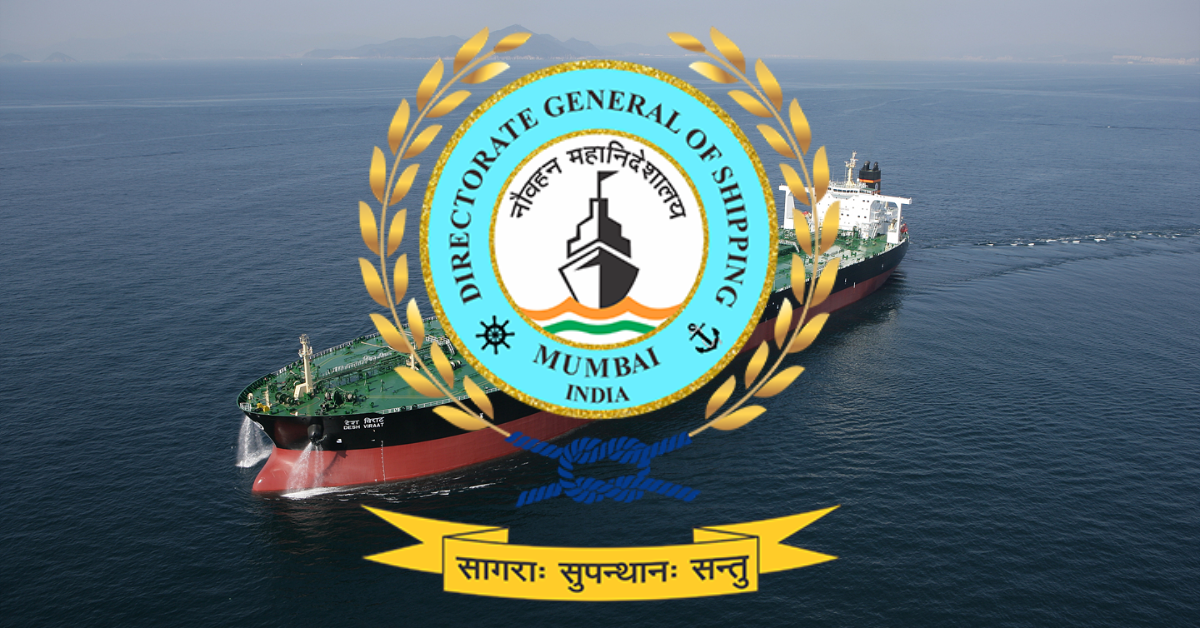
India’s Directorate General of Shipping has issued a sweeping enforcement circular prohibiting 366 foreign-flagged vessels from employing Indian seafarers — one of the largest single enforcement actions in the DGS’s history — after documenting serious violations involving crew abandonment, unpaid wages, denial of compensation in death and missing-at-sea cases, and failure to assist in repatriation of Indian sailors. The circular, addressed to all Recruitment and Placement Service Licence holders and to Indian seafarers directly, classifies 278 vessels as ‘restricted’ from hiring Indian crew and 88 vessels as ‘blacklisted’ — a more severe classification that typically accompanies documented and persistent non-compliance.

The DGS action arrives in the most commercially and humanically significant context for Indian seafarer welfare in decades: with more than 20,000 Indian seafarers still stranded in the Gulf region amid the ongoing Hormuz crisis, the vulnerability of Indian maritime workers to unscrupulous or financially distressed shipowners has never been more publicly visible. The NUSI has already issued a formal humanitarian emergency warning, and the India-UAE Fujairah evacuation pact discussions reflect the government’s recognition that seafarer welfare has become a genuine foreign policy and labour rights issue.

What ‘Restricted’ and ‘Blacklisted’ Mean in Practice

Under the DGS circular, RPSL holders — the licensed recruitment agencies that place Indian seafarers on foreign vessels — are prohibited from arranging employment for their candidates on any of the 366 vessels named in the notice. Individual Indian seafarers are also directly warned against accepting employment aboard these ships. The ‘restricted’ classification covers vessels where violations have been documented but where the operator may still be in the process of remediation or dispute; the ‘blacklisted’ classification covers the 88 vessels where violations are deemed established, persistent, or particularly severe.

The financial stakes for blacklisted operators are substantial: Indian seafarers represent approximately 12 per cent of the global maritime workforce, with over 240,000 Indian nationals employed on ocean-going vessels worldwide. A vessel blacklisted from hiring Indian crew faces a significant restriction on its ability to fill specialised officer and ratings positions that India disproportionately supplies — navigation officers, engineers, and electrical officers are categories where India has a dominant global market share. For shipowners dependent on Indian crew, blacklisting creates genuine commercial pressure to resolve outstanding welfare violations.

The Hormuz Crisis as Enforcement Accelerant

The timing of the DGS circular — amid an active humanitarian crisis for Indian seafarers in the Gulf — is not coincidental. The crisis has focused unprecedented political and media attention on the working conditions and legal protections of Indian sailors, and the DGS action signals that the maritime regulator intends to use its existing enforcement powers aggressively to protect Indian seafarers from exploitation. The 366-vessel circular is the enforcement complement to the legislative and diplomatic initiatives that India has been pursuing: the India-UAE evacuation pact negotiations, the NUSI advocacy, and the government’s direct seafarer welfare briefings by MoPSW and MEA all address the immediate crisis, while the DGS blacklisting creates medium-term deterrence against the shipowner conduct that creates seafarer abandonment in the first place.


Tags: DG Shipping

Maritimegateway

The Maritime Gateway Editorial Team delivers trusted news, analysis, and insights on shipping, ports, logistics, supply chains, and global trade, backed by industry expertise and editorial review.

Related Posts

India ship entry rules add salvage and pollution-response checks
Customs

India ship entry rules add salvage and pollution-response checks

October 10, 2026
NCT concession keeps ownership with Bangladesh
Asia

NCT concession keeps ownership with Bangladesh, says shipping minister

October 10, 2026
Major Ports Cargo Traffic Climbs 8% in First Half of FY27
Cargo

Major Ports Cargo Traffic Climbs 8% in First Half of FY27 as Growth Gathers Pace

October 10, 2026
Trichy Dry Port Moves Ahead
Cargo

Trichy Dry Port Moves Ahead as Tamil Nadu Shortlists Sites for Multimodal Logistics Hub

October 10, 2026

Leave a Reply Cancel reply

Your email address will not be published. Required fields are marked *

Popular News

No Content Available
[mc4wp_form]
Next Post
JNPA and Gateway Terminals India Settle 14-Year Tariff Dispute

JNPA and Gateway Terminals India Settle 14-Year Tariff Dispute

A modern news portal designed for daily coverage of breaking stories, global events, politics, business, technology, sports, and entertainment. Built to deliver fast, reliable, and engaging journalism across every major news category.
[mc4wp_form]
Browse by Category
  • 2008
  • 2009
  • 2010
  • 2012
  • 2013
  • 2014
  • 2015
  • 2016
  • 2017
  • 2018
  • 2019
  • 2020
  • 2021
  • 2022
  • 2023
  • 2024
  • 2025
  • 2026
  • Africa
  • Air Cargo
  • Americas
  • Articles
  • Asia
  • Bulk Ports
  • Bunkering
  • Business
  • Cargo
  • Container Terminals
  • Containers
  • Customs
  • Digital Dialogues
  • Dry Bulk
  • Economy
  • Entertainment
  • Equipment
  • Europe
  • EXIM
  • Featured
  • Forwarding
  • Global News
  • Government
  • Interviews
  • Lifestyle
  • Liquid Bulk
  • LNG
  • Logistics
  • Logistics Parks
  • Magazines
  • Main Line Operators
  • Middle East
  • Multimodal
  • National
  • News
  • Newsletters
  • NVOCC
  • Policy
  • Politics
  • Ports
  • Project Cargo
  • Rail
  • Recommended
  • Reports
  • Science
  • Shipping
  • Sports
  • Supply Chain
  • Tankers
  • Tech
  • Technology
  • Transport
  • Trending
  • Trucking
  • Uncategorized
  • Warehousing
  • Waterways
  • Webinars
  • World

Site Links

  • Site Admin
  • Log Out
  • Entries Feed
  • Comment Feed

Download Our App

Follow Us

© 2026 JNews – Premium WordPress news & magazine theme by Jegtheme.
  • Terms of Use
  • Privacy Policy
  • Manage Cookies
  • License

Welcome Back!

Login to your account below

Forgotten Password?

Retrieve your password

Please enter your username or email address to reset your password.

Log In
No Result
View All Result
  • Home
  • Politics
  • World
  • Business
  • Science
  • National
  • Entertainment
  • Lifestyle
  • Tech

© 2026 JNews - Premium WordPress news & magazine theme by Jegtheme.






