
July 10, 2020: Some point to rising rates and new blank sailings as sign that the US economy is coming to life again, but others are unsure. Meanwhile, tanker crude floating storage hits another new high
The second quarter of 2020 will be one of the worst ever for container shipping in terms of volume, yet box lines remain relatively healthy compared to others in the industry. Meanwhile, despite a recent improvement, the dry bulk market is still volatile
Containers
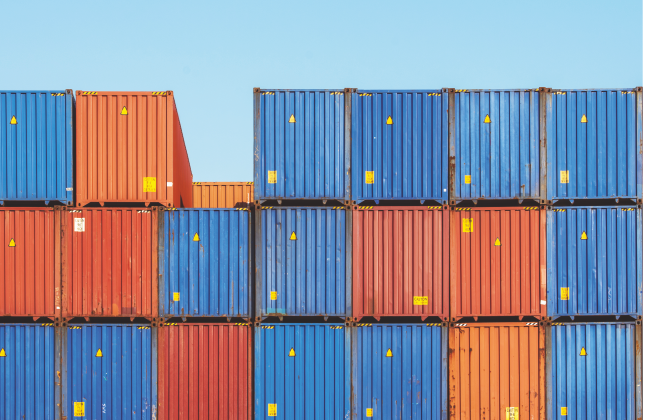
Doubts remain over whether container shipping will see a peak season this year. Some point to rising transpacific rates and the reintroduction of some previously blanked sailings as a sign of renewed demand from the US economy.
Others, however, see this as something of a dead cat bounce, with demand being driven by overly aggressive blankings that artificially rebalanced the supply/demand equation.
One thing is certain, however. The second quarter is set to be one of the worst in container shipping’s history in terms of volumes.
New figures from Container Trades Statistics this week showed that while there was an improvement from April’s shock figures, global box trade in May was down 11.4% on the previous year, and year-to-date liftings are running 7.7% behind last year’s figures.
Yet box lines remain healthy, due mainly to low oil prices and the high level of blankings. That they alone in shipping are having a good crisis has not gone unnoticed and there are fears that their success while others suffer may lead to charges that they are profiteering from the pandemic.
Carriers, however, are businesses, not charities. And for a sector that has failed to cover the cost of its capital for most of the past decade, it is hard to see what else they could do in the circumstances.
Box shipping’s carbon footprint was also in the news this week, with the claim that Mediterranean Shipping Co is Europe’s seventh-largest carbon emitter, coming in behind a number of coal-fired power stations.
MSC challenges the calculations behind the figures from environmental campaign group Transport & Environment, and as Ocean Network Express points out, carbon emissions must to be put in the context of the volumes of goods transported.
Nevertheless, environmental concerns are real, and shipping still has a long way to go if it is to meet the emissions reductions targets set by the International Maritime Organization.
This greening of the industry cannot be done alone, and CMA CGM has become the latest carrier, following Maersk, to invest in a collaborative effort to seek out new fuels.
With ships operational for up to 20 years, to be carbon neutral by 2050 will require a solution to be available by 2030. The decade ahead is going to require some heavy lifting if those targets are to be met.
Dry Bulk
Despite strong capesize rates, one leading dry bulk owner has said the market is “not out of the woods yet”.
Until the coronavirus epidemic is completely eliminated, there would always be uncertainty as to how long economies could stay open, dictating how demand for commodities would fare, according to president of Scorpio Bulkers Robert Bugbee.
While it was a good time to buy into a dry bulk company, due to low valuations, he sees himself more as a seller.
On a similar theme, Hong Kong owner and operator Pacific Basin said it expected to make a first-half loss due to an impairment charge of $198m for its older handysize vessels.
The impairment was due to the “uncertain market outlook” in the dry bulk shipping industry, it said, adding that the net loss could be in the region of $212m to $227m versus a profit of $8m profit in the year-earlier period. Actual results will be published at the end of July.
Amid the uncertainty, Danish owner and operator J. Lauritzen decided to split its tanker and dry bulk units into two separate entities, giving each one more flexibility. The move sees the chief executive Mads Zacho, who has been in the role for four years, step down at the end of August.
Also, Greek-owned Greek-owned Seanergy Maritime has acquired a 2005-built capesize, which should be delivered by the end of the month, to take advantage of the hot spot market, with rates exceeding $30,000 per day.
Meanwhile, forward freight agreement trading is set for a record in a “crazy year” for volatility, according to leading brokerage Freight Investor Services. Judging by how much has been cleared in the six months to June, the market is set to see 2m lots traded.
The previous record was in 2008, when 2.4m lots were traded, only 40% of which were cleared, while the rest were over-the-counter deals.
One lot is equivalent to 1,000 tonnes of cargo, making the FFA market huge. To compare, the physical market traded about 3.2bn tonnes of dry bulk commodities in 2018.
Tankers
Floating storage levels have risen to the highest level on record, as more very large crude carriers were added to those already at anchor in Singapore, outpacing volumes on smaller tankers that ended their deployment of refined products.
According to the very latest figures from Lloyd’s List Intelligence, for the week ending July 3, 293.8m barrels of crude and clean products are being temporarily stored on 224 tankers.
That is the highest level on records going back to 2009 and up from the 292.4m barrels stored on 232 ships seen four weeks ago. Methodology incorporates ships from panamax-sized tankers and larger, at anchor for 20 days or more.
The most recent week’s tally breaks down into 33.5m barrels of clean product and 258.5m tonnes on 200 tankers storing crude and dirty products, data show.
When Iran-flagged vessels that cannot trade are removed from the tally, total floating storage is at 210 tankers with 213m barrels. Tankers are concentrated off Singapore and Malaysia and China. There are some 23 tankers that have been waiting outside Chinese ports to discharge for more than 20 days, based on Lloyd’s List Intelligence data.
The strength in tanker freight rates so far this year has boosted the bottom line at Shanghai-listed China Merchants Energy Shipping which, in an earnings forecast, said It expected net profits in the first six months of the year will reach Yuan2.8bn-Yuan3.1bn ($398m-$441m), up 489%-553% from the same period in 2019.
However, the company has also been hit by the depression in the dry bulk and ro-ro market.
China’s liquefied natural gas imports rose sharply in May as operations at its terminals returned to normal after the coronavirus lockdowns. Buyers are reported to be stepping up imports from cheaper LNG sources and turning away from piped gas supplies in the process, according to industry analysts.
Stolt-Nielsen, the Oslo-listed chemical tanker owner, has cut spending and increased contract coverage, expecting a challenging third quarter and a long economic downturn, it said in a financial results statement this week.
The company expects a fall in deepsea activities as coronavirus shrinks the global economy. But it said a slowdown in new chemical tonnage entering the market, higher demand and positive movements in the product tanker market should improve fundamentals for the next few years.
Meanwhile, Italian operator d’Amico International Shipping has announced it has sold off two of its oldest South Korean-built medium range tankers — the 51,303 dwt High Progress and High Performance — as it looks to continue to modernise its fleet.
Finally, the US approach to enforcing its Venezuela sanctions policies on global shipping appear to be reaping dividends, with many shipowners and operators adjusting their business practices and co-operating with authorities in recent weeks.
Source: Lloyd’s List









