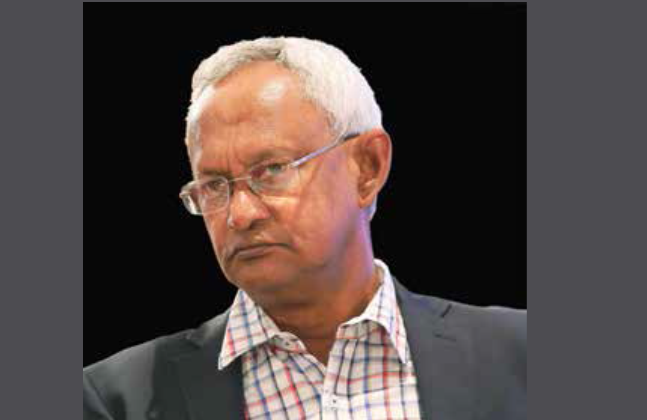
“To enhance trade between Bangladesh and India, both the countries should give more emphasis on connectivity, development of infrastructure, initiating confidence building and people to people contact,” avers Md Rezaul Karim, Chairman, Shippers’ Council of Bangladesh, as he details on the reforms being brought into the logistics sector to ensure smooth movement of cargo
Q Tell us about the role of Shippers’ Council of Bangladesh in promoting the export/ import trade of Bangladesh?
Since inception, SCB has been playing a very important role in the international trade. In fact, SCB initially used to facilitate export of jute. With the change of global trade scenario over the years, role of SCB has not only changed but has become manifold, especially with the opening of major export of RMG. SCB is only the Trade body in the Country that circulate Trade information with the publication of SCB Journal SHIPPERS’ NEWS regularly. Earlier, SCB coordinated between local shippers and foreign MLOs. But now it is also bringing concerned public and private agencies across the table to resolve vital export trade related issues. SCB is also one of the active partners of regional and global shipper’s council. Thereby it significantly contributes in facilitating trade.
Q What are the key logistics challenges the trade community in Bangladesh is facing currently?
Logistics challenges the trading community is facing in Bangladesh are not only too complex but also diverse due to new dimensions of business within & beyond. Major logistics challenge is to ensure trade facilitation with increased capacity building & credibility including skill development. As per WB Logistics Performances Index Report-2018, regulatory and legal framework with regard to Customs, infrastructure, ease of arranging shipment, quality of logistics services, timeliness, tracking cum contracting etc. require improvement. These areas need to be efficient enough to simplify trade related issues. In spite of digital plan, members of the community have to run after the capital for ordinary business. Load bearing scale at highway causes shipping delay with foreign trade cargo to & from Chittagong Port. Extra security lock in addition to international norm with MLOs, etc. cause huge extra money for doing business keeping us uncompetitive.
QWhile Bangladesh is the world’s second largest exporter of readymade garments, which are the other commodities that have the potential to boost the country’s exports?
Globally our market share in RMG export is around 6.5%. On the other hand, RMG accounts for 81% of our exports. Other exports include jute and jute goods, leather and leather goods etc. Pharmaceutical products, IT products etc. are emerging as new exportable. A large variety of seasonal fruits with high food value produced in the country can be another exportable item. We have surplus potato which can be processed for export. High value agricultural products are another source of export.
Blue economy can be a new prospect for our flourishing economy. For the time being Marine Fish Resources could be utilized with huge contribution to export basket through deep sea fishing.
Our exports in the region is around $7.6bn which can easily be increased to US$ 18.9bn as reported by WB, subject to easing of trade barriers through dialogue with major trading partners to facilitate bilateral benefits.
QSynchronizing feeder vessel movements with the scheduled movements of mainline vessel at transhipment ports has been a concern. How can this be resolved?
Over the years, major MLOs & FOs (Feeder Operators) have been merged for survival. Since, mother vessels normally do not call on our Port, we have no option but to be with transshipment ports in the region as per schedule to protect our economy. It is very difficult for us to join MLO club. On the other hand, local FOs like HRC, QC, Atlas, BSC & others no more exist. Procurement of vessels by BSC may be viable, subject to efficiency. But that may not happen. Shipping business is too capital intensive. Local investors find it very difficult to be engaged in such business. Since, there is no local FO, initiative with local ship building industry through tripartite contract & special rate of interest may encourage honest investors. Feeder Trade with JV may be another option for connectivity with relay ports.
Q A major problem the garments industry faces is it has little control over logistics services which impacts the inbound and outbound supply chain. How can the supply chain be improved?
It is true that inbound and outbound supply chain is not within the control of garment and other industries. But situation is gradually improving, Law enforcing agencies are doing their best to ensure smooth movement of goods to and from the ports. Transport sector is also being disciplined gradually.
Q Goods moving through the Petrapole/Benapole border often face delays due to lack of infrastructure. How can the cross border movement of cargo be expedited?
A huge trade between Bangladesh and India is conducted through Benapole and Petrapole land ports. But these two ports suffer from lack of infrastructural facilities. According to many studies, the existing challenges these two ports face are : insufficient operation hours, low storage capacity, broken internal roads, water logging, lack of fire fighting equipments, inadequate equipments, insufficient transport and space facilities, lack of surveillance, absence of CCTVS, inefficient regulatory and administrative procedure, lack of digitization. Removal of these problems will greatly enhance the bilateral trade.
Q In your opinion how can the Indo-Bangla trade be further improved?
Despite immense potentiality, Indo-Bangla trade remains below expected level. Here the barriers are many. High tariff, Para tariff and non-tariff barriers, lack of connectivity resulting is high cost and confidence gap in the international border are the main barriers. In order to enhance trade between Bangladesh and India, both the countries should give more emphasis on connectivity, development of infrastructure, initiating confidence building and people to people contact. Recently railway connectivity project has been taken up to connect Agartala in India with Akhaura in Bangladesh. Another railway connection project between Chilahati in Bangladesh and Jatpaignri in India has been taken. Border trade is contributing to enhanced trade. Moreover, attempts are also being made to execute SAFTA. There is a sensitive commodity list in India which is a barrier to our export. With a view to increasing trade between two countries the list has to be revised so that Bangladesh’s basket of export may be increased. I think, the over all progress in indo-Bangla trade is in the right direction.
Q While the global shipping and logistics industry is embracing Artificial Intelligence and Block chain technology, what is the level of digitalisation in the shipping and logistics sector of Bangladesh?
In order to remove inconvenience, and to face challenges in port and logistics industry, automation has been brought in both freight-port terminals and in land freight terminals. A unique system for overall port and logistics management called Terminal Information Management System (TIMS) has been introduced. TIMS, a web based end-to-end integrated port automation solution offers services like- Handling vessel and cargo movement activities in and out of the port, Real time information about freight, Managing gate operations, Overall port facilities and equipment management, Cargo and logistics information network.
Land Port Management System (LPHS) a full-fledged information management system for land ports was implemented to automate Benapole Land Port. It has dashboard driven secured login modules for various types of users; the main warehouse inventory module; the posting branch module; the Transshipment module; the assessment and billing module; a bank sub-module/plugin; a submodule for truck entry.
TIMS is a full feature Terminal Management System for sea ports. Through this system Berth operator is able to handle the container information easily and manage freight efficiently. The whole Yard Network have Wifi technology for device accessibility where users can use handheld devices for various operations from the yard.