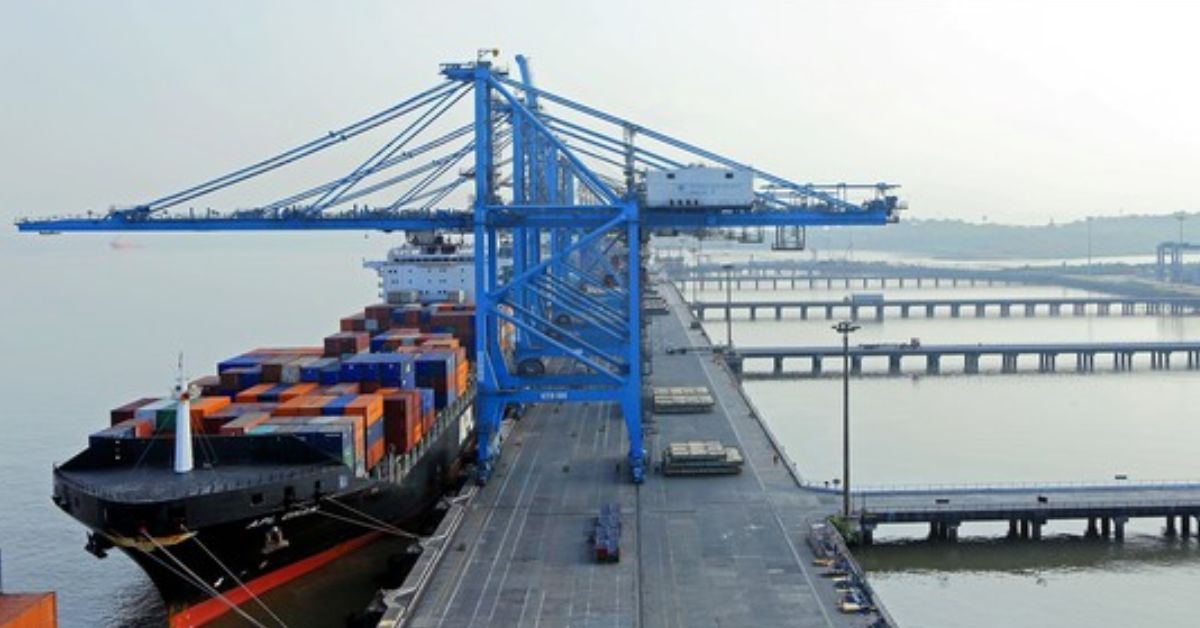
According to a top company executive, Great Eastern Shipping Company Ltd., the largest private ocean carrier in India, may “evaluate” getting into the container shipping business.
An analyst speculates that this might be a diversification plan meant to lessen the risks associated with the oil trade and demand as the globe shifts to renewable energy sources, reducing the amount of crude and petroleum products delivered by sea.
“We’ll assess the transportation space in containers. The general manager, Rahul Sheth, stated during the August 1 earnings call that “it’s clearly on our radar but not at the moment.” This information has not been released before.
Rahul is the son of Ravi Sheth, who is the managing director of Greatship (India) Ltd, the company’s oilfield services division, and a director of the Great Eastern Shipping Company. Bharat Sheth, the Deputy Chairman and Managing Director of the Mumbai-listed Great Eastern Shipping Company, is the brother of Ravi Sheth.
The Red Sea problem is the reason why the market is incredibly heated right now. The transportation industry that has profited the most is likely the container space, much more so than the petroleum product end. However, you have no idea how the Red Sea problem will turn out. If it goes the other way, that sector’s earnings might alter. As countercyclical players, we are. And the cycle is high now. Therefore, Rahul clarified, “we (should) probably be cautious with any decision we make towards this sector.”
Our history indicates that we are more inclined to enter a market when it is struggling. “Typically, we are countercyclical investors and prefer to buy in poor markets rather than strong ones”, said G Shivakumar, executive director and chief financial officer.
The intention of Great Eastern Shipping may be exactly what Indian exporters have long desired, even though a possible entry into container shipping may take some time. Exporters have been pressing the government for a national container carrier to lessen their reliance on international box lines, as they are burdened by the sharp increases in freight that have occurred since the epidemic and are still in place despite the Red Sea issue, barring a brief period of normalcy.
With just two ships, state-run Shipping Corporation of India Ltd. is the only Indian carrier active in the mainline container shipping market.
“The cyclical container shipping markets are currently experiencing a high. “It’s possible that they are considering entering this industry and attempting to broaden their business,” remarks Shailesh Garg, the director of Drewry Shipping Consultants Ltd.’s India branch, a shipping consultancy with headquarters in London.
It is predicted that as part of decarbonization initiatives, efforts towards green energy and green solutions will lead oil consumption to stall for a while before likely declining. Thus, this is an additional strategy to diversify and reduce economic risks that can result from the shift in the demand for oil, according to Garg.
With a fleet of forty-three vessels, the Great Eastern Shipping Company has been concentrating on four industries: dry bulk, petroleum products, LPG, and crude oil.
According to Garg, even though the market for container shipping is currently fairly appealing in terms of freight rates, it might not be the best moment to enter it due to the high cost of assets.
If the market declines after a year, that would be an expensive situation. Because container shipping is different from other forms of shipping in that you need to be a member of an alliance or larger network to properly utilize your asset, Garg noted, they may also want to buy ships and give them to operators who may be better qualified to operate the ships.
Currently, three or four major alliances, including the Mediterranean Shipping Company, CMA-CGM, Maersk, Hapag Lloyd, COSCO, Evergreen, Wan Hai, and Ocean Network Express (ONE), are in control of the container trade.
To guard against rising freight costs, a scarcity of containers, and a lack of space for cargo movement because of regular supply chain breakdowns, local exporters and cargo owners have been pleading with the government to establish a container shipping company.
However, having Indian container ships does not guarantee that they will just transport Indian goods, and having fewer ships means that the full trade cannot be served.
“The shipment of containers is more varied. It will therefore always be challenging for a small operator to compete due to the size of operations and connectivity. Joining a container shipping alliance and adhering to their scheduling and operational norms—including freight rates and capacity deployment—are prerequisites for participating in the industry. According to Garg, “you cannot be an Indian operator and be part of an alliance and be very different, charging different rates for Indian cargo and trying to put containers.”
“Carriers are now competing on a different level and container shipping is a whole new game.” They are using vessels that have a capacity of 18,000–24,000 twenty-foot units (TEUs). You must meet a minimum size requirement to participate in the game and join an alliance. It would be challenging for a new entrant to get in because there are only 4–6 ships with a capacity of 5,000–10,000 TEU each, according to Garg.
Due to the government’s efforts to encourage coastal shipping, fleet owners who wish to enter the market may want to think about using box ships for coastal movement.
Therefore, it is important to consider the markets and vessel sizes that one is attempting to enter, advises Garg.
Garg suggests that Great Eastern Shipping consider becoming a niche player by participating in intraregional trades such as the increasing intra-Asian trade. The rising India-Middle East commerce is attracting container ship operators to consider the Middle East as a possible destination. “One way to get into this business or feeder operations could be if an Indian player comes in and puts 4-6 ships and provides regional connectivity to markets like the Middle East or maybe some Asian markets,” Garg continued.