
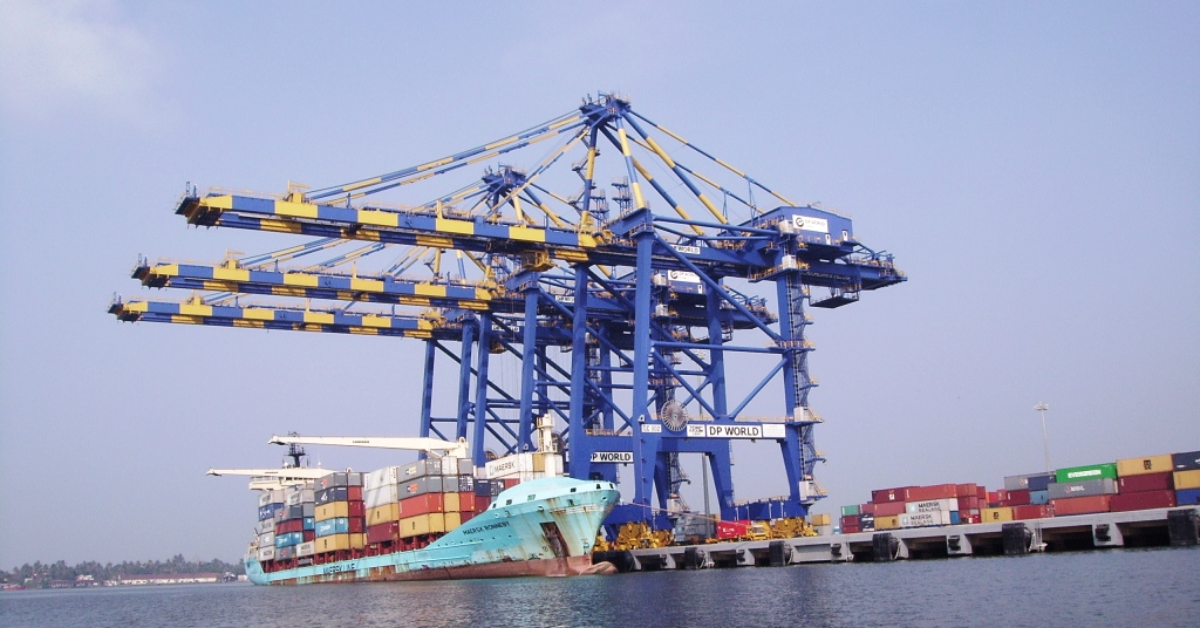
The Union government has granted a six-month extension to the implementation of its January 21 decision to roll back key cabotage relaxations that have allowed foreign-flagged vessels to participate in India’s coastal shipping market since 2018. The rollback — which would have reinstated Indian-flagged vessel exclusivity for carrying EXIM containers, empty containers, and select bulk commodities on domestic routes — was originally scheduled to take effect from April 21 after a three-month transition. The new order, dated March 31, pushes the effective date back to at least October 2026.
The Ministry of Ports, Shipping and Waterways cited stakeholder consultations and a review of prevailing geopolitical and market conditions as the basis for the extension — a transparent acknowledgement that the Hormuz crisis has fundamentally altered the operating environment for India’s coastal shipping sector and made the timing of the cabotage rollback untenable.
Why This Matters Now
The 2018 cabotage relaxations allowed foreign-flagged vessels to handle EXIM containers and empty containers on domestic coastal routes — enabling global shipping lines to move containers between Indian ports as part of their broader network operations without requiring Indian flag registration. Revoking this permission during an active maritime crisis would have created two simultaneous problems: it would have removed vessel capacity from Indian coastal routes at a moment when the Hormuz disruption has already tightened vessel supply, and it would have created equipment bottlenecks for shipping lines trying to reposition empty containers across Indian ports to meet the surge in export demand from manufacturers seeking alternative non-Gulf markets.
The six-month extension provides temporary relief to global shipping lines including MSC, CMA CGM, Maersk, and Hapag-Lloyd, which have deployed vessels on India’s coastal routes under the relaxed regime and need operational continuity during the crisis. It also protects transshipment terminal operators — particularly at Vizhinjam, JNPA, and Mundra — who depend on the flexibility of foreign-vessel coastal movements to manage the surge in transhipment cargo being rerouted through Indian hubs.
India–South Korea Shipbuilding Skills Pact
Separately, India’s Ministry of Ports, Shipping and Waterways has signed an implementation plan with the Korea International Cooperation Agency (KOICA) to strengthen skill development in India’s shipbuilding and marine sector. The agreement, signed on April 2, aims to support workforce mapping, identify skill gaps, and develop a comprehensive human resource roadmap for the sector. KOICA will work alongside the Korea Research Institute for Vocational Education and Training to conduct detailed research on India’s shipbuilding and marine engineering industries — findings that will inform structured training programmes aligned with the evolving requirements of India’s ₹70,000 crore shipyard modernisation programme. South Korea is the world’s second-largest shipbuilding nation, and the KOICA partnership gives India direct access to the expertise that has made Korean yards globally dominant in LNG carriers, VLCCs, and mega container vessel construction.
India’s Maiden Methanol Bunkering Trial at Kandla
In a separate green maritime milestone, Kandla Port has completed India’s first methanol bunkering trial — the safe handling, storage, and transfer of methanol as a marine fuel, conducted under stringent safety and environmental protocols. The trial marks India’s entry into alternative marine fuel infrastructure, aligning with the global maritime decarbonisation agenda and specifically with the growing fleet of methanol dual-fuel vessels being ordered by Maersk, CMA CGM, and other major carriers. As a port that handles 160 MMT of cargo annually, Kandla’s readiness to bunker methanol-capable vessels positions it as a first-mover in a segment expected to grow substantially over the next decade as shipping decarbonisation accelerates.









