
Monday, November 23, 2026
Maritime Gateway
No Result
View All Result
  • Logistics
    • Supply Chain
    • Warehousing
    • Logistics Parks
  • Transport
    • Rail
    • Trucking
    • Multimodal
    • Waterways
  • Global News
    • Americas
    • Asia
    • Europe
    • Middle East
    • Africa
  • Technology
  • More
    • Webinars
    • Reports
    • Newsletters
  • Login
Maritime Gateway
  • Logistics
    • Supply Chain
    • Warehousing
    • Logistics Parks
  • Transport
    • Rail
    • Trucking
    • Multimodal
    • Waterways
  • Global News
    • Americas
    • Asia
    • Europe
    • Middle East
    • Africa
  • Technology
  • More
    • Webinars
    • Reports
    • Newsletters
No Result
View All Result
  • Login
Maritime Gateway
No Result
View All Result

India Eyes the Strait

byMaritimegateway
September 25, 2026
in Cargo, Containers, Government, News, Shipping, Transport
Reading Time: 3 mins read

As geopolitical tensions in West Asia escalate, New Delhi makes a calculated push to secure crude oil through the world’s most strategic maritime chokepoint — while Indian ports mobilise emergency measures on the ground.

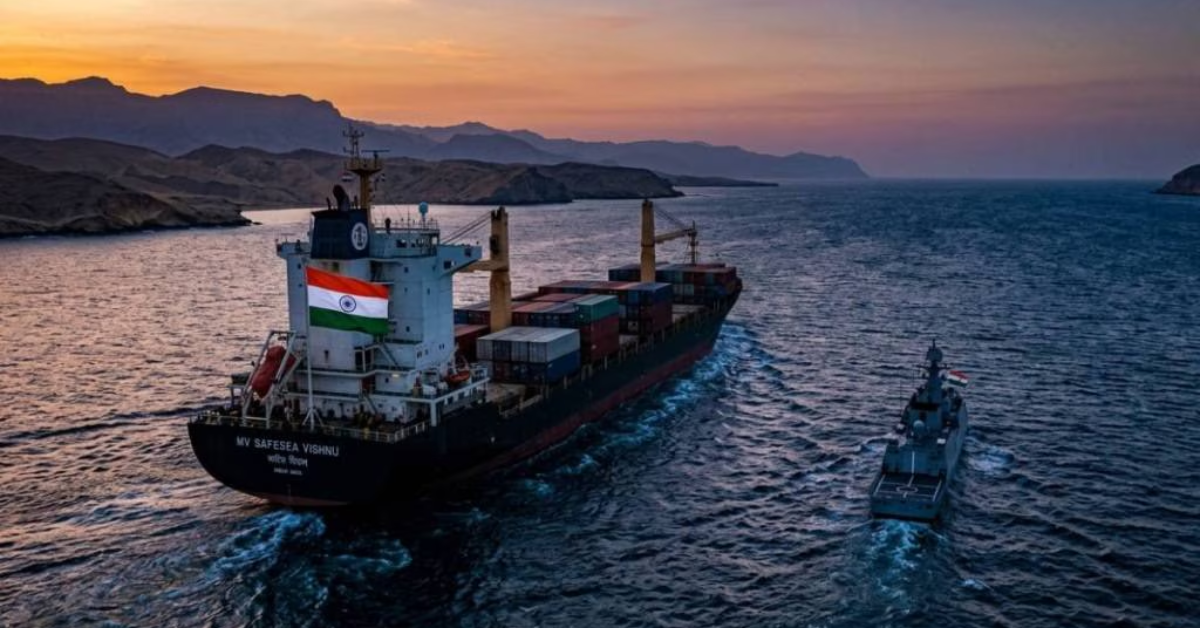
India is preparing to dispatch oil tankers through the Strait of Hormuz to secure fresh crude supplies from Middle Eastern producers, even as geopolitical tensions and military risks continue to cloud the vital waterway. According to multiple industry and government sources, plans are being finalised for Indian-linked vessels to resume loading operations at Gulf ports and transit through the strategically critical corridor that handles roughly 20 percent of the world’s traded oil.

The move comes as New Delhi seeks to protect its energy security amid prolonged instability in West Asia, linked to the ongoing Iran conflict and regional shipping disruptions. Indian authorities and shipping operators have been coordinating closely with regional stakeholders to arrange safe passage for energy cargoes. Diplomatic channels have also been active, with India holding discussions with Iranian authorities earlier this year to facilitate the movement of Indian-flagged tankers through the waterway.

In a significant development on May 20, multiple oil tankers carrying an estimated six million barrels of crude oil successfully exited the Strait of Hormuz, signaling continued — if cautious — movement of energy shipments through the chokepoint. Shipping and tracking data confirmed the departures, offering some relief to energy markets that have been on edge over supply disruptions. Industry analysts said the successful transit may ease immediate fears over shortages but cautioned that elevated security risks and insurance premiums remain serious concerns.

On the ground in India, ports have moved swiftly to adapt. Mormugao Port Authority (MPA) in Goa issued two consecutive trade notices within five days, announcing priority berthing for vessels carrying critical cargo such as crude oil, LNG, LPG, and fertilisers. Under the directive, shipping agents and vessel operators are urged to ensure timely submission of statutory documents to avoid delays. The ministry of ports, shipping and waterways had flagged concerns that the Hormuz crisis could disrupt energy supply chains linked to the Gulf.

In a significant relief for exporters, Mormugao Port also announced that all applicable concessions and waivers for export cargo destined for West Asian countries will now be adjusted directly at the billing stage. The earlier system — where exporters paid the full amount upfront and sought reimbursements later — has been discontinued with immediate effect. Port officials said this was aimed at easing cash flow pressures on trade businesses at a time of rising freight costs and supply chain uncertainty.

Energy analysts note that India’s decision to push through the Hormuz route reflects the country’s continued dependence on Middle Eastern crude, despite long-term efforts to diversify imports from Russia, the United States, and Africa. Saudi Arabia, the UAE, Iraq, and Kuwait together account for a large share of India’s crude basket, and any prolonged disruption to Hormuz transit could significantly raise import costs for Indian refineries. With oil prices already volatile amid geopolitical uncertainty, the stakes for India’s energy import strategy have rarely been higher.

Maritime operators continue to implement enhanced risk-management measures including adjusted routing, increased monitoring, additional insurance coverage, and war risk premiums. The situation remains fluid, and Indian refiners and government officials are expected to keep a close watch on vessel movements and security updates in the coming weeks.


Tags: hormuz straitIndian Vessels

Maritimegateway

The Maritime Gateway Editorial Team delivers trusted news, analysis, and insights on shipping, ports, logistics, supply chains, and global trade, backed by industry expertise and editorial review.

Related Posts

India ship entry rules add salvage and pollution-response checks
Customs

India ship entry rules add salvage and pollution-response checks

October 10, 2026
NCT concession keeps ownership with Bangladesh
Asia

NCT concession keeps ownership with Bangladesh, says shipping minister

October 10, 2026
Major Ports Cargo Traffic Climbs 8% in First Half of FY27
Cargo

Major Ports Cargo Traffic Climbs 8% in First Half of FY27 as Growth Gathers Pace

October 10, 2026
Trichy Dry Port Moves Ahead
Cargo

Trichy Dry Port Moves Ahead as Tamil Nadu Shortlists Sites for Multimodal Logistics Hub

October 10, 2026

Leave a Reply Cancel reply

Your email address will not be published. Required fields are marked *

Popular News

No Content Available
[mc4wp_form]
Next Post
GRSE Launches Next-Gen OPV: Crafted for Vigilance, Built for Victory

GRSE Launches Next-Gen OPV: Crafted for Vigilance, Built for Victory

A modern news portal designed for daily coverage of breaking stories, global events, politics, business, technology, sports, and entertainment. Built to deliver fast, reliable, and engaging journalism across every major news category.
[mc4wp_form]
Browse by Category
  • 2008
  • 2009
  • 2010
  • 2012
  • 2013
  • 2014
  • 2015
  • 2016
  • 2017
  • 2018
  • 2019
  • 2020
  • 2021
  • 2022
  • 2023
  • 2024
  • 2025
  • 2026
  • Africa
  • Air Cargo
  • Americas
  • Articles
  • Asia
  • Bulk Ports
  • Bunkering
  • Business
  • Cargo
  • Container Terminals
  • Containers
  • Customs
  • Digital Dialogues
  • Dry Bulk
  • Economy
  • Entertainment
  • Equipment
  • Europe
  • EXIM
  • Featured
  • Forwarding
  • Global News
  • Government
  • Interviews
  • Lifestyle
  • Liquid Bulk
  • LNG
  • Logistics
  • Logistics Parks
  • Magazines
  • Main Line Operators
  • Middle East
  • Multimodal
  • National
  • News
  • Newsletters
  • NVOCC
  • Policy
  • Politics
  • Ports
  • Project Cargo
  • Rail
  • Recommended
  • Reports
  • Science
  • Shipping
  • Sports
  • Supply Chain
  • Tankers
  • Tech
  • Technology
  • Transport
  • Trending
  • Trucking
  • Uncategorized
  • Warehousing
  • Waterways
  • Webinars
  • World

Site Links

  • Site Admin
  • Log Out
  • Entries Feed
  • Comment Feed

Download Our App

Follow Us

© 2026 JNews – Premium WordPress news & magazine theme by Jegtheme.
  • Terms of Use
  • Privacy Policy
  • Manage Cookies
  • License

Welcome Back!

Login to your account below

Forgotten Password?

Retrieve your password

Please enter your username or email address to reset your password.

Log In
No Result
View All Result
  • Home
  • Politics
  • World
  • Business
  • Science
  • National
  • Entertainment
  • Lifestyle
  • Tech

© 2026 JNews - Premium WordPress news & magazine theme by Jegtheme.






