
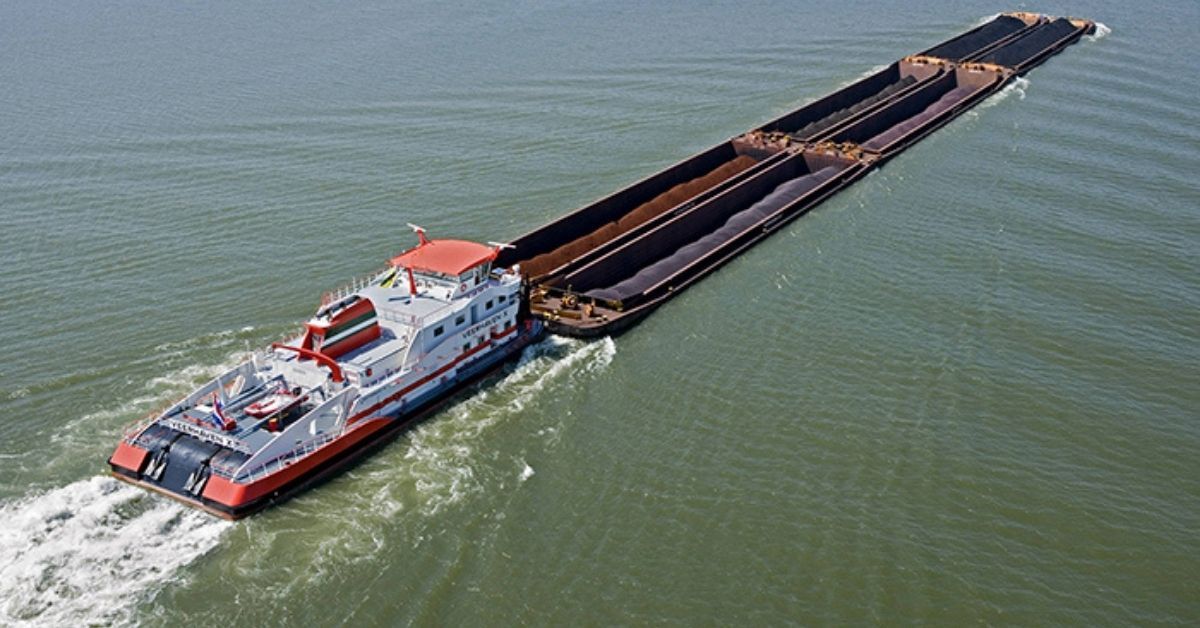
Cargo movement through waterways between Bangladesh and India rose to a new height in fiscal year 2021-22 as local entrepreneurs, particularly cement makers, found the river routes convenient to bring their raw materials, mainly fly ash, from the neighbouring country.
During fiscal year 2021-22, vessels carried 20 per cent more cargo to 47.4 lakh tonnes, the highest since fiscal year 2001-02, from that a year ago, according to data of Bangladesh Inland Water Transport Authority (BIWTA).
In other words, cargo movement on river routes of Bangladesh and India nearly doubled in four years from 24 lakh tonnes in fiscal year 2018-19 thanks to increased production of cement to meet a surge in demand for construction of mega public projects and private buildings.
During last fiscal year, Bangladeshi vessels carried 42.18 lakh tonnes while Indian vessels carried 5.22 lakh tonnes.
This is the third consecutive year cargo movement through waterways between India and Bangladesh has being growing.
The outbreak of Covid-19 in 2020, convenience and relatively lower cost than road encouraged many businesses to prefer waterways to transport their goods, mainly imports from India, under a Protocol on Inland Water Transit & Trade between Bangladesh and India (PIWT&T) signed in 1972.
Both the neighbouring nations inked the agreement to make mutually beneficial arrangements for the use of their waterways for commerce between the two countries and for passage of goods between two places in one country and to third countries through the territory of the other under the terms mutually agreed upon, according to the BIWTA.
“This (waterway) is the cheapest route to do everything. We have been using river routes for a long time as fly ash is hazardous cargo and transporting the material through waterway is good for environment,” said Mohammed Amirul Haque, managing director of Premier Cement.
The cement maker brings imported fly ash using the routes under the PIWT&T. It also exported cement to Tripura, a northeastern estate of India, in 2020.
“We are also importing other materials through waterways,” he said, suggesting that the BIWTA and authorities in India to improve infrastructure in waterways to facilitate more cargo movement and improve river routes including dredging and other facilities.
Apart from fly ash, steel and iron, stone chips, rice, wheat and maize were also imported using the river routes in fiscal year 2021-22. Of those, Bangladesh has been bringing imported steel products and stone chips for the last couple of years, according to the BIWTA.
“We see increased awareness and interest among businesses to use waterways in recent years. In the past, people were not that much aware about the scopes to use rivers routes,” said a senior official of the BIWTA.
A portion of the cargo is also exported to India using the protocol routes, the official added.
Under the protocol, there are 11 ports or terminals in each country to load and unload imported and exported cargoes.
Of that, water transporters mainly use Narayanganj and Mongla in Bangladesh and Kolkata and Haldia in India, according to operators.
Nazmul Hossain Hamdu, managing director of Sohag Trading Company, which operates 25 vessels, said cost of transporting goods through waterways was almost half of road transport cost per tonne.
He said the number of vessels carrying goods on the protocol routes increased but the volume of goods did not increase to that much of an extent.
“Future prospects look bright as the Indian government plans to carry goods through Bangladesh to the seven sisters in its northeastern part,” said Hamdu, vice president of Bangladesh Cargo Vessel Owners’ Association.
Mahfuz Hamid, former chairman of the Coastal Ship Owners Association of Bangladesh, said use of waterways would increase if the National Board of Revenue (NBR) allows unloading of items such as steel, machinery and industrial raw materials at Narayanganj.
“This will benefit industries by reducing freight cost. On the other hand, the pressure on roads will reduce,” he said, adding, “What is needed is completion of customs procedures there.”









