
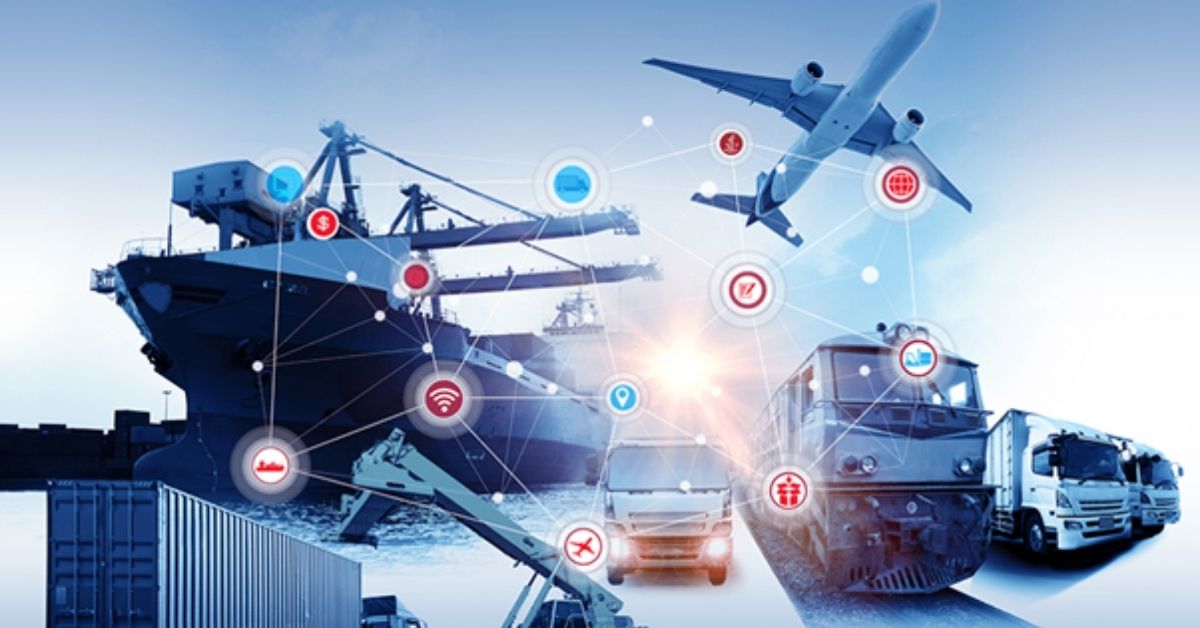
India is projected to become a $5 trillion economy by 2027. This growth is expected to be driven by a few major factors, key amongst which is a stronger, more robust, streamlined, organised, and efficient logistics and transport infrastructure. The recently announced Union Budget and the broader Amrit Kaal 2047 vision – the government’s active effort to make India an export-led, aatmanirbhar economy – all seek to lay a strong foundation for an organised logistics sector in India.
Why? Because the logistics sector, one way or another, will be a significant economic driver for the country in coming years.
Consider this: India’s current contribution to global exports stands below 2%. By undertaking strategic capacity building for the logistics sector, the government can, not just boost the economy in the short and medium terms but also supercharge long-term development and economic activity with a massive headroom for growth. Increasing the country’s participation in international value chains through a more organised logistics sector has, therefore, emerged as a clear policy priority – and key players in the space can contribute significantly to this nation building project.
Amrit Kaal and the logistics sector
The first and the most obvious place to look for synergy is the Amrit Kaal vision, which aims to set a roadmap for India’s growth and development to mark 100 years as an independent nation by focusing on sustainability, efficiency, and innovation. An investment of Rs 80 lakh crore, for instance, has been earmarked for over 300 initiatives to transform the country’s logistics, infrastructure, and shipping sectors by 2047. The 100-day plan by the latest NDA government also outlines intentions to make operational high-speed corridors spanning nearly 700 kilometres, as well as award contracts on a further 3,000 kilometres worth of highways. This continues previous policy focus, such as express railway services and the National Industrial Corridor Development, and the recent increase in capital allocated to logistics infrastructure projects marks a sustained commitment.
Logistics companies should seize this opportunity and incentive to invest in infrastructure by building and expanding more modern warehouses, distribution centers, and transportation fleets. The tech adoption within the industry is already well underway with automated sorting hubs, robotics process automation (RPA), cloud computing, APIs, big data-driven predictive analytics, and digitised inventory management. Adopting more cutting-edge solutions such as automated drone delivery and outdoor robotics will align well with the government’s focus on driving greater technological and digital adoption within the industry while ensuring a more resilient and efficient supply chain.
The growing focus on sustainability is also something that players within the logistics space should embrace wholeheartedly by prioritizing solutions to accurately measure and reduce carbon emissions in their supply chains. Initiatives focused on carbon insetting such as the use of sustainable aviation fuel, leveraging electric vehicles, and potentially adopting electric planes in the future, as well as ensuring LEED certification for all facilities, will be critical. Implementing these shifts will not only help logistics companies bring down operational costs in the medium-to-long term but also make logistics networks more future-proof by being compliant with environment-friendly policy reforms in the coming years.
Role of foreign trade policy
Another area of interest for logistics companies should be the Foreign Trade Policy, which seeks to increase exports and deepen the nation’s integration into international supply networks. The ease of doing business has been highlighted as a priority, time and again, by both government and industry stakeholders – and policy measures have been outlined to make progress on that front. For instance, the latest union budget introduced digital freight corridors for faster and more efficient cargo movement with real-time tracking. It also streamlined customs processes at inland container depot, air cargo complexes, and sea ports to significantly slash import release times and reduce overall operational costs.
To maximise and accelerate this shift toward digital business, government agencies and logistics players can look at leveraging the well-known and proven concepts of public-private partnerships (PPPs). PPPs have been the key growth enablers of India’s economic growth and development for several decades now. Of particular interest here would be initiatives such as One District One Product (ODOP) and ‘Towns of Excellence’, which focus on building specific capabilities and service networks around a certain location and product. Through PPPs, logistics players can undertake dedicated capacity building around a specific type of product, whether packaging and warehousing or fleet operations, for more seamless and efficient operations.
Something similar can be undertaken with the e-commerce export hubs outlined in the Union Budget 2024-25. With the policy calling for PPP models to be implemented, logistics players can use the seamless regulatory and logistics framework promised to offer an extensive array of trade- and export-related services at the point of need. Not only will this help them expand their operational footprint and revenue streams but also give a massive boost to the burgeoning MSME market by making it easier to do business and take their products to a much wider audience across the globe.
Moreover, despite the gaps that remain to be addressed, the growing shift of the GST toward truly becoming the “One Nation, One Tax” that it was promised to be is something that must be appreciated. While express logistics companies still await the pan-India GST registration that will do away with the need for separate GST registration in every state, the move to simplify and rationalise compliance to reduce the GST burden is something that they must make the most of. With plans in the pipeline to further digitise GST and customs processes for more streamlined logistics operations, embracing the digital shift must be a priority for all logistics players, regardless of their size, for better compliance and seamless operations. The express logistics industry is positioned to be a major force behind India’s economic growth in the future. By aligning themselves with government initiatives such as the National Logistics Policy, the Amrit Kaal vision, ODOP, and the Foreign Trade Policy, logistics players have an unparalleled opportunity to drive business growth with broader economic growth. A trade network that is more globally competitive, efficient, and well-integrated will make India the envy of the world, enabling the country to achieve its ambitious economic goals and truly stake its claim as a manufacturing and economic superpower.









