
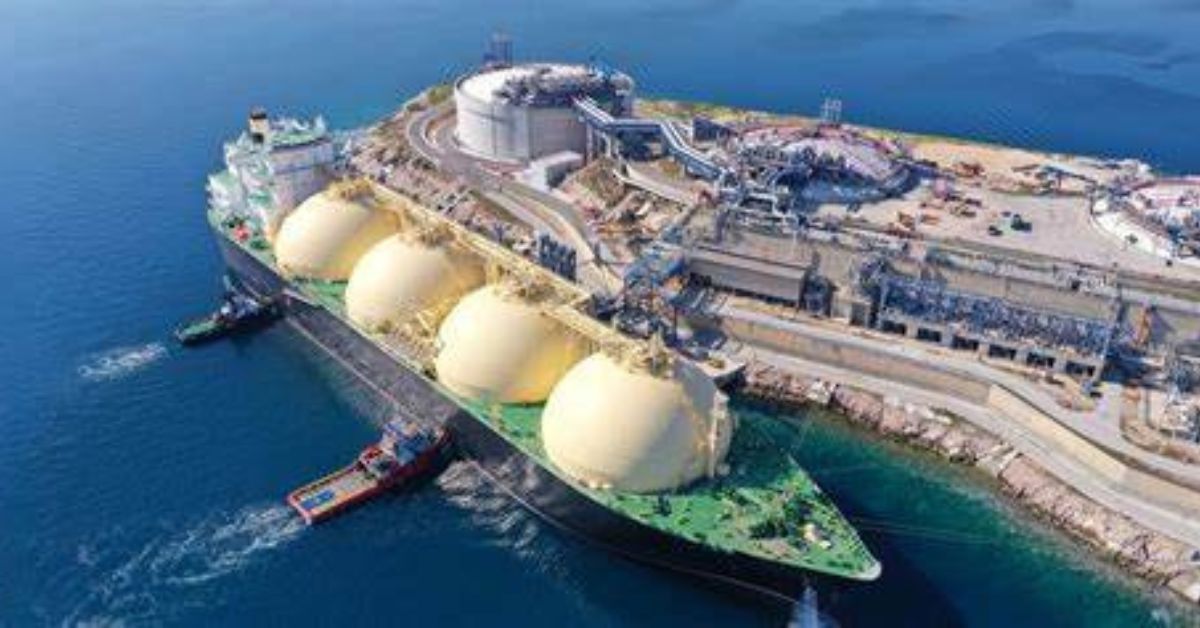
The maritime sector, under increasing pressure to decarbonize, has seen an unprecedented surge in LNG adoption. But while LNG-powered vessels are setting new records, the infrastructure to support them– especially bunkering capacity–is racing to catch up. The success of LNG as a transitional fuel hinges not only on shipbuilding trends and regulations but on our ability to rapidly close the gap between fuel demand and refueling capability. LNG demand surges amid global upheaval LNG markets have experienced a dramatic upswing, driven by surging demand–particularly from China–and geopolitical disruptions, including the war in Ukraine. These factors have intensified global efforts to diversify energy sources, positioning LNG as a cleaner, more stable alternative to traditional hydrocarbons. The ripple effect on marine fuels has been profound. DNV’s Alternative Fuels Insights (AFI) platform reports that 642 LNG-fueled vessels–excluding LNG carriers–were in operation as of 2024. A record 169 LNG vessels were delivered in 2024 alone, and 264 new LNG vessel orders were placed the same year, more than doubling 2023’s order volume. If the current trajectory continues, the global LNG-powered fleet is expected to double by the end of this decade.
Bunkering infrastructure struggles to keep pace
As the LNG fleet expands rapidly, so too does the demand for safe, efficient, and reliable LNG bunkering infrastructure. LNG consumption by LNG-fuelled vessels grew by more than 500 per cent from 2020 to 2024, with a similar growth rate projected through 2029. Despite this surge, infrastructure investment hasn’t kept pace Only 64 LNG bunkering vessels are in operation globally, with 16 more on order. Of the existing fleet, 42 per cent are above 10,000 m³ in capacity, while another 37 per cent fall between 5,000 and 10,000 m³. Regionally, Europe accounts for 42 per cent of the fleet, Asia for 28 per cent, and the Americas for 18 per cent. Yet as demand intensifies, supply bottlenecks are becoming more pronounced—especially in emerging maritime hubs. Although 191 ports had LNG bunkering capabilities by the end of 2024, another 81 ports were still under construction, highlighting the critical gap in global coverage.
Why the supply gap exists
One underlying issue is a shift in shipyard priorities. Many yards previously building small gas carriers have transitioned to constructing larger LNG or LPG carriers, leaving fewer facilities capable of producing small and mid-sized bunkering vessels. This capacity crunch is exacerbated by high infrastructure costs, lack of standardization, and lengthy approval timelines.
Safety at the core of LNG bunkering
• As bunkering activities scale up, safety protocols must evolve in tandem. LNG bunkering involves several critical operational challenges:
• Cargo heel management: Maintaining a small volume of LNG to stabilize tank temperatures and minimize boil-off gas (BOG).
• Pressure control: Monitoring tank pressure during loading is essential to prevent overpressure situations
Vapour return systems: These systems balance tank pressure by returning displaced vapors, ensuring a smooth, steady transfer.
• Redundancy systems: Safetycritical systems like pumps and valves must have backups in place.
DNV supports this through vessel notations like AP (alternative propulsion), RP (redundant propulsion), and Gas Bunker.
With complexity increasing, training becomes vital. Well-trained personnel–from crew members to port operators–are central to ensuring smooth and safe LNG transfers.
Shore power: A sustainability game-changer
While LNG reduces emissions by up to 20 per cent compared to heavy fuel oil, further decarbonization is necessary. One of the most promising enhancements is shore power– allowing LNG bunker vessels to plug into the grid while docked, eliminating generator emissions.
According to DNV’s Maritime Forecast to 2050, shore power outperforms on-board fossil fuel generators in almost all well-to-wake emission scenarios. It also reduces noise and particulate matter in local port environments. Ports like Abu Dhabi, Rotterdam, and Los Angeles are leading the charge, with large-scale shore power infrastructure already in place. Because bunkering vessels operate on predictable, short port-based routes–much like ferries–they are ideal candidates for electrification, hybrid battery systems, and shore connection technologies.
India: An LNG bunkering market poised for take-off
India is emerging as a key LNG bunkering market. Valued at $6.8 billion in 2024, it is projected to reach $36.29 billion by 2030, growing at a CAGR of 32 per cent. This boom is fueled by both regulatory reforms and increased investment in LNG infrastructure across major ports like Mumbai, Chennai, and Visakhapatnam. These ports are actively developing LNG terminals, storage tanks, and bunkering facilities, supported by government incentives. India’s push to lower sulfur and nitrogen oxide emissions is also prompting shipowners to transition to LNG-powered vessels—many of which are being built with LNG-ready designs in domestic shipyards.
Digitalization is another driving force. Real-time monitoring systems, automated transfer procedures, and advanced analytics are being integrated into LNG bunkering operations to enhance transparency, safety, and efficiency.
Coastal and inland waterways: A new frontier
India’s maritime future is not limited to deep-sea shipping. Coastal and inland waterway vessels are increasingly adopting LNG, aided by their proximity to ports and the government’s inland transport initiatives. These vessels offer a scalable, cost-efficient use case for LNG, making them an attractive segment for future bunkering investment.
A flexible future for bunkering vessels
A major concern has been the long-term viability of LNG bunkering vessels should the market shift toward other fuels. But there’s good news: these vessels can be repurposed for small-scale LNG distribution, particularly for interregional trade. They can also be adapted to handle bio-LNG or synthetic LNG, which are fully compatible with existing LNG infrastructure and engines. This flexibility ensures bunkering assets remain valuable long after the peak of LNG’s use as a transition fuel.
Market outlook and investment opportunities
With over 400 LNG-powered vessels already operational and more than 500 on order, the bunkering market is projected to grow from $1.2 billion in 2023 at a CAGR of 28.5 per cent through 2030. Europe remains at the forefront, with Rotterdam, Amsterdam, and Barcelona investing heavily in bunkering capacity and supply chain innovation. Despite high capital costs, regulatory uncertainty, and regional disparities in infrastructure, momentum is building. Mobile bunkering platforms, AI-driven fuel management, and collaborative frameworks among fuel suppliers, ports, and shipping lines are accelerating LNG’s adoption as a sustainable fuel.









