
Ammonia-fueled VLCCs delivery expected from 2026
Ammonia bunkering part of Singapore’s strategy to build up hydrogen
First methanol bunker expected late July
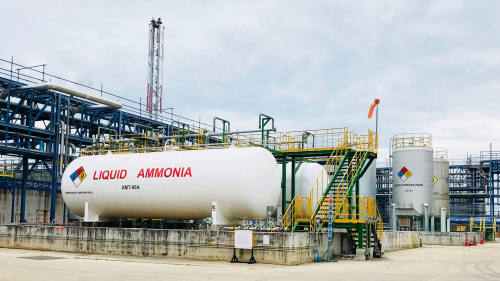
The Maritime and Port Authority of Singapore expects ammonia bunkering to take place in its waters from 2026, following the delivery of its first ammonia-fueled vessels, as well as when such bunkering safety standards are available, its chief sustainability officer Tham Wai Wah said in an exclusive interview with S&P Global Commodity Insights.
This came after MPA clarified that it was “not realistic” for the country to conduct such trials by the end of this year, in response to results of a safety study released end-April by the MPA-funded Global Centre for Maritime Decarbonization.
Under the Castor Initiative, which MPA joined in 2021, the industry-led coalition’s founding members Lloyd’s Register, Samsung Heavy Industries and MISC via its subsidiary AET inked an agreement to deliver two ammonia-fueled VLCCs in the latter half of the decade.
“We’ll take baby steps… I know the benefit of (ammonia bunkering), but technology advancement may not be that fast,” MPA’s Tham Wai Wah told S&P Global in the interview, adding that Singapore, which already has ammonia storage facilities, can still meet industry demand.
He added that four key considerations must be met before the country can operationalize green fuels like ammonia — ample supply, technology maturity, suitable regulations, and infrastructure.
Current technology also requires ammonia to be blended with polyfuel, and “cleaner” ammonia must be developed before engine manufacturing can be scaled up, Tham said.
Ammonia’s dilemma
The MPA and Energy Market Authority of Singapore are reviewing proposals from an expression of interest called in December last year, which allowed the country to build, own and operate ammonia power generation, storage, and bunkering solutions on Jurong Island.
The EOI was also expected to help Singapore develop safety standards and regulations to support ammonia bunkering, and acts as a pathfinder project to help develop a hydrogen supply chain in Singapore under its National Hydrogen Strategy, according to the EOI.
Once such ammonia solutions are built, Singapore can then move towards cracking ammonia to produce hydrogen that can be used as a drop-in fuel to run power stations for instance, Tham said.
However, ammonia does not comply with the International Maritime Organization’s International Code of Safety for Ships Using Gases or Other Low-flashpoint Fuels, or IGF code, yet, which means the IMO does not recognize it as a safe fuel to use for now, he added.
Ammonia is also toxic, corrosive and must be stored at low temperatures of minus 33 degrees Celsius, though it has been transported as cargo for decades.
In May, the MPA hosted a three-day workshop on managing accidents involving ammonia-fueled ships, which was attended by more than 70 participants from 12 countries, including port authorities, classification societies and fuel suppliers.
Methanol first
In the meantime, MPA is pushing the industry to adopt green methanol, or e-methanol, as a fuel, with Singapore’s first methanol bunkering pilot expected to take place in late July, Tham said. The bio-methanol used in the pilot will be brought in from the US, the MPA said in an email statement.
This comes as methanol is a “more mature” fuel that is traded and handled in other sectors, and fuels like this could be tapped to accelerate energy transition, and provide new opportunities for new builds and retrofits, given that the IMO 2050 timeline was only a ship’s lifetime away, the MPA added.
Methanol-fueled vessels are also gaining popularity, with 19 vessels ordered in May; surpassing orders for LNG-fueled ones by a 12-to-7 ratio, according to figures from DNV’s Alternative Fuels Insight.
“We are now seeing growing momentum in the number of new builds that will run on methanol,” Tham said. “If I use methanol now, when e-methanol is available in the next 10 or five years, I just use it as a drop-in (fuel).”
However, safety is also a key consideration when adopting methanol as a bunker fuel. For instance, methanol burns with a blue flame and has a low flashpoint, so operators need to be trained to spot and fight such fires before operations can be carried out.
But still, MPA said methanol has fewer hurdles to cross compared with ammonia as an operational fuel, and the upcoming methanol bunkering pilot will also help to form a framework for future development of ammonia bunkering.
Role of a bunkering hub
There is no “silver bullet” for the maritime industry to best decarbonize, but MPA’s current focus will be on green methanol, ammonia and hydrogen further down the road, Tham said.
MPA will have to move in pace with the industry, provide space to test newer technology such as ammonia engines, and contribute guidelines and regulatory experiences in consortiums, he added
Singapore is also working with other ports to develop Green and Digital Shipping Corridors to co-develop green solutions that can be trialed and implemented along such sea routes, while work is underway with countries like Australia, as well as ports like Long Beach and Los Angeles. “In order for us to actually move all these (green) fuels or create a future supply chain, within the maritime sector, we need to have capability. That’s the advantage we have as the world’s largest bunkering hub,” Tham said.









