
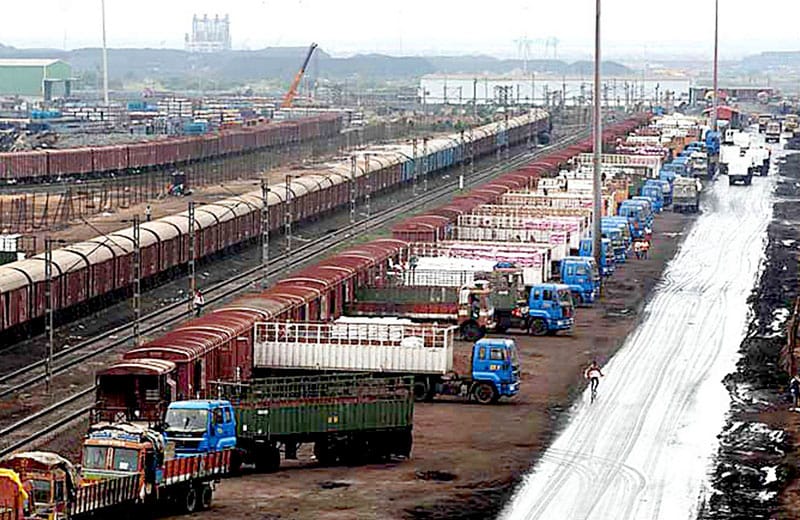
Modern retail today is a global marketplace which streamlines transactions between manufacturers, producers (farmers), creators (Designers etc.), shopping platforms and consumers. The logistics and supply chain acts as the key enabler in making both the consumers get what they want and the retailers deliver to the consumer expectation in the challenging festive season.
The festive season commences post monsoon and in a short span of 4 months creates a pressure situation for the retailers. It is not just the festivals, but the variety of festivals that are characterised by the choices that consumers want to have. There is no one particular product preference but a combination of products both as regular consumption and a gift factor that add to the complexity.
Retailers are challenged to achieve a balance in the festive season through:
- Forward planning: not just of 1-2 months by a period of at least 6 months at one go. Across multiple regions, marketplaces with different economic, traditional and localisation preferences. Same product sold across multiple locations could need a regional colour packing option as a last mile need creating pressure on the supply chain.
- Alerts and demand expectation management: Consumers demand – no lag – in their getting a product that has been launched in the world markets across time zones to be made available to them. It is not a good situation to be saddled with outdated fashion or old technology models of items.
- Accelerated processing speeds and reduced error rates: Ability to deliver to a demand centre in a just-in-time manner without errors becomes a norm rather than an exception. Lost sales opportunities can cost a whole season sales in case of inability to address the niche demands and changes in consumption pattern created by external factors.
- Enhance visibility and tracking into orders and KPIs: Technology and communication using sensors across the value chain and end products create a load full of data. This data needs to be interpreted in a timely manner and action is taken to course correct logistics decisions to both capture emerging opportunities and stop losses.
- Reduce operational costs, including fewer overtime costs: a multitude of delivery nodes in a chain of supply with stocking norms and in-transit warehousing needs to be operationalised to reduce operational costs. Also, there is a need to not create undue pressure on last mile deliveries which can add additional manpower costs.
- Improve customer experience and higher profits: A timely availability of size, model, colour or any other consumer preference at the retail level needs to be serviced to meet and enhance the customer experience. There is a need to also reduce the reverse logistics of customer returns and low demand goods. Retailers can protect their margins and make a higher margin by ensuring a timely availability or placement of products thru a smarter use of retail logistics.
In the era of e-retail focused logistics, there is a need for e-retail players to demand a different level of capabilities and service levels in order to cater to their customers. E-retail players have scaled up and remain efficient while still providing competitive prices to customers. The dedicated e-retail focussed LSP’s now account for a larger share of the logistics sector while Individual players continue to expand their operations, reach and capabilities.
Today, as the mainstream logistics sector in India prepares to embrace the digital world and transform towards organised and structured processes, the organised logistics impact on Retail growth will be through:
1. Just in time Delivery
With features that enable retailers to make informed choices when selecting a freight carrier for providing automated tracking updates, online logistics service providers are creating an ecosystem that drives assurance and trust. Further, the complete process of rate procurement to doorstep delivery, being facilitated on the online channel, gives the clients an added advantage of transparent dealings and regular updates. A single dashboard to track and manage multiple orders from around the globe helps clients get a real-time update on the progress of their shipment. Previously, ambiguous costs like customs clearance and documentation etc., are also clearly stated, with adequate information regarding the appropriate route of transportation, agreed service level optimisations and standardised, all-inclusive rates, making the entire process transparent and reliable. Retailers are thus well assured of receiving their shipments on time, ensuring a smooth and positive service experience.
2. Intelligent processes
Adopting the best of modern technology, new age logistics start-ups are transforming the traditional processes with intelligent, data-driven methods. One such process is that of forecasting, which uses vital data of past shipments, like frequent destinations, frequently used sea or air freight forwarders, average delivery time, average weight/ volume of shipments, quantity, type of material, average costs per shipment etc., enabling businesses retailers to acquire customised costs and eliminate variability, with little to no scope of additional/ hidden charges. Further, this vital data is also useful to retailers to avail contract rates with frequently associated LSP’s, thus cutting logistics costs and driving profits.
3. Smart Consolidation
While logistics is a vital key to timely deliveries and to boost retail, it is also a key expense that can impact the end profits. Consolidation of shipments through centralised warehouses is a trend that is helping shape the organised logistics framework for Retailers. For example, the free flow of goods across India can be leveraged to create a centralised hub for shipping to international destinations. Shipments from all over the country can be clubbed together basis their destination and shipped from a single port, thus creating an efficient logistics system. Consolidation can help reduce shipping costs through bulk volume discounts, help cut down on other ancillary charges like customs fee and documentation charges (which could have been higher for individual shipments) and facilitate better order management and timely delivery.
4. Reverse Logistics
The growth of e-commerce and the multi-channel model—which enables consumers to buy anytime, anywhere—has significantly impacted the retail industry. This has given rise to reverse logistics–the flow of goods and products from the point of consumption to point of origin, for purpose of recapturing value or for proper disposal. When a manufacturer’s product normally moves through the supply chain network, it is to reach the distributor or customer. Any processor management after the sale of the product involves reverse logistics. From a logistics and supply chain point of view, Reverse logistics presents one of the biggest operational challenges in the world of eCommerce freight logistics, due to the sheer volume and cost of processing returns. However, if handled effectively by organised logistics providers, reverse logistics can result in direct benefits, including improved customer satisfaction, decreased resource investment levels, and reductions in storage and distribution costs.
Summation:
Retail, from luxury to e-commerce, is an extremely price sensitive business and especially so in the festive season. Logistics, when utilised smartly, can prove to be a key factor in improving profits. Streamlining the processes through advance planning and execution through the help of experienced online logistic marketplaces can not only ease the burden of planning, supervision and management but also helps to dramatically control costs, thus add to revenue growth through well planned and efficient functioning.
– By Ruchi Dogra, Co-Founder & Director, FreightCrate









