
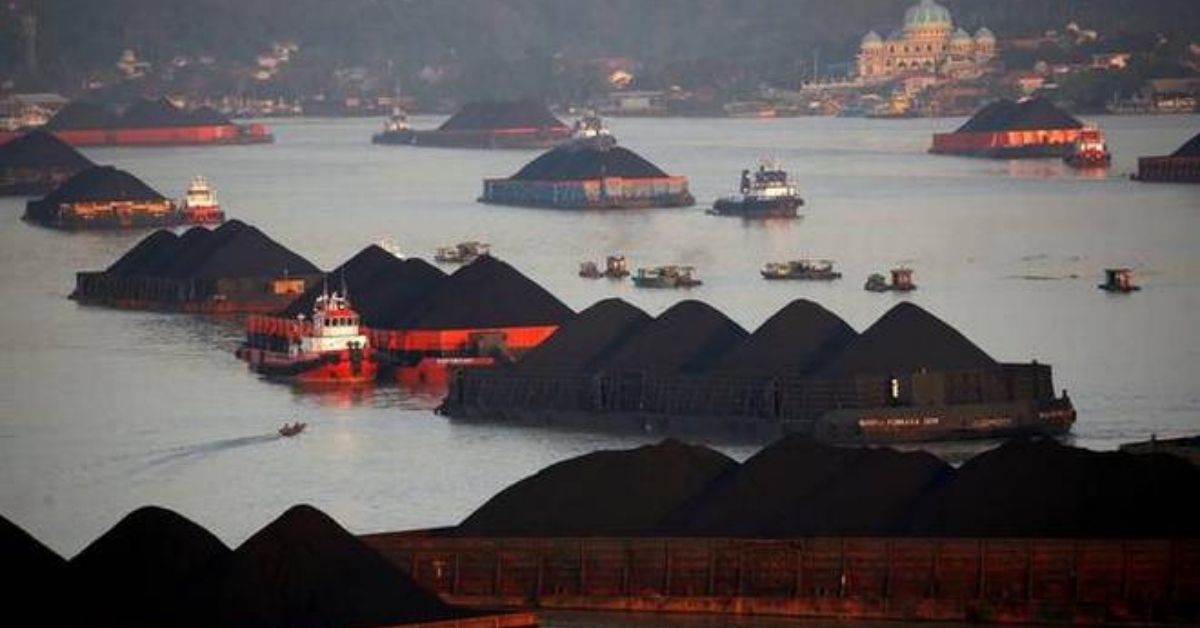
In late 2021, diplomats spent hours arguing over whether to “phase-out” or “phase-down” coal in the final communique of the COP26 climate change summit. Under pressure from China and India, the watered-down second choice prevailed. Still, it was good enough for the United Nations to proclaim that the dirtiest fuel was being “consigned to history.”
Nothing is further from reality.
Coal is neither down or out. The best words to define the coal market today were pronounced in 2001 by Ivan Glasenberg, the former boss of commodity behemoth Glencore Plc. Back then, the foul-mouthed commodity tycoon said that “everyone’s h–ny as hell for coal.” Two decades later, in a more politically-correct world, one can simply say the coal industry is booming.
Look at the market. The benchmark thermal coal price in Asia last week jumped to almost $244 per metric ton, the second-highest ever and only a handful of dollars below a peak in October. In a sign of market frenzy — triggered in part by an export ban by major producer Indonesia — one small shipment last week traded above $300 a ton in what many in the market believe is the most expensive coal transaction ever. The coal that’s used in steelmaking — so-called metallurgical or coking — is also trading at a record high, changing hands above $400 per ton.
The mining companies that have stuck with coal despite pressure to divest are making a killing. Look at Glencore, the world’s largest exporter of seaborne thermal coal. Its shares have risen to a 10-year high as investors anticipate a cash bonanza. For them, it’s an ideal world: Demand is rising, while supply is constrained because institutional investors, led by BlackRock Inc., have convinced nearly every miner to stop opening new pits. The arrangement is so good that from the outside it almost looks like a cartel.
What’s good for Glencore and other die-hard coal enthusiasts is terrible news for the planet. The commodity is the world’s most carbon-intensive fuel, and every energy scenario compatible with net-zero carbon emissions by 2050 features a rapid decline in its use. The opposite is happening, though, sending more carbon dioxide into the atmosphere.
Last year, the world burnt the largest amount ever of coal to produce electricity. And under current trends, total global consumption, which on top of power generation also includes industrial uses such as in steel and cement, will hit a record high this year, according to the International Energy Agency.
The consumption boom has wrong-footed many who said back in 2013-14 that coal demand had peaked and would soon start to decline. At best, coal consumption is settling at a high altitude plateau. At worst, it may continue rising. Beyond this year, the IEA forecasts some additional small demand increases for 2023 and 2024, setting fresh record highs in both years.
The consumption boom has wrong-footed many who said back in 2013-14 that coal demand had peaked and would soon start to decline. At best, coal consumption is settling at a high altitude plateau. At worst, it may continue rising. Beyond this year, the IEA forecasts some additional small demand increases for 2023 and 2024, setting fresh record highs in both years.
The gap between the world’s ambition to get rid of coal and the reality of its energy system hasn’t been wider. China is a key reason why demand climbed so much last year, and continues to do so in 2022. Facing electricity shortages, Beijing ordered its state-owned coal miners in late 2021 into Stakhanovite efforts to avoid blackouts. The result was that the Asian giant dug more coal than ever in November and December.
But Beijing wasn’t alone. In the U.S., Senator Joe Manchin is doing his best to keep the coal industry alive. Governments in green-conscious Europe turn a blind eye to burning coal for electricity when the wind isn’t blowing, the sun isn’t shining, and natural gas becomes too expensive. The U.K. on Monday burnt the most coal in nearly a year to help keep the lights on. And then there are the own-goals. In one perplexing policy decision, Germany is retiring its nuclear power stations quicker than its coal-fired plants. Nuclear power should easily substitute for coal in delivering electricity.
All of that means that coal demand is likely to grow nearly 3% from 2019 to 2024, reaching an all-time high of 8,031 million tons, according to the IEA. The forecast is far more pessimistic than the three scenarios the agency mapped last year for future energy demand. One saw demand roughly flat from 2019 to 2024; the two others pointed to consumption falling. Using the IEA numbers, the world would need to reduce coal demand by more than 20% from 2019 to 2024 to be on a trajectory compatible with the agency’s goal of net-zero by 2050. For now, the world is heading in the opposite direction.
Optimists will say coal is losing market share in global electricity production as green energy sources like wind and solar take hold. On paper, they are right: In 2022, coal is likely to account for about 36% of the world’s electricity production, down from more than 40% only a few years ago. But that’s of little help to the atmosphere, which cares about the absolute number of coal burnt — and therefore, CO2 emitted — rather than percentage of market share. The optimists are technically right but wrong, in practice.
The world needs to stop debating about whether to phase-out, phase-down and other grand statements that do little to reduce consumption. Instead, it needs to focus on why coal is in so much demand and how to change it — not in 2050, but over the next ten years.
Source : Economic Times









