
December 11, 2020: When the first consignment of Sputnik-V vaccine from Russia, on board an Emirates flight, reached Delhi airport early November, the onward journey to Central Drug Laboratory, Kasauli, was a dry run for logistics on formidable challenges to transport massive consignments of temperature-sensitive vaccine for deployment across the country quickly. Packed like Russian dolls, Sputnik vials needed to be stored at -20oC throughout the logistics chain.
While ensuring seamless cold chain vaccine operations, all logistics players will need to collaborate for a proactively integrated, speedy, and cost-effective transit, storage, and delivery, an additional mandatory feature for vaccine parcels is the requisite ambient temperature requirement. Serum Institute of India, the world’s largest vaccine manufacturer, has been licensed to mass-produce the vaccine developed by Oxford University and Swedish-British drugmaker AstraZeneca, so India is likely to get supplies soon. Unlike the vaccines from Pfizer or Moderna requiring ultra-low (up to minus 70oC) temperature-controlled storage, the AstraZeneca vaccine can be stored in a normal refrigerator.
Like micro-planning for zero-failure strategic operations, the ensuing vaccine supply chain system will test the nation’s ability to minutely and effectively plan, coordinate, and deliver the vaccine strictly as per requirement in every nook and corner. The vaccine challenge, when met efficiently and effectively, will lend new confidence. Life-blood of an economy, logistics, today, is acknowledged as a critical factor for the country’s competitiveness and resilience. It has increasingly shifted from being a cost-centre to a centre of value creation. Characterised by high costs (around 14% of GDP vis-à-vis c. 8% in industrial economies) and low service quality, logistics in India is considered an Achilles’ heel. Logistics costs, if pared by just 2%, can yield $50 billion annually.
To help cut logistics costs, PM Modi called for a “new direction” to infrastructure development, ensuring multimodal coordination. The government created a logistics division in the commerce department, and, inter alia, planned cold chain infrastructure development, especially suited for horticultural products, also pharmaceuticals. The ensuing massive vaccine logistics exercise may well spur the country’s vital logistics sector to revamp and upgrade itself.
The future growth of transportation is likely to be affected by multiple factors—rapid urbanisation, demographic changes, growing middle class, the digital revolution, which will have a major impact on mobility and transport, in both demand and supply. There is a paradigm change in transport itself—an integrated logistics service, involving the convergence of traditional transport infrastructure with the world of information technology.
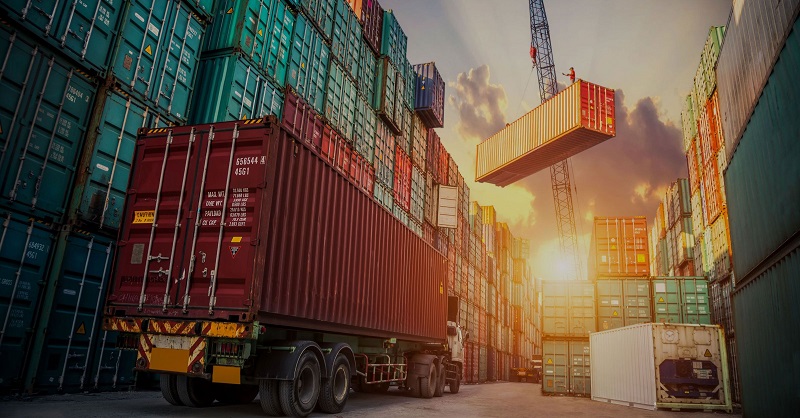
Transport today is a high-tech industry. As transport costs fall, physical geography matters less. With economies of scale in production, economic geography matters more. With the decline in air transport costs, the price of speed has fallen dramatically. There is the supremacy of demand for precision, speed and coordination in anticipating customer needs. Further, the value of trade is growing much faster than its weight. In recent years, container-isation has redefined the whole transport business, driving a relentless move towards seamless, door-to-door integrated intermodal transportation.
While PM’s call for optimal multimodal connectivity is in line with integration, which is the dominant theme in global logistics management, India has promoted a system with little inter-modal coordination. India’s transport networks, railways, in particular, are severely constrained for capacity.
To scale up investments in infrastructure, the government has been making substantial sectoral allocations: subsuming all existing highway projects, the Rs 5.5 trillion umbrella Bharatmala programme envisages about 84,000 km of new highways to be constructed; likewise, Sagarmala entails an investment of Rs 6 trillion for around 600 projects to unlock the potential of country’s 7,500 km coastline and 14,500 km of navigable waterways. Railways, too, projects a Rs 1.6 trillion investment plan.
Like at seaports, India needs to significantly improve the air cargo infrastructure and processes, to facilitate the transport of increasing volumes of light-weight high-value cargo. Accounting for 95% of all inland cargo, India’s roads and railways dominate the nation’s freight market. The sub-optimal rail-road mix in freight movement is a major concern. Shift to Rail is essential for sustainable development. Railways has been losing most of the low-density high-value cargo. It remains overwhelmingly patronised by captive customers of bulk cargo.
The heart of railways’ freight strategy is the creation of high volume, high-speed freight corridors, calibrating the services to create critical mass of containers carrying piecemeal general goods, in partnership with other players, for integrated time-tabled multimodal service. It needs to embrace myriad innovative systems—hardware and software—to harness its potential, simultaneously recognising the pivotal role roads play for first/last-mile connectivity. The huge potential of containerisation of domestic cargo offers opportunities for exponential growth in the sector. A standardised pallet, like airline ULDs, will help handle piecemeal general cargo by road or rail, by passenger or freight trains.
Characterised by a rigid bureaucratic structure, antithetical to business ethos, also tardy and lackadaisical in increasing capacity on arterial routes, rationalising its freight pricing by eschewing cross-subsidisation of passenger fares, and extracting far more from its resources and accelerating asset velocity, Railways hasn’t been agile to deliver and earnest to lower unit cost of operation.
The post-Covid phase provides a unique opportunity to regain leadership role in the transport market. Concentrating on the core segment, namely, inter-city long/medium distance passenger service corridors, with new genre rail travel available on-demand, through up-gradation, expansion, and acceleration of inter-city trains, it must speedily corporatise sectional or “regional” services which cater for a short distance (up to 100 km), that contribute maximum loss in passenger business and devour valuable route and terminal capacity.
A logistics division in the commerce department is by itself, not a sufficient condition. For an institutional framework to evolve conducive to optimal growth of transport sector, some of the recommendations made by the National Transport Policy Development Committee need implementation, such as a unitary transport ministry for coordinated development of rail, road, shipping and aviation sectors and effective regulatory mechanism to safeguard stakeholders’ interests. Road transport being designated a ‘concurrent’ subject in the Constitution, and there being no provision of ‘intermodal/multimodal transport’, separate legislation may be necessary to cover all aspect of logistics, also taxation parity between various modes.
Covid-19 experience suggests: a need to win customer trust, raise productivity, optimise asset utilisation, cut costs, minimise delays, simplify processes, enhance reliability. The vaccine logistics will potentially be an opportune moment for India’s logistics industry to learn the right lessons.
Source: financial Express








