
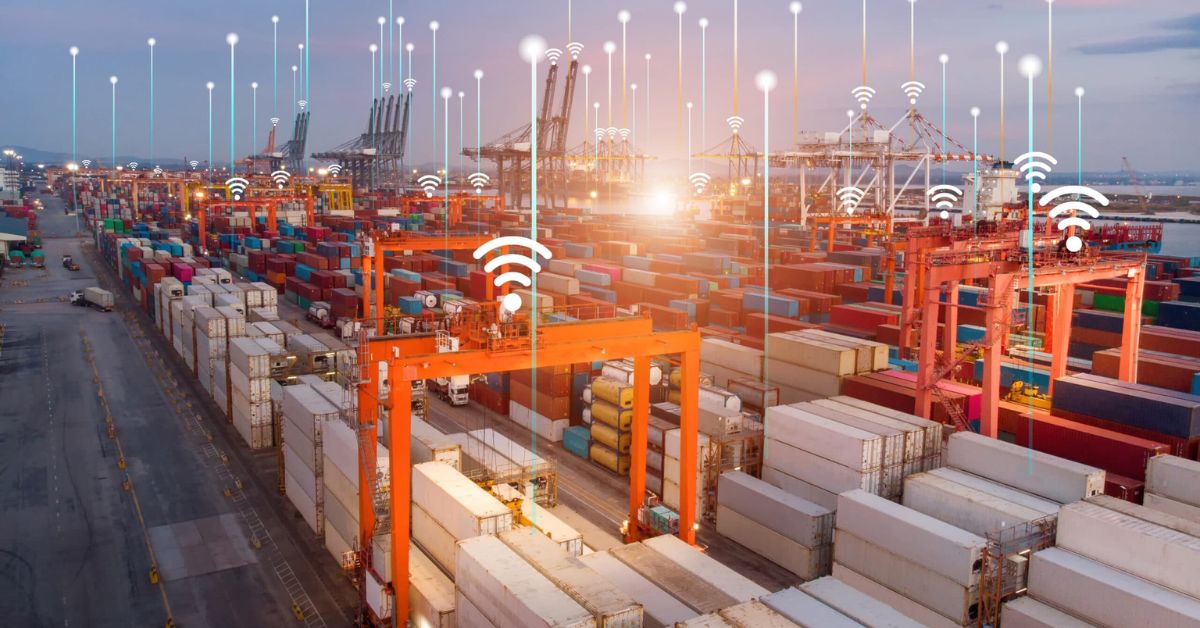
Among the suite of emerging technologies, Artificial Intelligence (AI) stands out as a transformative force capable of revolutionising port operations. From automating container handling to predictive maintenance, intelligent surveillance, and real-time decision-making, AI is reshaping port ecosystems across the globe.
This article explores how AI is being adopted at leading ports worldwide, the technologies enabling it, and its potential to boost efficiency, reduce costs, and build smarter, safer, and more sustainable ports.
The case for AI in ports
Traditionally, ports have operated with a heavy reliance on manual labour, siloed systems, and legacy equipment. As trade volumes have grown, this model has proven inadequate, leading to congestion, inefficiencies, and safety risks. AI offers ports the capability to automate, anticipate, and adapt — making operations smarter and significantly more responsive.
AI systems, when integrated with 5G networks, Internet of Things (IoT) sensors, and cloud platforms, create a digital nervous system for ports — allowing them to analyse data in real time, make informed decisions, and orchestrate complex logistical processes with precision.
Automating cargo handling and equipment operations
One of the most visible applications of AI in ports is in the automation of container and cargo handling.
At Qingdao Port in China, the world’s first fully automated container terminal, AI works alongside Automated Guided Vehicles (AGVs), Automated Stacking Cranes (ASCs), and Terminal Operating Systems (TOS) to carry out unmanned operations. The AI-enabled TOS processes thousands of data points to optimise crane scheduling, stack positioning, and route planning for AGVs, drastically cutting turnaround time and enhancing throughput.
Shanghai Yangshan Port has deployed AI systems to optimise the control and operation of intelligent cranes, IGVs (Intelligent Guided Vehicles), and yard logistics. Operators manage remote-controlled cranes through a central control room, receiving multiple 4K camera feeds via a private 5G network. AI-powered path optimisation and collision avoidance systems help ensure seamless, safe operations in one of the world’s busiest ports.
In Australia, the Port of Brisbane and Port of Melbourne have launched Smart Port programs focused on AI and automation. These include intelligent cargo handling systems, smart scheduling, and the deployment of autonomous vehicles for internal transport. These ports aim to reduce human error, improve safety, and scale operations cost-effectively.
Predictive maintenance and asset health monitoring
Maintenance of critical port infrastructure is crucial to ensuring operational continuity. Traditional maintenance approaches — either reactive or time-based — are both costly and inefficient. AI-powered predictive maintenance offers a smarter solution.
At Beibuwan Port in China, AI-enabled IoT systems continuously monitor the performance of heavy machinery, including cranes, forklifts, and rubber-tired gantries. By analysing data patterns, the system can predict potential breakdowns before they occur, allowing timely maintenance and reducing unplanned downtime.
Ningbo-Zhoushan Port has gone a step further by creating digital twins — virtual replicas of physical port assets that simulate operations in real time. These models help identify performance bottlenecks, predict maintenance needs, and optimise resource deployment across the terminal.
Such predictive capabilities reduce operating costs, extend equipment life, and help ports maintain high levels of reliability, especially during peak traffic periods.
AI-driven surveillance and safety monitoring
Ensuring safety and security in sprawling port environments — often comprising several square kilometres — is a significant challenge. AI-powered video analytics is transforming port security by enabling real-time surveillance, anomaly detection, and rapid response capabilities.
At Piraeus Port in Greece, AI and 5G-enabled video surveillance systems are deployed on quay cranes and along high-traffic zones. These systems use deep learning algorithms to detect unauthorised human presence in restricted areas and alert security teams instantly.
The Port of Koper in Slovenia uses AI to monitor 4K video feeds from drone-mounted and body-worn cameras. The system identifies suspicious behaviour, tracks movements of people and vehicles, and supports law enforcement in responding to incidents with greater speed and accuracy.
In Spain, the Ports of Malaga and Bilbao have implemented similar AI systems to monitor key areas such as truck entry points and railways. Bilbao’s deep learning-based automated vehicle recognition system has helped save over 8,000 labour hours annually at gate checkpoints while improving safety and reducing emissions.
Gate management and smart scheduling
Port congestion is a major source of inefficiency. AI systems are now being deployed to manage vehicle flow, reduce dwell times, and optimise scheduling at port entry and exit points.
The Port of Los Angeles has introduced the Port Optimiser™, a cloud-based AI-powered platform developed in partnership with Wabtec. It provides real-time visibility into cargo movement, vessel arrival predictions, and truck appointment scheduling. Integrated with the Truck Appointment System (TAS), the platform dynamically allocates gate slots to reduce traffic bottlenecks and idle time.
This system uses historical and real-time data to help trucking companies plan arrivals better and ensures that cranes and container stacks are ready when trucks arrive — creating a more synchronised supply chain.
Smarter intermodal logistics
AI also enables ports to extend intelligence into the hinterland — connecting maritime gateways with road, rail, and inland waterways. Ports like Brisbane and Melbourne are building intermodal terminals integrated with AI-based cargo tracking, autonomous vehicle handling systems, and real-time coordination between different modes of transport.
China’s Tianjin Port, dubbed the world’s first zero-emission smart port, has developed a smart logistics platform connecting the Beijing-Tianjin-Hebei region. AI is central to this digital ecosystem, supporting e-commerce, customs documentation, and paperless trade processing — all linked to solar-powered, AI-run AGVs and cranes.
AI for strategic planning and operations optimisation
Beyond real-time automation, ports are beginning to use AI for long-term planning and strategic decision-making.
At Shanghai Yangshan Port, AI models use historical data to forecast cargo volumes, simulate alternative scheduling models, and assess the impact of disruptions like extreme weather or labour shortages. This enables port authorities to build resilient and responsive systems that adapt proactively rather than reactively.
AI is also being integrated into Digital Twin platforms — enabling ports to visualise and simulate entire operational workflows. These simulations assist in designing better infrastructure, optimising space utilisation, and enhancing safety procedures.
Environmental and sustainability gains
AI’s ability to optimise operations not only improves efficiency but also helps reduce emissions and energy usage — key priorities for modern ports under global climate goals.
By reducing idle times, automating crane operations, and optimising vehicle movements, ports like Bilbao and Tianjin are cutting their carbon footprint. Predictive analytics also help optimise energy consumption of lighting, cooling, and machinery, contributing to the port’s sustainability agenda.
Conclusion: Charting the future with AI at the core
The maritime industry is undergoing a digital renaissance, and ports are at the heart of this transformation. Artificial Intelligence is the driving engine that enables this evolution — turning traditional ports into intelligent logistics ecosystems.
Whether it’s automating crane operations, improving security with real-time surveillance, or enhancing customer visibility through digital dashboards, AI is helping ports operate faster, safer, and more sustainably. For ports in India and other developing maritime nations, embracing AI now offers the chance to leapfrog traditional infrastructure challenges and integrate seamlessly into the digital global trade network.
In an era defined by data, ports that harness AI will be the ones to lead — not follow — the next wave of maritime progress.









